
Carne Asada – The Smoky, Flavorful Grilled Beef of Mexican Cuisine
Introduction
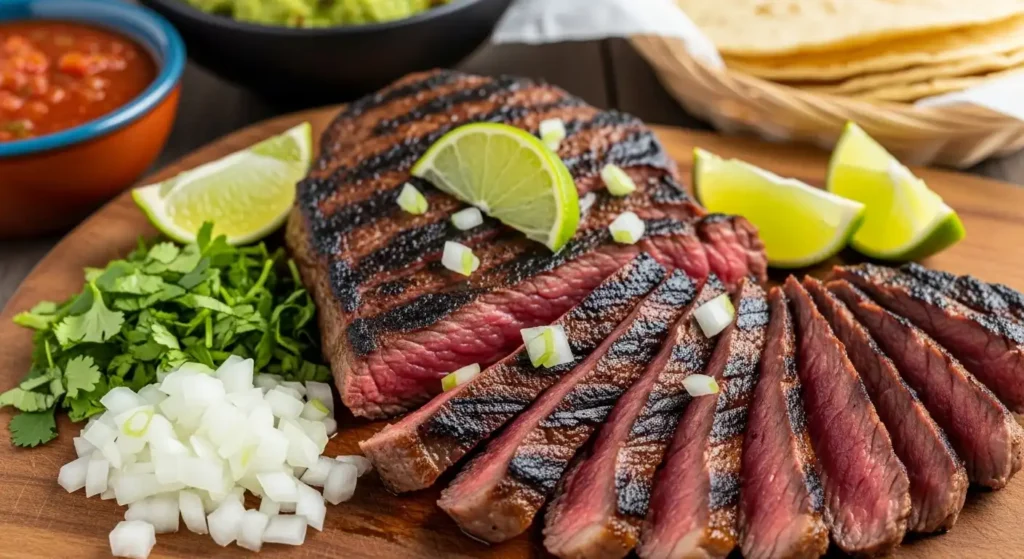
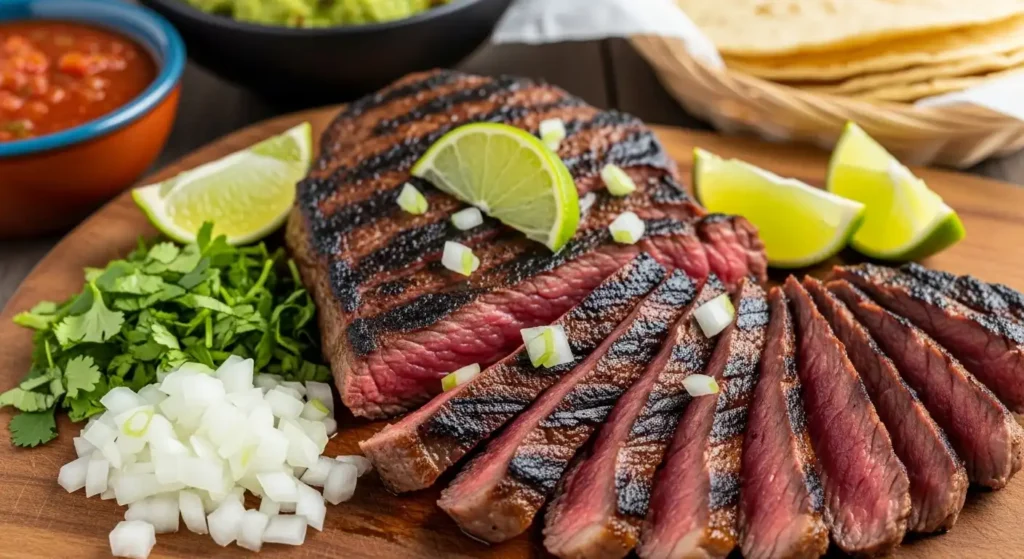
Few dishes capture the essence of Mexican cooking like Carne Asada. The name literally translates to “grilled meat,” but in Mexico and beyond, it means much more. Carne asada is beef marinated in citrus, spices, and herbs, then grilled to smoky perfection. It’s often thinly sliced and served in tacos, burritos, or alongside rice and beans for a hearty, satisfying meal.
The beauty of carne asada lies in its simplicity. With just the right marinade and the magic of an open flame, a humble cut of beef transforms into something extraordinary. It’s a dish made for gatherings—whether it’s a casual backyard barbecue or a festive family cookout.
In this post, we’ll explore the history of carne asada, the essential ingredients, a step-by-step recipe, and even the health benefits of this beloved dish. Whether you’re new to Mexican cooking or just looking to elevate your grilling game, this guide will help you master the art of carne asada.
A Brief History of Carne Asada
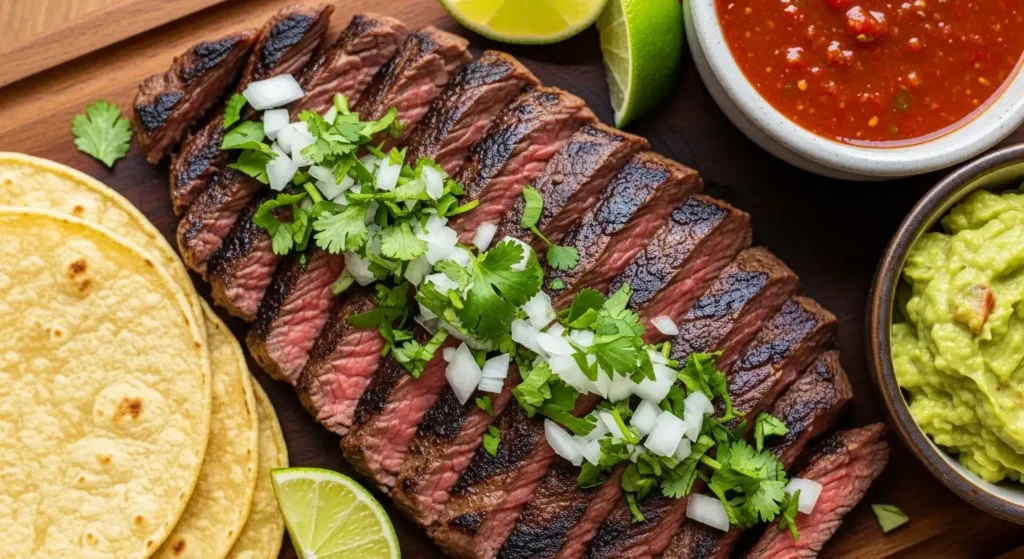
Carne asada has deep roots in Northern Mexico, where cattle ranching has long been a way of life. Regions like Sonora, Nuevo León, and Baja California are especially famous for their beef and grilling traditions.
Historically, cattle were introduced to Mexico by Spanish settlers in the 16th century. Over time, beef became a staple in northern states, where wide-open ranch lands made cattle farming practical. Locals began marinating beef with native spices, citrus, and chilies before grilling it over mesquite wood. This combination of indigenous ingredients and Spanish influence gave birth to carne asada.
Today, carne asada is more than just a meal—it’s a social tradition. Families and friends gather around the grill for carne asada Sundays, a cultural ritual that celebrates food and community. It’s also a popular street food, often served as tacos, quesadillas, or tortas, making it one of the most versatile dishes in Mexican cuisine.
Ingredients for Carne Asada
Carne asada’s signature flavor comes from its marinade. The right balance of acidity, spice, and herbs tenderizes the beef while infusing it with irresistible flavor.
Essential Ingredients
- Beef – Flank steak, skirt steak, or sirloin are the most popular cuts. These are flavorful, relatively inexpensive, and ideal for grilling.
- Citrus juice – Lime and orange juice add acidity that tenderizes the meat and brightens the flavor.
- Garlic – Fresh cloves bring depth and aroma.
- Chilies – Jalapeños or serranos for heat; dried chilies like guajillo can also be used in some recipes.
- Herbs and spices – Cumin, oregano, black pepper, and cilantro are traditional choices.
- Oil – Olive oil or vegetable oil helps the marinade cling to the meat.
- Salt – Essential for bringing out the natural flavor of the beef.
Optional Toppings & Sides
- Fresh pico de gallo
- Grilled green onions (cebollitas)
- Guacamole or avocado slices
- Mexican rice and refried beans
- Warm corn or flour tortillas
Step-by-Step Preparation of Carne Asada
Making carne asada at home is straightforward, but attention to detail makes all the difference. Here’s a step-by-step guide:
Step 1: Prepare the Marinade
- In a bowl, combine lime juice, orange juice, minced garlic, chopped cilantro, oil, cumin, oregano, and salt.
- For extra heat, add chopped jalapeño or a splash of hot sauce.
Step 2: Marinate the Beef
- Place your chosen cut of beef in a large resealable bag or shallow dish.
- Pour the marinade over the beef, ensuring it’s well coated.
- Cover and refrigerate for at least 2 hours (overnight is ideal for maximum flavor).
Step 3: Preheat the Grill
- Use a charcoal or gas grill for authentic smoky flavor.
- If possible, grill over mesquite wood or charcoal to mimic traditional Mexican flavor.
Step 4: Grill the Beef
- Remove the beef from the marinade and let excess liquid drip off.
- Grill the steak over high heat for 4–6 minutes per side, depending on thickness.
- Aim for a charred exterior while keeping the inside juicy.
Step 5: Rest and Slice
- Let the beef rest for 5 minutes after grilling to retain its juices.
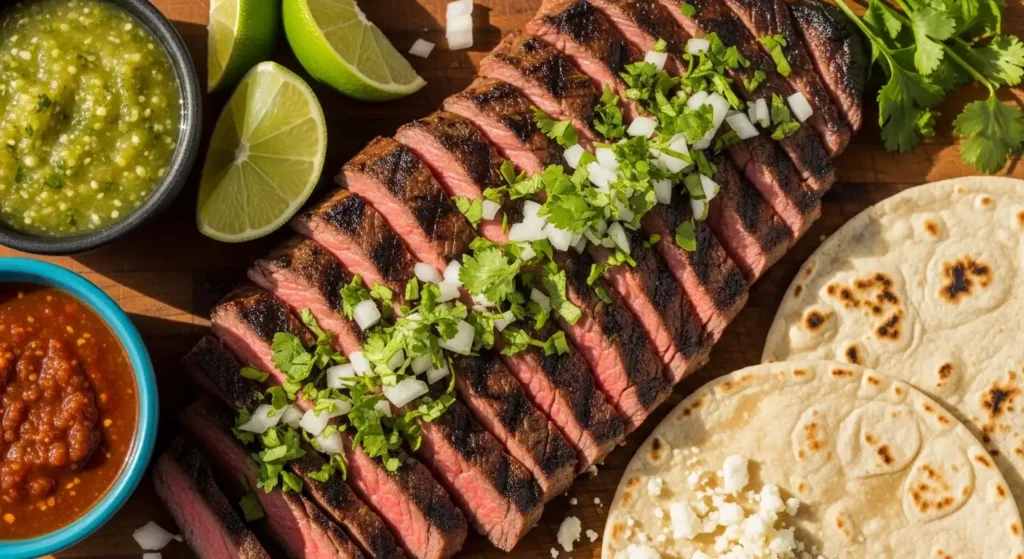
- Slice thinly against the grain for maximum tenderness.
Step 6: Serve and Enjoy
- Serve the carne asada as tacos with warm tortillas, onions, cilantro, and salsa.
- Alternatively, enjoy it with rice, beans, and grilled vegetables for a classic plate.
Health Benefits of Carne Asada
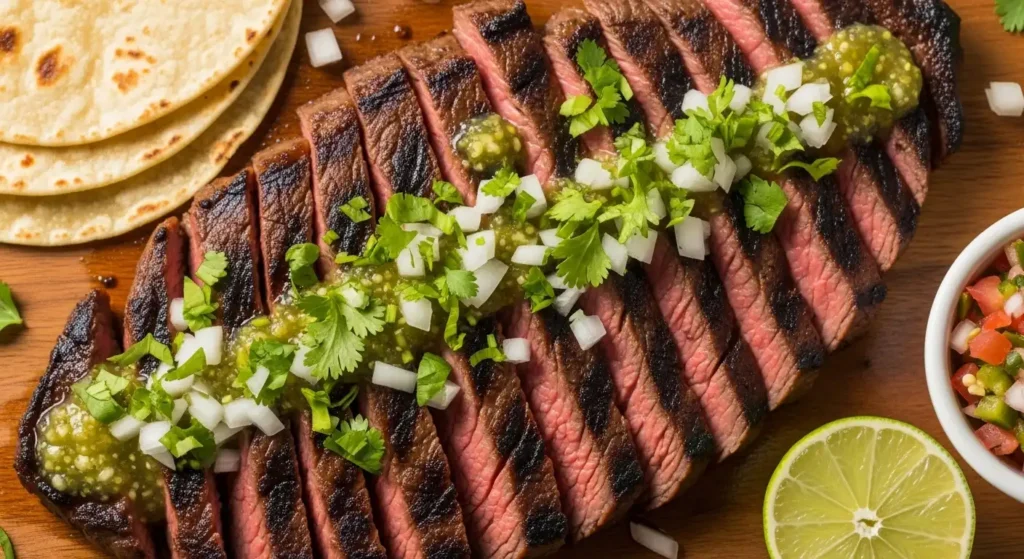
While carne asada is undeniably indulgent, it also provides several nutritional benefits when enjoyed as part of a balanced diet.
1. High-Quality Protein
Beef is an excellent source of protein, essential for building and repairing muscles.
2. Rich in Iron and Zinc
These minerals support energy levels and immune function, making carne asada a nutrient-dense option.
3. Vitamins for Energy
Beef contains B vitamins, especially B12, which supports brain function and red blood cell production.
4. Balanced with Fresh Ingredients
When paired with salsa, lime, and fresh herbs, carne asada delivers antioxidants and vitamin C.
5. Portion Control & Lean Cuts
Using lean cuts like flank or skirt steak and pairing them with vegetables and whole-grain tortillas keeps the meal lighter and balanced.
Conclusion
Carne asada is more than just grilled beef—it’s a celebration of Mexican tradition, flavor, and togetherness. From its origins in Northern Mexico’s ranching culture to its role in backyard cookouts and bustling taquerías, this dish has remained a staple because it’s both simple and spectacular.
Making carne asada at home allows you to capture those smoky, zesty flavors right from your own grill. And if you’re looking to try something new, consider pairing your carne asada with homemade sourdough tortillas or bread. The tangy bite of sourdough beautifully complements the rich, charred beef, adding an artisanal twist to a classic dish.
So fire up the grill, marinate your steak, and start your journey into both carne asada and sourdough baking. Together, they’ll turn your kitchen into a place of flavor, tradition, and joy.