
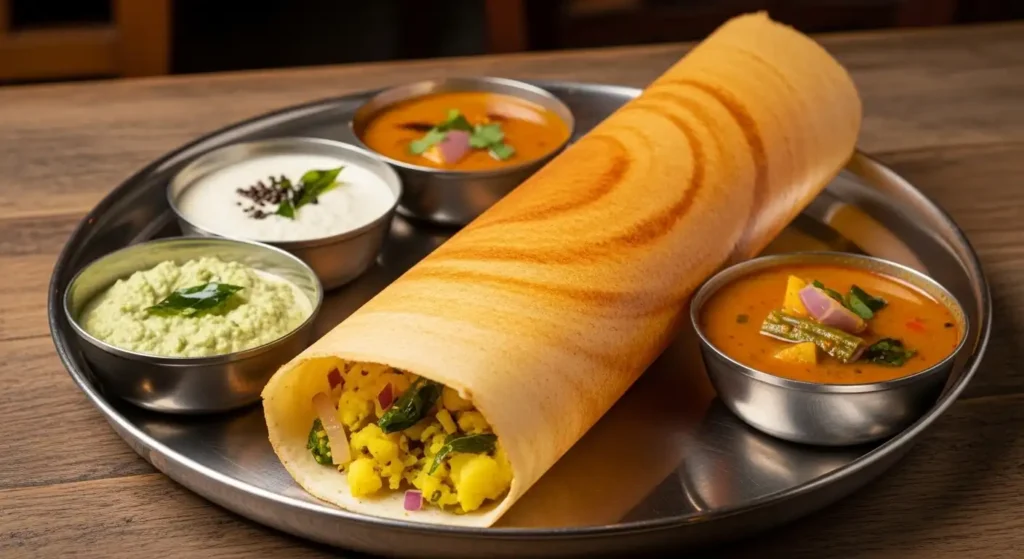
Masala Dosa – Crispy Rice Pancake Filled with Spiced Potatoes
Introduction
If there’s one dish that instantly transports you to the bustling streets and cozy cafés of South India, it’s Masala Dosa. This iconic dish combines a crispy, golden-brown rice and lentil crepe with a warm, flavorful filling of spiced mashed potatoes, creating a harmony of textures and flavors that is both satisfying and comforting.
Masala Dosa is more than just a breakfast item—it’s a cultural emblem of South Indian cuisine, enjoyed from homes to street-side stalls, and now adored globally. Often served with coconut chutney, sambar, and a variety of spicy dips, Masala Dosa is both nutritious and indulgent, appealing to vegetarians and food enthusiasts alike.
In this article, we’ll explore the history of Masala Dosa, the essential ingredients, a step-by-step preparation guide, and its health benefits. By the end, you’ll be ready to recreate this South Indian classic in your own kitchen.
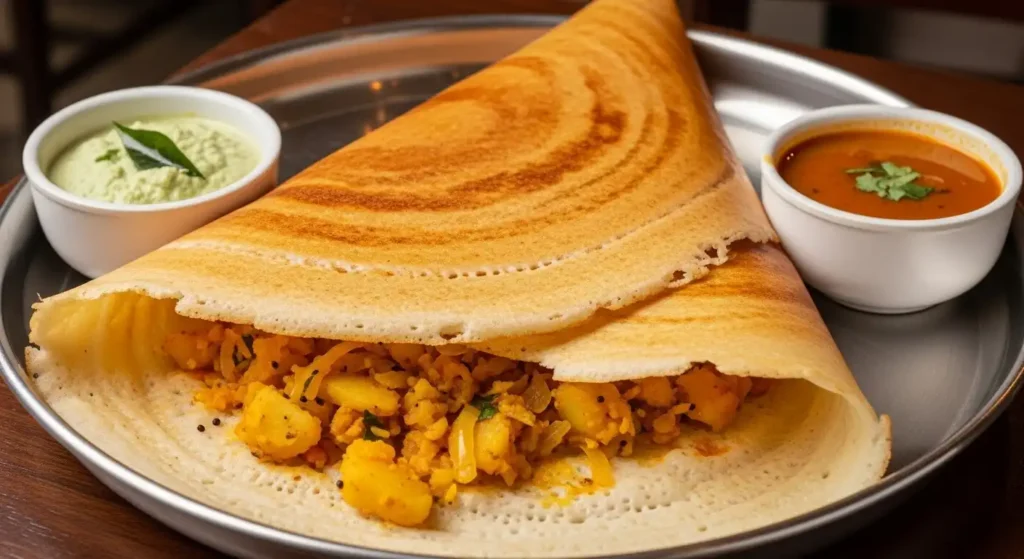
History of Masala Dosa
The origins of Dosa date back over a thousand years, with references found in ancient South Indian texts such as the Tamil Sangam literature. Early dosas were simple fermented rice and lentil pancakes, likely thinner and smaller than today’s varieties.
The Masala Dosa, specifically filled with spiced potatoes, is believed to have originated in Udupi, Karnataka, a city famous for its vegetarian cuisine. Udupi restaurants popularized this version in the mid-20th century, and it quickly became a signature dish across India.
Over time, Masala Dosa has traveled far beyond South India, finding a home in Indian restaurants worldwide—from London and New York to Singapore and Dubai. Its universal appeal lies in the contrast of textures (crispy exterior, soft filling) and the balance of flavors (savory, slightly tangy, mildly spiced).
Ingredients for Masala Dosa
For the Dosa Batter:
- 2 cups parboiled rice (idli rice preferred)
- ½ cup urad dal (split black gram)
- 2 tablespoons poha (flattened rice), optional for softness
- ½ teaspoon fenugreek seeds (methi)
- Salt to taste
- Water as needed
For the Potato Masala Filling:
- 3–4 medium potatoes, boiled and mashed
- 1 medium onion, finely chopped
- 2 green chilies, chopped
- 1 teaspoon ginger, grated
- ½ teaspoon mustard seeds
- ½ teaspoon cumin seeds
- ½ teaspoon turmeric powder
- 8–10 curry leaves
- 2 tablespoons oil
- Salt to taste
- 2 tablespoons fresh coriander leaves, chopped
For Serving:
- Coconut chutney
- Tomato chutney
- Sambar (optional)
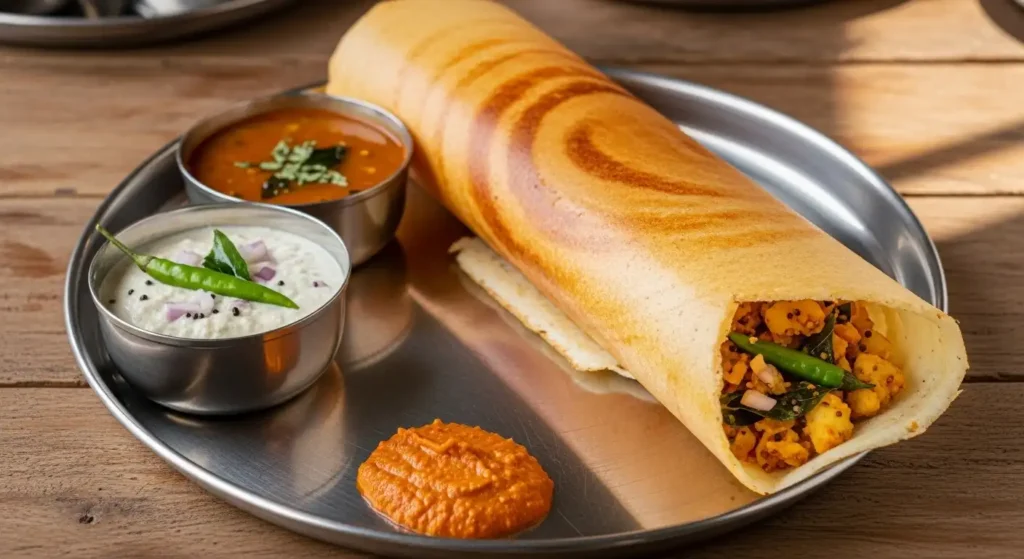
Step-by-Step Preparation
Step 1: Prepare the Dosa Batter
- Rinse and soak the rice and fenugreek seeds in water for 6–8 hours.
- Soak urad dal separately for the same duration.
- Grind urad dal with a little water to a smooth and fluffy paste.
- Grind the rice (and poha, if using) coarsely.
- Combine the rice and urad dal pastes, mix well, and add salt.
- Allow the batter to ferment overnight in a warm place. The batter should rise and appear slightly airy.
Step 2: Make the Potato Masala
- Heat oil in a pan over medium heat. Add mustard seeds; once they crackle, add cumin seeds and curry leaves.
- Sauté onions, green chilies, and ginger until onions turn translucent.
- Add turmeric powder and mashed potatoes, stirring well.
- Adjust salt and cook for 3–4 minutes, mixing thoroughly.
- Garnish with fresh coriander leaves and set aside.
Step 3: Cook the Dosas
- Heat a non-stick pan or cast-iron griddle on medium-high heat.
- Pour a ladle of batter in the center and spread in a circular motion to make a thin pancake.
- Drizzle a little oil around the edges and cook until the underside is golden brown and crispy.
- Flip if desired for extra crispiness, though traditional masala dosas are cooked on one side.
Step 4: Assemble the Masala Dosa
- Place a portion of potato masala on one side of the dosa.
- Fold the dosa over the filling, either in half or rolled, to encase the potatoes.
- Serve hot with coconut chutney, tomato chutney, and sambar.
Health Benefits of Masala Dosa
While Masala Dosa is often considered a treat, it offers several nutritional advantages:
- Low in Fat (When Moderated)
Steamed batter and minimal oil in cooking make it lighter than deep-fried snacks. - Fermentation Benefits
Fermented rice and lentil batter enhances digestibility and provides probiotics, supporting gut health. - Good Source of Protein and Carbs
Urad dal in the batter adds plant-based protein, while potatoes provide complex carbohydrates for energy. - Rich in Fiber and Micronutrients
Potato masala, curry leaves, and optional vegetables contribute fiber, vitamins, and minerals. - Customizable for Healthier Variants
- Use brown rice or multigrain flour in the batter for added fiber.
- Add grated carrots or peas to the potato filling.
- Minimize oil usage for lighter dosas.
Tips for the Perfect Masala Dosa
- Fermentation is key: A well-fermented batter results in soft yet crispy dosas.
- Use a cast-iron skillet for authentic crispiness.
- Spread batter thinly for a delicate, crunchy texture.
- Prepare fillings in advance to serve immediately while the dosa is hot.
- Experiment with fillings: Paneer, mixed vegetables, or sweet potato masala can offer exciting variations.
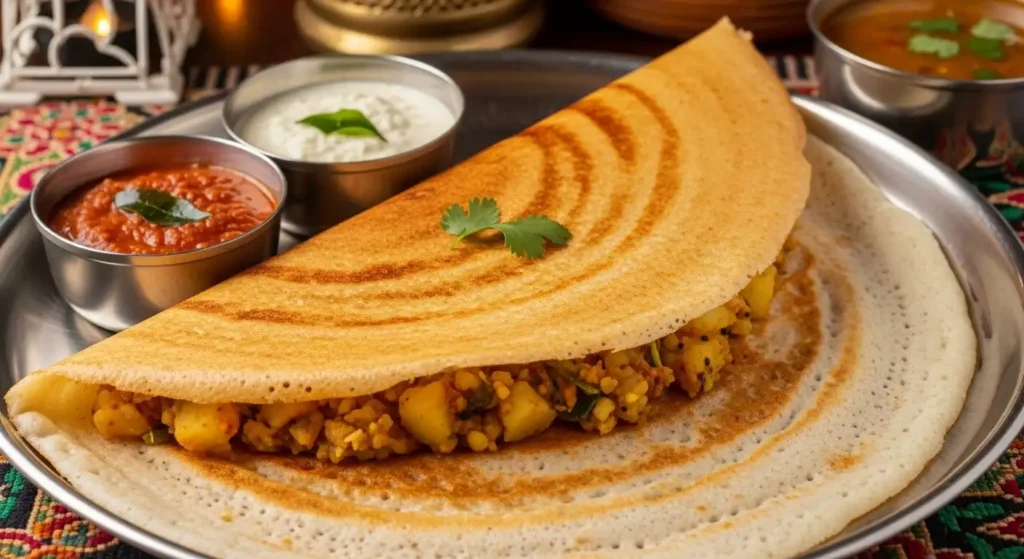
Conclusion
Masala Dosa is a true representation of South Indian culinary artistry—crispy, flavorful, and utterly satisfying. Its combination of light, fermented crepes and spiced potato filling makes it a wholesome, nutritious meal that appeals to all ages.
Cooking Masala Dosa at home is not just about making a dish; it’s about experiencing the joy of fermentation, mastering the art of thin, crispy pancakes, and embracing the harmony of flavors that South Indian cuisine is known for.
Much like sourdough baking, preparing Masala Dosa requires patience, practice, and appreciation for natural fermentation. Once you master it, the reward is a plate of golden, crispy, and comforting dosas that will delight your family and friends.
So, gather your ingredients, let your batter ferment overnight, and enjoy the experience of making this iconic South Indian favorite in your very own kitchen!