Prosciutto di Parma: Italy’s Legendary Cured Ham
Introduction
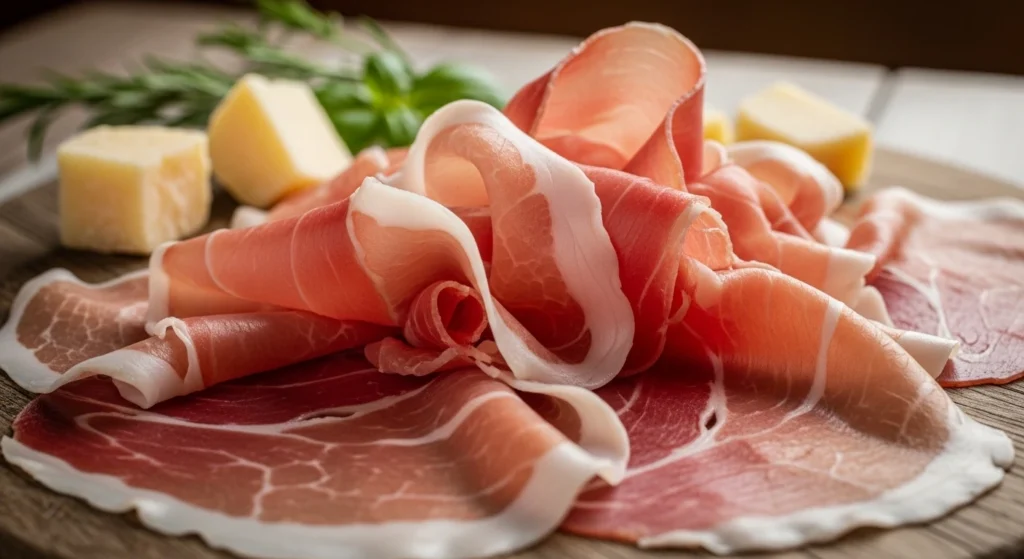
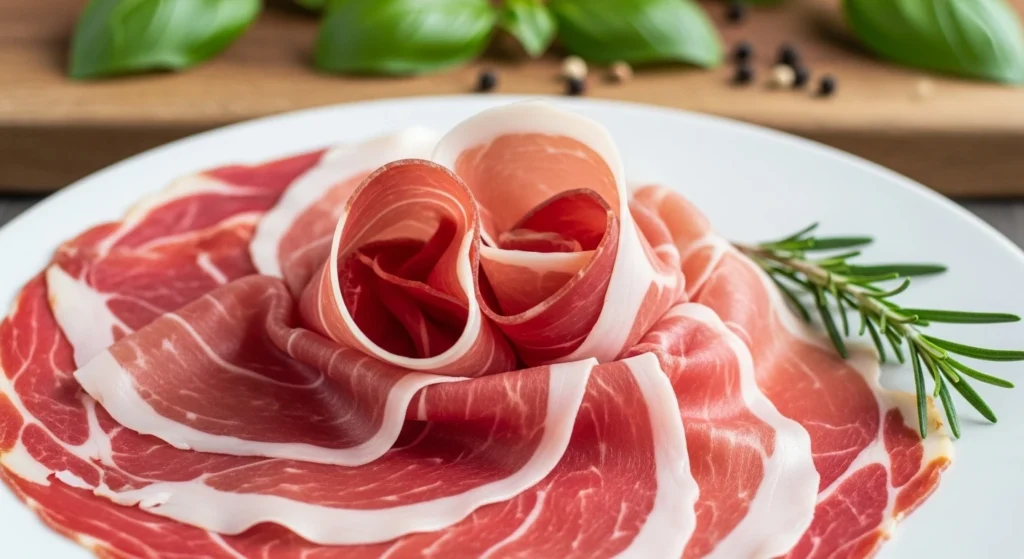
Few Italian foods capture the elegance of simplicity quite like Prosciutto di Parma. This delicately sliced cured ham, with its melt-in-your-mouth texture and savory-sweet flavor, has been treasured for centuries. Known worldwide as one of Italy’s finest culinary exports, Prosciutto di Parma is more than just food—it’s a cultural icon rooted in tradition, craftsmanship, and passion.
Whether paired with fresh melon, layered on pizza, or enjoyed on its own, this artisanal ham embodies the best of Italian cuisine: simple, authentic, and timeless. In this guide, we’ll explore the history of Prosciutto di Parma, its carefully selected ingredients, the step-by-step curing process, and its surprising health benefits. By the end, you’ll see why this delicacy holds a special place on tables across Italy and beyond.
The History of Prosciutto di Parma
Prosciutto, meaning “ham” in Italian, has been part of Italy’s food culture since ancient times. But Prosciutto di Parma, in particular, carries centuries of tradition tied to the Parma region of northern Italy.
Ancient Origins
The art of curing ham dates back more than 2,000 years. Romans were known to salt and dry pork legs, both as a way to preserve meat and to enjoy its distinctive flavor. Historical records suggest that locals in Parma were already perfecting the technique of ham curing during this period.
The Role of Parma’s Climate
What makes Prosciutto di Parma unique is the natural environment of the Parma region. Nestled between the Apennine mountains and the Po River Valley, Parma enjoys gentle breezes, mild winters, and dry summers—ideal conditions for curing ham without artificial preservatives.
Protected Designation of Origin (PDO) Status
In 1996, Prosciutto di Parma was granted Protected Designation of Origin (PDO) status by the European Union. This means that only ham produced in Parma, following strict traditional methods, can legally be called Prosciutto di Parma. Each leg is branded with the iconic Parma Crown Mark, a guarantee of authenticity and quality.
Ingredients: The Simplicity of Perfection
One of the most remarkable things about Prosciutto di Parma is that it’s made with just two ingredients:
- High-Quality Pork Legs
Only specially bred and fed pigs raised in specific regions of Italy are used. The pigs are primarily fed a natural diet, including whey from Parmigiano Reggiano cheese production, which enriches the flavor of the meat. - Sea Salt
No nitrates, additives, or preservatives are used—just a touch of sea salt to enhance the natural flavor and aid in the curing process.
That’s it. This simplicity is what makes Prosciutto di Parma extraordinary: the magic lies in time, environment, and craftsmanship.
Step-by-Step Preparation of Prosciutto di Parma
Producing Prosciutto di Parma is an art form, perfected over centuries. Here’s a closer look at the process:
Step 1: Selection of Pork
Only fresh, heavy pig legs (weighing at least 12 kg) are chosen. The quality of the pork is critical—healthy, well-fed pigs ensure rich, flavorful meat.
Step 2: Salting
A master salter gently massages the pork legs with sea salt. This step not only seasons the meat but also begins the preservation process. After salting, the legs rest in cold, humid rooms for about a week, allowing the salt to penetrate.
Step 3: Resting
The legs are salted again and then left to rest in carefully controlled conditions for about 60 to 80 days. This allows flavors to develop slowly.
Step 4: Washing and Drying
After resting, the salt is washed off, and the hams are hung in well-ventilated rooms. Here, they dry naturally with the breezes that flow from the Apennines, giving them their unique taste.
Step 5: Curing
The hams are transferred to larger curing rooms, where they hang for months. The climate of Parma plays a vital role in ensuring the ham matures at the right pace.
Step 6: Greasing (Sugnatura)
The exposed parts of the ham are coated with a mixture of pork fat and rice flour. This prevents the meat from drying out too quickly while allowing it to breathe.
Step 7: Long Aging
Prosciutto di Parma must be aged for at least 12 months, though some varieties are cured for up to 36 months for deeper flavor.
Step 8: Quality Testing
Before being branded with the Parma Crown Mark, each ham undergoes strict testing. Inspectors use a horse bone needle (which absorbs scents quickly) to pierce the ham and check the aroma. Only the finest hams pass this test.
Health Benefits of Prosciutto di Parma
Though Prosciutto di Parma is often seen as an indulgence, it offers several surprising health benefits when consumed in moderation.
1. High in Protein
As a cured meat, Prosciutto di Parma is rich in protein, making it a satisfying addition to meals and a good source of essential amino acids.
2. Low in Fat Compared to Other Cured Meats
Thanks to the careful selection of pork and natural curing, Prosciutto di Parma contains less fat than many other cured meats, while still offering full flavor.
3. Naturally Preserved
No artificial preservatives or nitrates are added, making it one of the cleanest cured meats available. The preservation relies solely on salt, air, and time.
4. Rich in Vitamins and Minerals
Prosciutto di Parma provides important nutrients such as B vitamins (especially B1, B6, and B12), zinc, iron, and phosphorus—all essential for energy and overall health.
5. Easily Digestible
The long curing process breaks down proteins, making Prosciutto di Parma easier to digest than fresh pork or heavily processed meats.
How to Enjoy Prosciutto di Parma
Prosciutto di Parma is versatile and pairs beautifully with many foods. Here are a few classic ways to enjoy it:
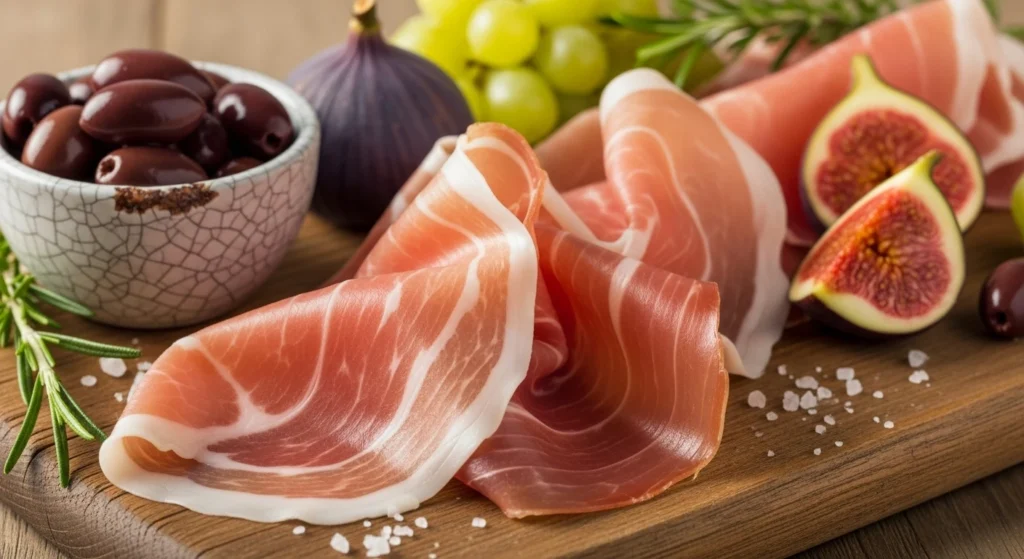
- With Fruit: Pair thin slices with melon or figs for a sweet-and-salty contrast.
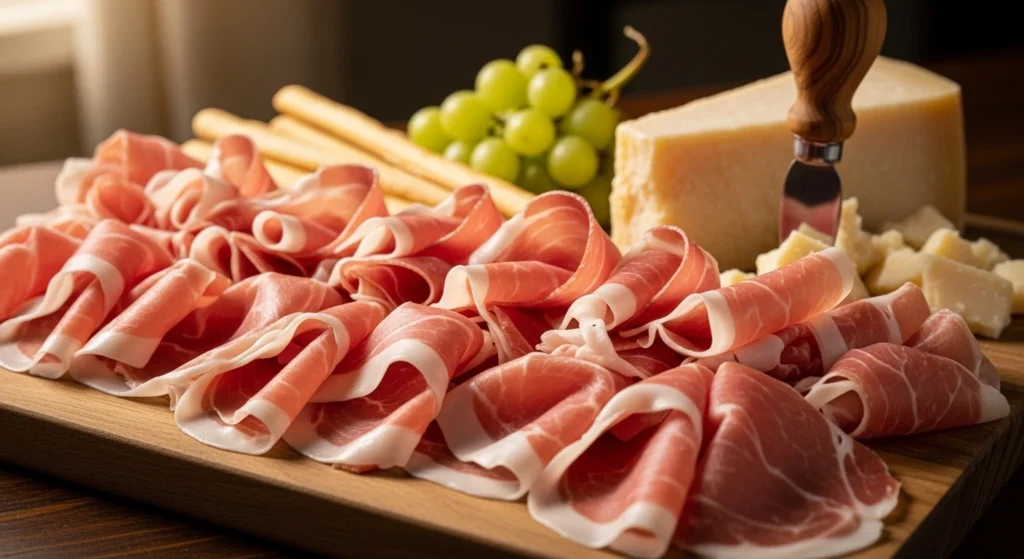
- On a Charcuterie Board: Combine with cheeses like Parmigiano Reggiano and olives.
- In Sandwiches and Panini: Layer with mozzarella, arugula, and tomatoes.
- On Pizza: Add after baking for a delicate, savory topping.
- Wrapped Around Vegetables: Try asparagus or breadsticks wrapped in prosciutto for easy appetizers.
Tips for Buying and Storing Prosciutto di Parma
- Look for the Crown Mark: This guarantees authenticity.
- Buy freshly sliced: Thin slices are best enjoyed within a few days.
- Store properly: Keep in the fridge, wrapped in parchment or wax paper (not plastic), to preserve flavor and texture.
- Serve at room temperature: Allow slices to warm slightly before eating for maximum flavor.
Conclusion
Prosciutto di Parma isn’t just ham—it’s a masterpiece of Italian tradition, crafted with patience, skill, and respect for nature. With just pork, salt, and time, artisans create one of the world’s most beloved delicacies, a food that tells the story of Parma’s culture and culinary heritage.
Enjoyed on its own, paired with fruit, or as part of a meal, Prosciutto di Parma is a reminder that sometimes, the simplest ingredients yield the most extraordinary results.
So, why not explore Prosciutto di Parma in your kitchen? Like sourdough baking, it’s a testament to the beauty of slow, thoughtful food preparation—where patience rewards you with unmatched flavor and tradition.
Buon appetito! 🥓🍇