Lokum (Turkish Delight): A Sweet Journey Through Tradition and Taste
Table of Contents
Introduction
Few sweets have captured the imagination of food lovers around the world like Lokum, more commonly known as Turkish Delight. With its soft, chewy texture, delicate flavors, and beautiful powdered sugar coating, this confection is more than just candy—it’s a piece of Turkish culture and history. From royal palaces of the Ottoman Empire to modern cafés around the globe, Lokum has stood the test of time as a symbol of hospitality, tradition, and indulgence.
In this article, we’ll explore the history of Turkish Delight, its traditional ingredients, and a step-by-step preparation guide for those who wish to try making it at home. We’ll also look at its health benefits and why this sweet treat continues to charm generations.
History of Lokum (Turkish Delight)
Origins in the Ottoman Empire
The roots of Lokum stretch back more than 500 years, during the height of the Ottoman Empire. It is believed to have been invented in the late 18th century by Bekir Effendi, a confectioner from Anatolia who later became famous in Istanbul. His shop quickly gained attention from the Ottoman elite, and Lokum soon became a staple dessert served in palaces and homes alike.
Symbol of Hospitality and Love
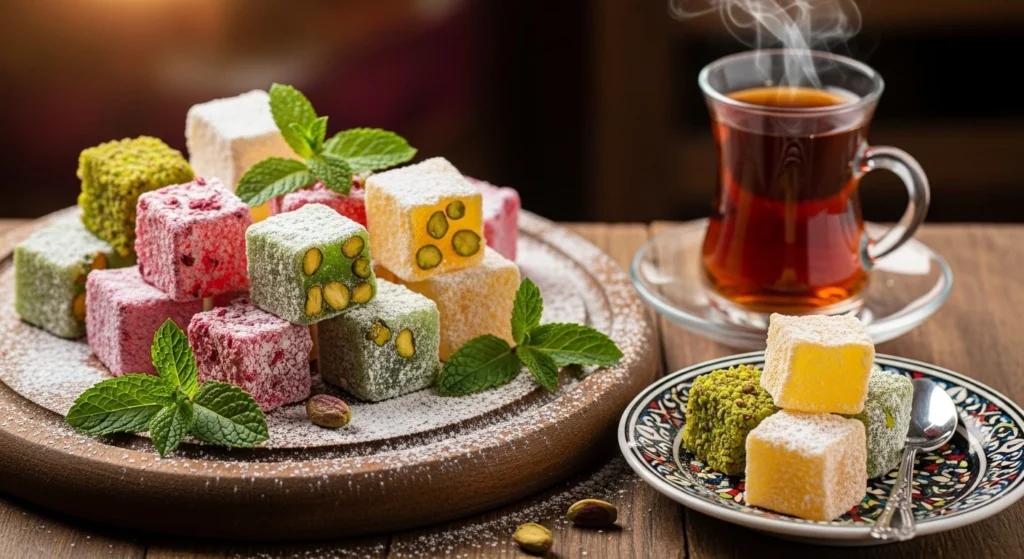
In Turkey, Lokum has always been more than a dessert. It was (and still is) a gesture of hospitality. Guests are often welcomed with a plate of Turkish Delight alongside a cup of strong Turkish coffee or tea. In weddings and family celebrations, Lokum symbolizes sweetness and joy shared among loved ones.
Global Fame
Lokum began spreading beyond Turkey in the 19th century, when European travelers discovered it and introduced it back home as “Turkish Delight.” It quickly gained popularity across Europe, particularly in Britain. Even today, it’s not uncommon to see Lokum in gift boxes, enjoyed during festive occasions or as souvenirs from Turkey.
Ingredients for Authentic Turkish Delight
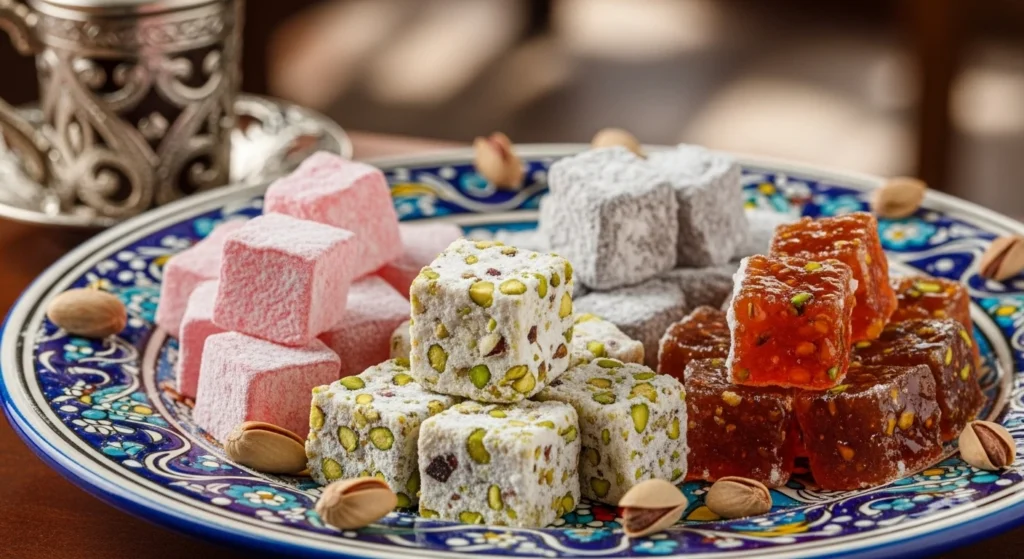
While there are many variations today (from rose and lemon to pistachio and pomegranate), the base of Turkish Delight remains simple. The beauty of Lokum lies in the balance of flavors and the smooth, chewy texture that makes it so unique.
Basic Ingredients:
- Sugar – The foundation of the sweetness.
- Cornstarch (or wheat starch) – Provides the signature jelly-like consistency.
- Water – Used to dissolve and cook the sugar and starch.
- Flavoring agents – Rosewater, lemon juice, orange blossom water, or fruit extracts.
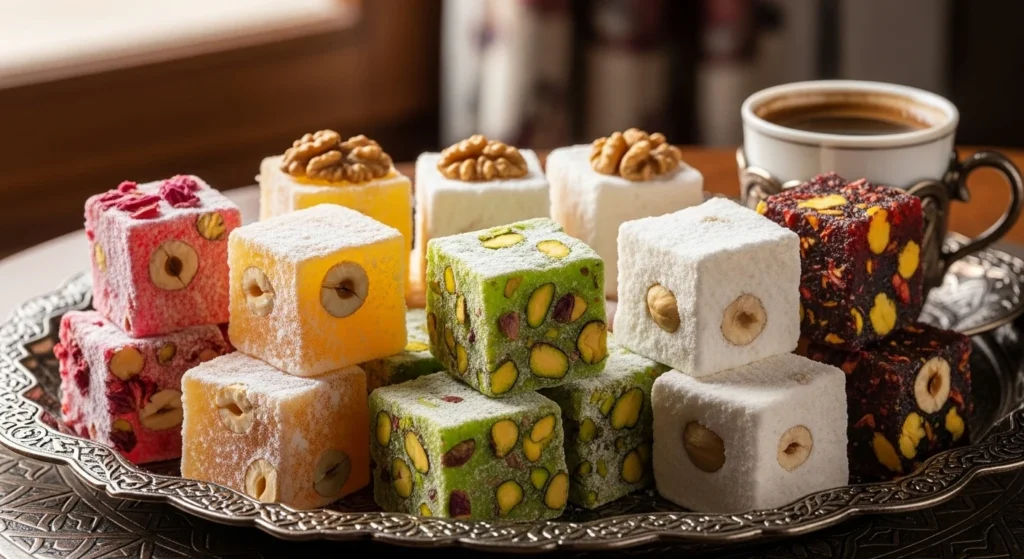
- Nuts (optional) – Pistachios, hazelnuts, or walnuts for added texture and richness.
- Icing sugar & cornstarch mixture – For dusting the finished Lokum to prevent sticking.
Popular Flavor Variations:
- Rose Lokum – Delicately floral and aromatic.
- Lemon Lokum – Refreshing and citrusy.
- Pistachio Lokum – A luxurious variety filled with crunchy pistachios.
- Pomegranate Lokum – A modern twist with vibrant color and tangy sweetness.
Step-by-Step Preparation of Turkish Delight
Making Lokum at home requires patience, but the reward is worth it. Here’s a beginner-friendly guide to crafting this traditional sweet.
Step 1: Gather Your Tools
You’ll need:
- A large saucepan
- A whisk or wooden spoon
- A baking dish (lined with parchment paper)
- A candy thermometer (optional, but very helpful)
Step 2: Prepare the Sugar Syrup
- Combine 4 cups of sugar and 1½ cups of water in a saucepan.
- Bring to a gentle boil, stirring until the sugar fully dissolves.
- Let it simmer until it reaches the soft-ball stage (about 240°F / 115°C if using a thermometer).
Step 3: Make the Starch Paste
- In another pot, mix 1 cup of cornstarch with 4 cups of water until smooth.
- Place it on low heat, whisking constantly until the mixture thickens into a paste.
Step 4: Combine Syrup and Paste
- Slowly pour the sugar syrup into the starch paste while stirring.
- Continue cooking on low heat, stirring constantly for about 45 minutes to 1 hour until the mixture turns golden, glossy, and very thick.
Step 5: Add Flavors and Nuts
- Stir in your choice of rosewater, lemon juice, orange blossom water, or fruit essence.
- If desired, fold in chopped pistachios, hazelnuts, or walnuts for texture.
Step 6: Set and Cool
- Pour the mixture into a parchment-lined baking dish.
- Smooth the surface with a spatula.
- Let it rest at room temperature for at least 6–8 hours (preferably overnight).
Step 7: Cut and Dust
- Once firm, turn the block of Lokum out onto a cutting board.
- Use a sharp knife, lightly oiled, to cut it into small cubes.
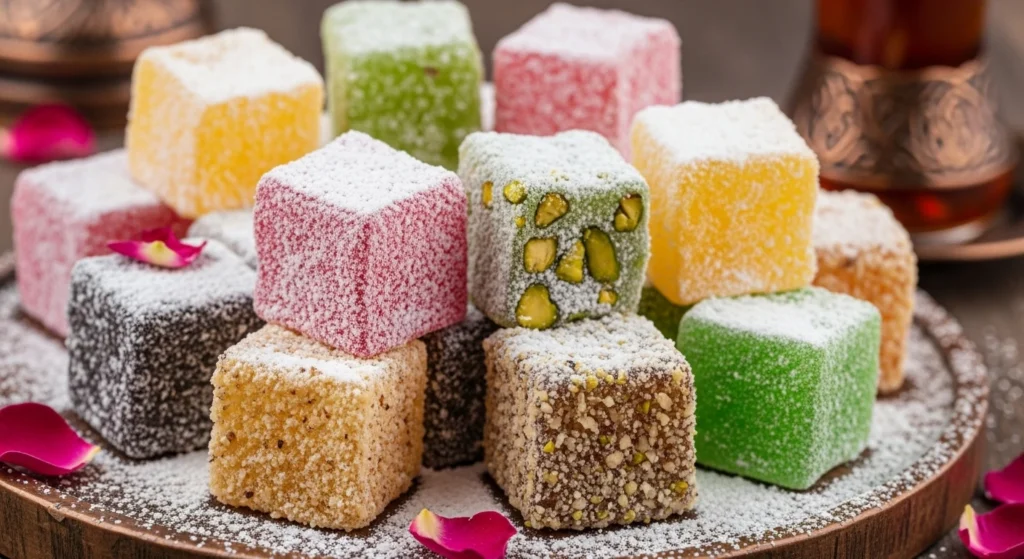
- Toss the cubes in a mixture of powdered sugar and cornstarch to keep them from sticking.
And there you have it—your very own homemade Turkish Delight!
Health Benefits of Turkish Delight
While Lokum is definitely a treat to be enjoyed in moderation, it does have some surprising benefits when compared to many processed sweets.
1. Natural Ingredients
Traditional Turkish Delight is made with sugar, starch, and natural flavorings—much simpler and more wholesome than many packaged candies that contain artificial colors, preservatives, and additives.
2. Gluten-Free Option
Since Lokum is typically made with cornstarch, it can be enjoyed by people with gluten sensitivities or celiac disease (always check ingredients when buying commercially, as some brands may vary).
3. Energy Boost
With its high sugar content, Lokum can provide a quick burst of energy, making it a delightful snack with tea or coffee during a midday slump.
4. Rich in Antioxidants (with Nuts & Fruits)
Varieties that include pistachios, walnuts, or pomegranate add extra nutrients, antioxidants, and healthy fats, making them a slightly healthier indulgence.
5. Emotional Connection
Beyond physical health, Lokum also contributes to mental well-being. Sharing sweets is part of social bonding, celebrations, and cultural identity—an often-overlooked but valuable benefit of traditional foods.
Tips for Enjoying Lokum
- Pairing – Best enjoyed with Turkish coffee or tea for a balanced flavor experience.
- Storage – Keep Lokum in an airtight container at room temperature; avoid the fridge as it can alter the texture.
- Gift Idea – Beautifully boxed Lokum makes an elegant gift for holidays, weddings, or special occasions.
Conclusion
Lokum, or Turkish Delight, is more than a sweet—it’s a cultural treasure that has delighted generations for centuries. From its humble origins in the Ottoman Empire to its worldwide fame today, it continues to symbolize warmth, hospitality, and celebration.
Whether you enjoy it as a fragrant rose-flavored cube dusted with sugar, or a nut-filled delight with pistachios, there’s a version for every palate. And if you’re adventurous in the kitchen, making Lokum at home is a rewarding experience that connects you directly with Turkish tradition.
So why not give it a try? Just like sourdough baking, making Turkish Delight is both an art and a joy—an invitation to slow down, savor the process, and create something truly special to share with family and friends.