
Satay (สะเต๊ะ): A Flavorful Journey Through Southeast Asia’s Beloved Skewers
Introduction
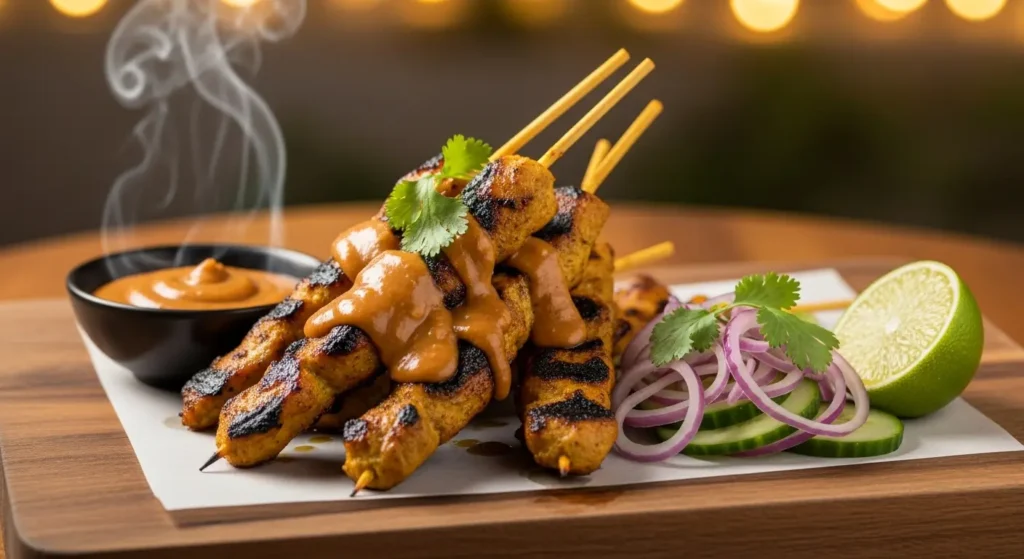
When it comes to street food that brings people together, few dishes are as iconic as Satay (สะเต๊ะ). These skewered and grilled meats, often served with a rich peanut sauce, are popular across Southeast Asia—especially in Thailand, Indonesia, and Malaysia.
What makes satay so special isn’t just its smoky aroma or tender bite—it’s the combination of flavors. The marinade brings a balance of sweet, savory, and aromatic spices, while the peanut dipping sauce adds creaminess and a touch of heat. It’s the kind of dish you can find sizzling on street corners, served at family gatherings, or featured at upscale restaurants.
In this article, we’ll take a deep dive into the history of satay, explore its ingredients, walk through a step-by-step recipe, and highlight its health benefits. Whether you’re new to Southeast Asian cuisine or already a fan, this guide will help you recreate the magic of satay in your own kitchen.
History of Satay
Origins in Indonesia
Satay is believed to have originated in Java, Indonesia, during the 19th century. Inspired by Middle Eastern kebabs brought by traders, locals adapted the idea of skewered meat by using available spices, herbs, and grilling techniques.
Spread Across Southeast Asia
From Indonesia, satay spread across Southeast Asia. Each country gave it its own unique twist:
- Thailand – Known as Satay (สะเต๊ะ), often made with pork or chicken and served with a tangy cucumber relish alongside peanut sauce.
- Malaysia and Singapore – Typically served with spicy peanut sauce and compressed rice cakes (ketupat).
- Indonesia – Countless regional varieties exist, from beef satay (sate sapi) to satay with sweet soy glaze (sate kecap).
A Dish of Cultural Connection
Today, satay isn’t just food—it’s a cultural connector. Found everywhere from humble street carts to international restaurants, it symbolizes the shared food heritage of Southeast Asia and the joy of gathering around smoky grills.
Ingredients of Satay
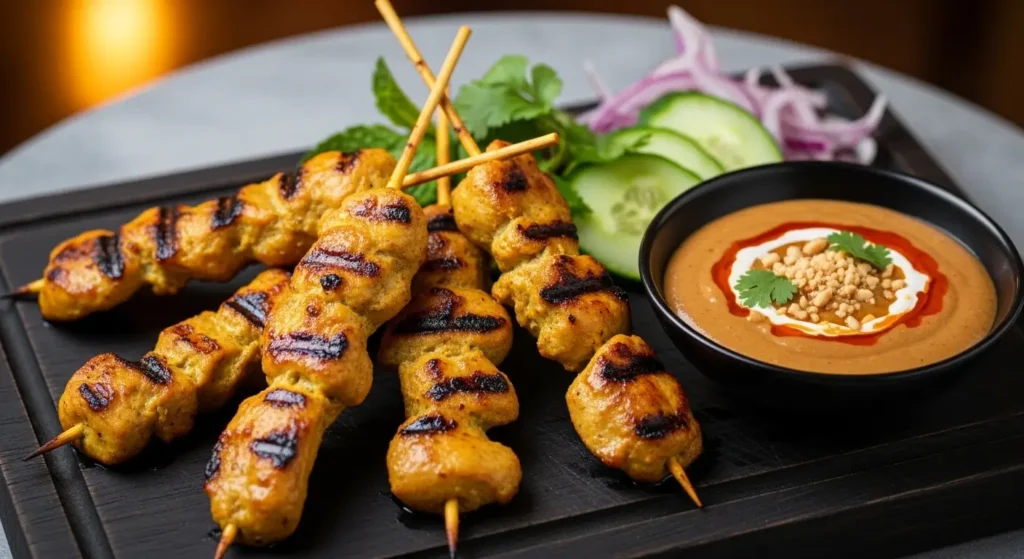
The beauty of satay lies in its flavorful marinade and accompaniments. Here’s what you’ll need for a classic Thai-style satay:
For the Meat
- Chicken, pork, or beef – Thinly sliced for skewering. Chicken thigh or pork shoulder works best for tenderness.
- Bamboo skewers – Soaked in water to prevent burning.
For the Marinade
- Coconut milk – Adds creaminess and moisture.
- Curry powder – Gives warmth and depth.
- Turmeric – Provides color and earthy flavor.
- Garlic and shallots – For aromatic richness.
- Coriander and cumin – Essential spices for complexity.
- Soy sauce or fish sauce – Adds saltiness and umami.
- Palm sugar – Balances with a touch of sweetness.
For the Peanut Sauce
- Roasted peanuts or peanut butter – The base of the sauce.
- Coconut milk – Creates a creamy texture.
- Red curry paste – Adds spice and aroma.
- Palm sugar – For sweetness.
- Tamarind paste or lime juice – For tanginess.
- Soy sauce or fish sauce – For depth and saltiness.
For the Relish (Ajad)
- Cucumber – Sliced thinly.
- Red onion – For sharpness.
- Fresh chilies – For heat.
- Vinegar and sugar – Mixed to make a tangy dressing.
Step-by-Step Preparation
Making satay at home may seem like a project, but it’s surprisingly straightforward once you break it down.
Step 1: Prepare the Marinade
- In a bowl, combine 1 cup coconut milk, 2 tablespoons curry powder, 1 teaspoon turmeric, 2 cloves minced garlic, 2 shallots, 1 tablespoon soy sauce, and 1 tablespoon palm sugar.
- Mix until smooth.
Step 2: Marinate the Meat
- Slice 500g of chicken or pork into thin strips.
- Add the meat to the marinade and coat thoroughly.
- Cover and refrigerate for at least 2 hours or overnight for best flavor.
Step 3: Skewer the Meat
- Soak bamboo skewers in water for 30 minutes.
- Thread the marinated meat onto skewers, folding longer strips for even cooking.
Step 4: Make the Peanut Sauce
- In a saucepan, heat 1 tablespoon oil.
- Add 2 tablespoons red curry paste and stir until fragrant.
- Add 1 cup coconut milk, ½ cup ground roasted peanuts, 2 tablespoons palm sugar, 1 tablespoon tamarind paste, and 1 tablespoon soy sauce.
- Simmer until thick and creamy. Adjust seasoning to taste.
Step 5: Prepare the Relish
- In a small bowl, mix ¼ cup vinegar, 2 tablespoons sugar, and ½ teaspoon salt until dissolved.
- Add sliced cucumber, red onion, and chilies.
Step 6: Grill the Satay
- Preheat a grill or grill pan over medium-high heat.
- Brush skewers lightly with oil.
- Grill for 2–3 minutes per side, until charred and cooked through.
Step 7: Serve and Enjoy
- Arrange skewers on a platter.
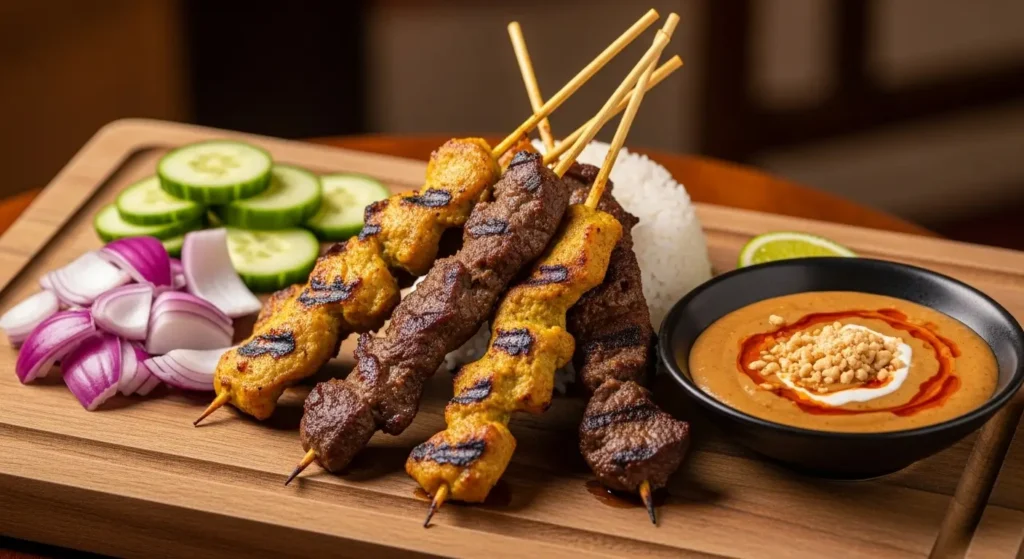
- Serve with peanut sauce on the side and cucumber relish for balance.
- Pair with jasmine rice or sticky rice for a complete meal.
Health Benefits of Satay
Satay isn’t just delicious—it also offers several nutritional benefits:
1. High in Protein
Grilled meats like chicken, pork, or beef provide a lean source of protein, essential for muscle repair and energy.
2. Nutrient-Rich Spices
Turmeric, garlic, coriander, and cumin are all anti-inflammatory and antioxidant-rich, supporting overall health.
3. Healthy Fats from Peanuts
Peanut sauce, when consumed in moderation, provides healthy monounsaturated fats that can promote heart health.
4. Fresh Vegetables in Relish
The cucumber and onion relish adds fiber, vitamins, and minerals, balancing the richness of the dish.
5. Grilling Over Frying
Because satay is traditionally grilled, it’s generally lower in fat compared to deep-fried snacks.
Tips for Perfect Satay
- Slice meat thinly – Ensures quick, even cooking.
- Don’t skip marination – The longer the meat marinates, the deeper the flavor.
- Grill over charcoal if possible – For authentic smoky aroma.
- Adjust sauce thickness – Add more coconut milk for a creamier peanut sauce, or simmer longer for a thicker version.
- Balance flavors – Sweet, salty, spicy, and tangy should all come through in harmony.

Conclusion
Satay (สะเต๊ะ) is more than just grilled meat on a stick—it’s a flavorful journey into Southeast Asia’s culinary traditions. With its smoky skewers, rich peanut sauce, and refreshing cucumber relish, it’s a dish that balances bold flavors with simple joy.
The best part? You don’t need to travel across the world to enjoy it. With a few fresh ingredients and some patience, you can recreate authentic satay right at home.
And just like sourdough baking, making satay is a hands-on experience that rewards you with both delicious food and a deeper connection to tradition. So fire up your grill, thread those skewers, and let the aromas transport you to the vibrant streets of Southeast Asia.