
Table of Contents
Kadhi Pakora – Yogurt-Based Curry with Gram Flour Dumplings
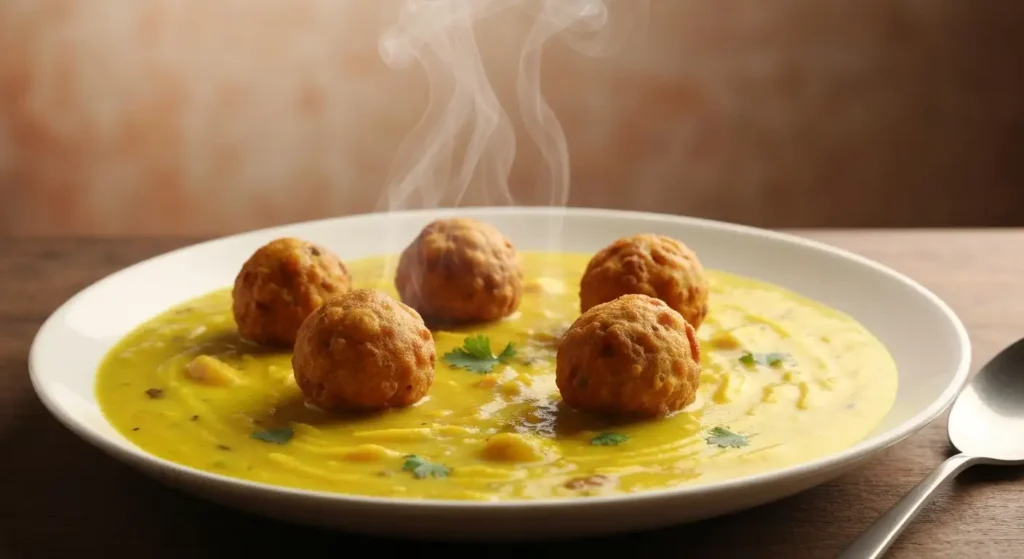
When you think of true Indian comfort food, Kadhi Pakora often comes to mind. This humble yet hearty dish features a creamy yogurt-based curry thickened with gram flour (besan), paired with soft, golden pakoras (gram flour dumplings). It’s tangy, spiced just right, and always served with steaming hot rice or roti.
What makes Kadhi Pakora so special is that it’s both flavorful and nourishing, a dish you’ll find cooked in households across North and West India. From Punjab to Gujarat, every region has its own take—thick, creamy, and pakora-rich in the north, or thinner and subtly spiced in the west.
In this guide, we’ll dive into the history of Kadhi Pakora, list its ingredients, explain a step-by-step preparation method, and explore its health benefits.
History of Kadhi Pakora
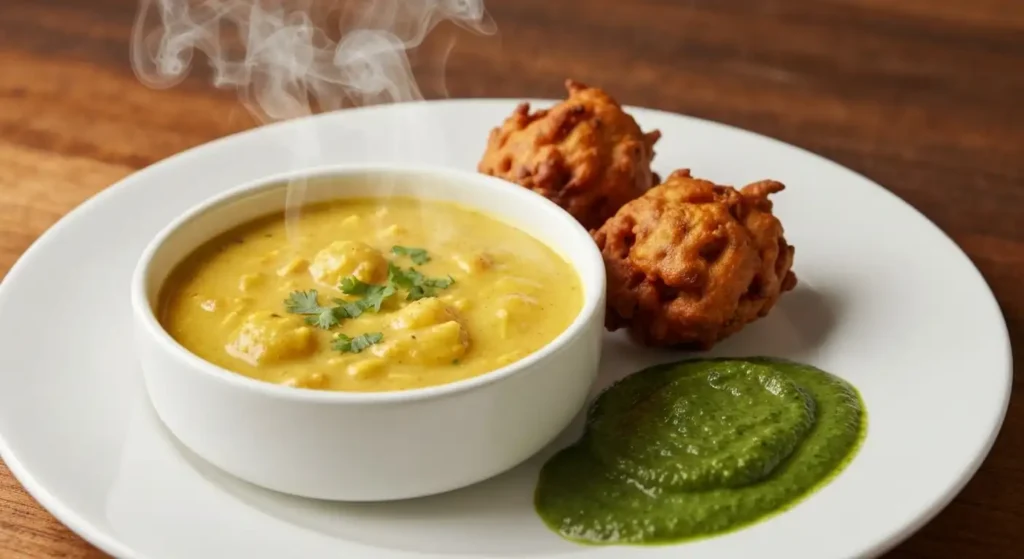
The word Kadhi comes from “Kadh” (to simmer or cook slowly), which perfectly describes the dish’s cooking style. Its roots lie in traditional Indian kitchens where yogurt (or buttermilk) and gram flour were staple ingredients, especially during summers when fresh milk would ferment easily.
- North Indian Kadhi (Punjab, Haryana, Rajasthan): Creamy, thick, and often made with deep-fried pakoras. It’s rich and indulgent, usually enjoyed with rice on weekends or special occasions.
- Gujarati Kadhi: Thinner in consistency, slightly sweetened with jaggery or sugar, and lighter on the stomach.
- Rajasthani Kadhi: Similar to Punjabi but sometimes spicier, with added red chilies and garlic tempering.
The addition of pakoras (fritters made from gram flour and onions/spinach) is believed to have originated in Punjab, giving the curry extra texture and making it more filling. Over time, Kadhi Pakora has become a symbol of home-style cooking—simple, budget-friendly, and comforting.
Ingredients for Kadhi Pakora
For the Kadhi (Curry)
- 2 cups yogurt (preferably slightly sour)
- 4 tablespoons gram flour (besan)
- 4 cups water
- 1 medium onion, finely chopped
- 2 green chilies, slit
- 1 tablespoon ginger-garlic paste
- 2 tablespoons oil or ghee
- ½ teaspoon turmeric powder
- 1 teaspoon red chili powder
- 1 teaspoon coriander powder
- Salt, to taste
For the Pakoras (Fritters)
- 1 cup gram flour (besan)
- 1 medium onion, thinly sliced (optional: spinach or fenugreek leaves)
- 1 teaspoon carom seeds (ajwain)
- ½ teaspoon turmeric powder
- 1 teaspoon red chili powder
- ½ teaspoon baking soda (optional, for fluffiness)
- Salt, to taste
- Water, as needed (to make a thick batter)
- Oil, for deep frying
For the Tempering (Tadka)
- 2 tablespoons ghee or oil
- 1 teaspoon cumin seeds
- ½ teaspoon mustard seeds
- 2 dried red chilies
- 8–10 curry leaves
- A pinch of asafoetida (hing)

Step-by-Step Preparation of Kadhi Pakora
Step 1: Prepare the Pakoras
- In a mixing bowl, combine gram flour, sliced onion, spices, and salt.
- Add water gradually to make a thick batter.
- Heat oil in a deep pan and drop spoonfuls of batter into hot oil.
- Fry until golden brown and crisp. Remove and set aside on paper towels.
Step 2: Prepare the Kadhi Base
- In another bowl, whisk yogurt, gram flour, turmeric, chili powder, and salt until smooth.
- Slowly add water, whisking continuously to avoid lumps.
Step 3: Cook the Kadhi
- Heat oil or ghee in a heavy-bottomed pot.
- Add onions, ginger-garlic paste, and green chilies. Sauté until onions turn golden.
- Pour in the yogurt-besan mixture, stirring constantly.
- Simmer on low heat for 30–40 minutes, stirring occasionally to prevent sticking. The kadhi will thicken as it cooks.
Step 4: Add Pakoras
- Gently drop the fried pakoras into the simmering kadhi.
- Cook for 5–10 minutes so they soak in the flavors.
Step 5: Prepare the Tempering
- Heat ghee in a small pan.
- Add cumin, mustard seeds, curry leaves, red chilies, and hing.
- Pour the sizzling tempering over the hot kadhi.
Step 6: Serve
Garnish with fresh coriander and serve hot with steamed rice, jeera rice, or roti.
Health Benefits of Kadhi Pakora
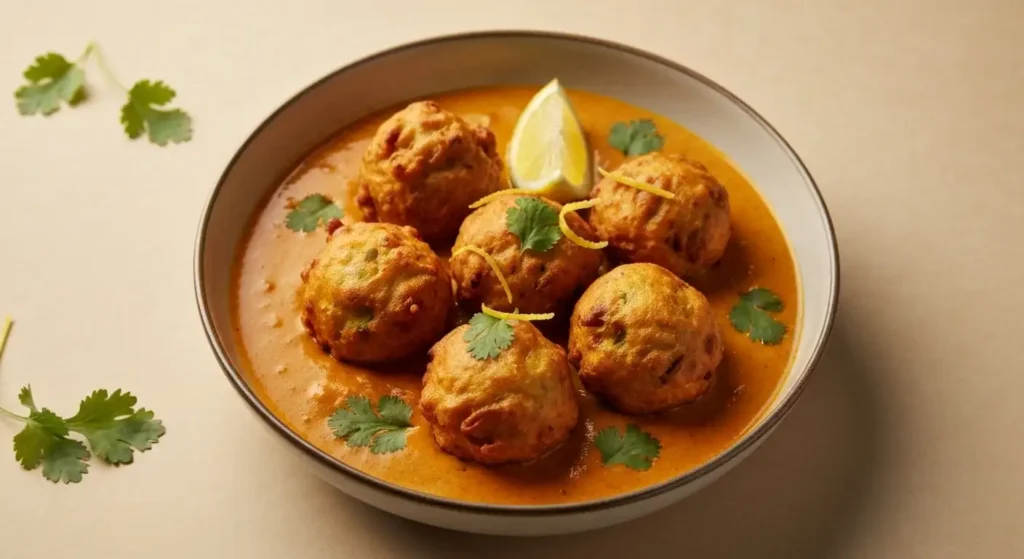
Though indulgent, Kadhi Pakora offers several nutritional benefits:
1. Probiotic Powerhouse
Yogurt provides probiotics, which aid digestion and improve gut health.
2. Rich in Protein
Gram flour (besan) is high in protein and fiber, making pakoras more filling and nutritious.
3. Supports Immunity
Turmeric, ginger, garlic, and chilies used in kadhi have anti-inflammatory and immunity-boosting properties.
4. Gluten-Free Option
Kadhi is naturally gluten-free since it uses gram flour instead of wheat flour.
5. Balanced Meal
When served with rice or chapati, Kadhi Pakora provides a wholesome mix of carbohydrates, protein, and fats.
Tips for the Perfect Kadhi Pakora
- Use slightly sour yogurt for authentic tangy flavor.
- Whisk thoroughly to avoid lumps in the yogurt-besan mixture.
- Simmer slowly—the longer it cooks, the richer the taste.
- Soak pakoras briefly in warm water before adding to kadhi for softer dumplings.
- Add a final tadka just before serving to enhance aroma and flavor.
Variations of Kadhi
- Gujarati Kadhi: Sweeter, thinner, with jaggery or sugar.
- Rajasthani Kadhi: Spicier, often with garlic and red chili tempering.
- Sindhi Kadhi: Made with tamarind and assorted vegetables.
- Kadhi without Pakora: A lighter, quick version for everyday meals.
Why Kadhi Pakora Is Comfort Food
Kadhi Pakora is more than just a curry—it’s nostalgia in a bowl. It reminds many of home-cooked Sunday lunches, rainy days, or festive family meals. Its balance of tangy, creamy curry with crunchy pakoras makes it both hearty and satisfying.
Conclusion
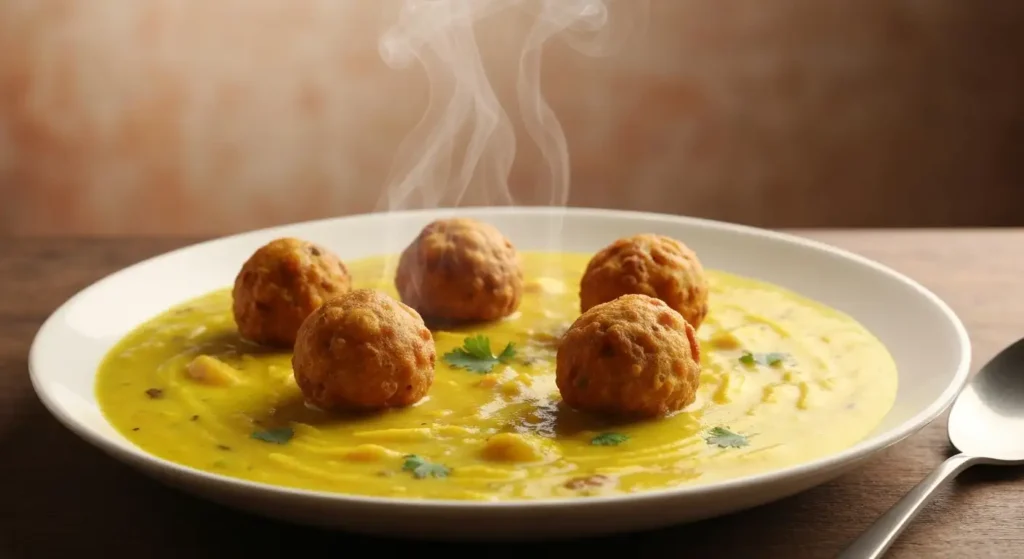
Kadhi Pakora is a dish that perfectly blends simplicity and indulgence. With its creamy yogurt base, hearty pakoras, and aromatic spices, it’s the ultimate Indian comfort food. Whether you make it the Punjabi way—rich and pakora-heavy—or the Gujarati way—light and slightly sweet—it never fails to warm both the stomach and the soul.
And if you’re looking for a creative pairing, try enjoying Kadhi Pakora with a slice of fresh sourdough bread. The tangy curry pairs beautifully with sourdough’s subtle acidity. Who knows—it may even inspire you to start baking sourdough yourself!
ready to publish?