
Table of Contents
Samosa – Deep-Fried Pastry Filled with Spiced Potatoes, Peas, or Meat
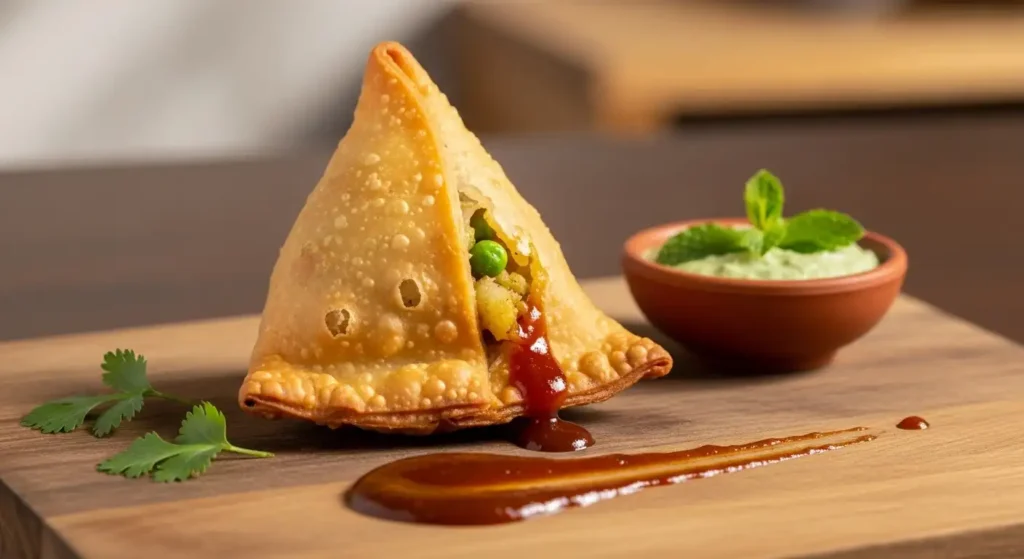
Few snacks in the world are as beloved and universally recognized as the samosa. Whether enjoyed as a street food treat, served at festivals, or paired with chai on a rainy day, this deep-fried pastry is a true symbol of Indian culinary creativity. Crisp on the outside and flavorful on the inside, samosas offer the perfect balance of texture and spice, making them irresistible to both children and adults alike.
In this blog post, we will explore the history of samosas, dive into the key ingredients, provide a step-by-step preparation guide, and highlight the health benefits of this popular snack. By the end, you’ll have all the knowledge you need to make authentic samosas at home.
History of Samosa
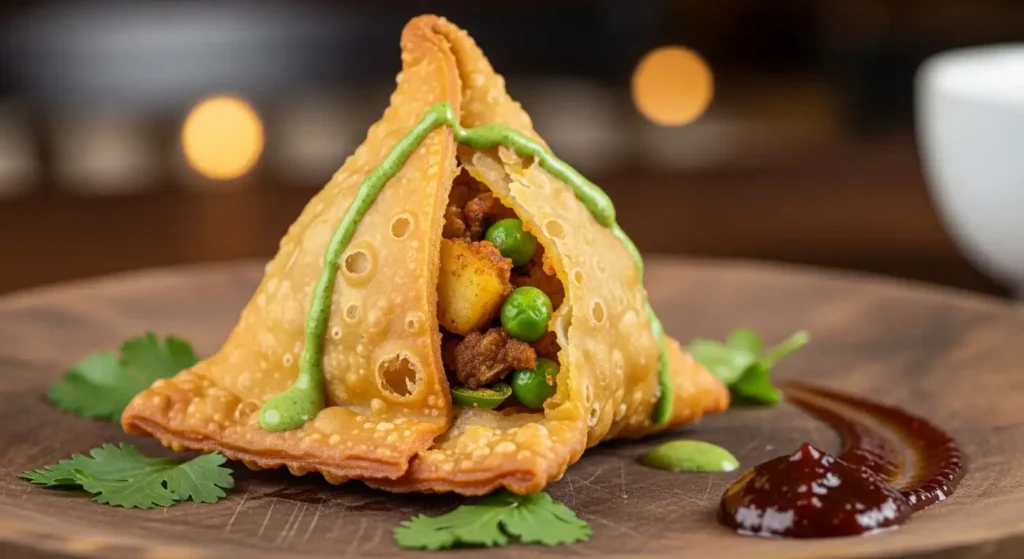
The origins of the samosa can be traced back to the Middle East and Central Asia, where triangular pastries filled with meat and nuts were common. Known as “sambusak” or “sanbusak”, these pastries traveled along trade routes to India in the medieval period.
- Arrival in India: During the Delhi Sultanate (13th–16th century), samosas were introduced as a street food delicacy. Local cooks adapted the recipes, substituting regional ingredients like potatoes, peas, and spices.
- Regional Variations: Over time, samosas evolved into various regional styles across India:
- North India: Spiced potatoes and peas wrapped in thin pastry, deep-fried to perfection.
- South India: Sometimes smaller, with a slightly spicier filling including curry leaves and mustard seeds.
- Other Parts of India: Some regions use lentils, paneer, or meat fillings, adjusting spice levels to taste.
Today, samosas are not only a staple of Indian cuisine but also popular worldwide, appearing in restaurants, tea stalls, and international street food festivals.
Ingredients for Samosa
Samosas are made up of two main components: the pastry and the filling. While variations exist, here’s a classic recipe for potato and pea samosas.
For the Pastry
- 2 cups all-purpose flour (maida)
- 4 tablespoons oil or ghee
- ½ teaspoon salt
- Water, as needed (to form a firm dough)
For the Filling
- 3 medium potatoes, boiled, peeled, and diced
- ½ cup green peas (fresh or frozen)
- 1 small onion, finely chopped (optional)
- 2 green chilies, finely chopped
- 1 teaspoon ginger-garlic paste
- 1 teaspoon cumin seeds
- 1 teaspoon coriander powder
- ½ teaspoon turmeric powder
- 1 teaspoon garam masala
- ½ teaspoon red chili powder (adjust to taste)
- Salt, to taste
- 2 tablespoons oil
- Fresh coriander leaves, chopped
For Frying
- Oil, enough for deep frying
Step-by-Step Preparation of Samosa
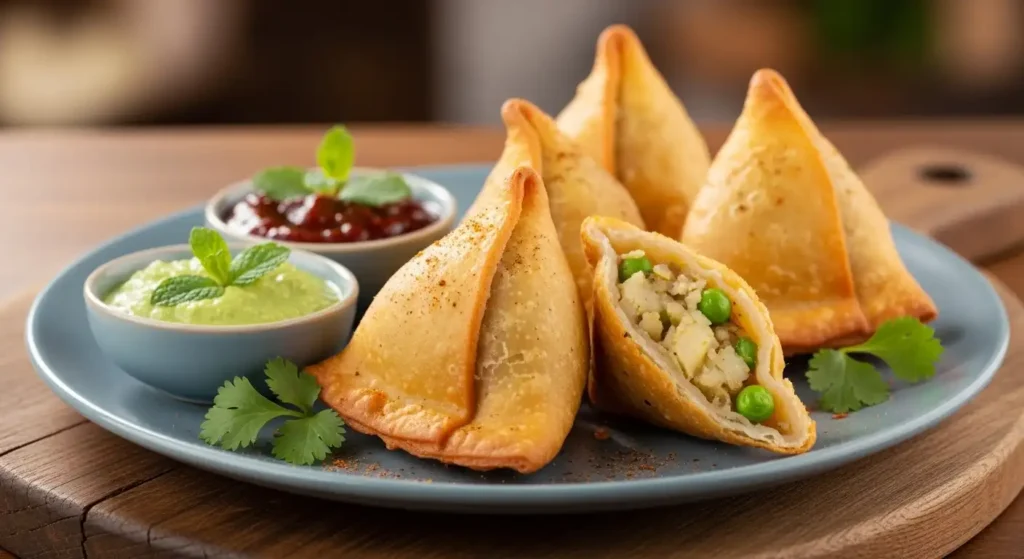
Making samosas at home may seem daunting at first, but with a clear step-by-step approach, it’s quite manageable.
Step 1: Prepare the Dough
- In a mixing bowl, combine flour and salt.
- Add oil or ghee and rub it into the flour until it resembles breadcrumbs.
- Gradually add water, a little at a time, and knead into a firm, smooth dough.
- Cover the dough with a damp cloth and let it rest for 30 minutes.
Step 2: Prepare the Filling
- Heat oil in a pan. Add cumin seeds and let them splutter.
- Add onions (if using), green chilies, and ginger-garlic paste. Sauté until onions are golden.
- Add turmeric, coriander powder, red chili powder, and salt. Mix well.
- Add boiled potatoes and green peas. Mash slightly while stirring to combine evenly.
- Add garam masala and chopped coriander leaves. Cook for 2–3 minutes. Remove from heat and let the filling cool.
Step 3: Shape the Samosas
- Divide the dough into small balls. Roll each ball into a thin oval or circle.
- Cut the rolled dough in half to form two semi-circles.
- Take one semi-circle, form a cone by bringing the straight edge corners together, and seal with a little water.
- Fill the cone with 1–2 tablespoons of filling.
- Fold the open edges and pinch them to seal tightly. Repeat for all dough balls.
Step 4: Fry the Samosas
- Heat oil in a deep frying pan over medium heat.
- Carefully slide the samosas into the hot oil.
- Fry until golden brown and crisp on all sides, turning occasionally for even cooking.
- Remove using a slotted spoon and drain on paper towels to remove excess oil.
Step 5: Serve
Samosas are best enjoyed hot, with:
- Tamarind chutney
- Mint-coriander chutney
- Yogurt dip
- Chai (spiced tea) for a classic Indian snack experience
Health Benefits of Samosa
While samosas are primarily an indulgent snack, they do have some nutritional benefits depending on the ingredients used and cooking method.
1. Provides Energy
The combination of potatoes, peas, and flour makes samosas rich in carbohydrates, providing a quick energy boost.
2. Source of Protein and Fiber
Green peas add protein and fiber, aiding digestion and helping maintain satiety.
3. Packed with Spices
Cumin, coriander, turmeric, and garam masala not only enhance flavor but also offer antioxidant and anti-inflammatory benefits.
4. Can Be Made Healthier
- Baking instead of deep-frying reduces fat content.
- Using whole wheat flour instead of all-purpose flour increases fiber.
- Adding more vegetables to the filling improves nutrition.
Tips for Perfect Samosas
- Don’t overfill: Overstuffing can cause samosas to break while frying.
- Seal edges properly: Use water to seal seams for crisp, intact samosas.
- Moderate oil temperature: Too hot, and samosas burn outside but remain raw inside; too low, and they absorb excess oil.
- Rest the dough: Resting makes it easier to roll and shape.
- Experiment with fillings: Paneer, lentils, chicken, or mixed vegetables can be used for variety.
Variations of Samosa
- Vegetable Samosa: Standard potato and pea filling.
- Keema Samosa: Minced meat filling, popular in North India and Pakistan.
- Paneer Samosa: Indian cottage cheese with spices for a vegetarian twist.
- Baked Samosa: Healthier version using whole wheat pastry, baked instead of fried.
- Sweet Samosa: Stuffed with jaggery, coconut, or dry fruits for dessert.
Why Samosas Are a Global Favorite
Samosas have transcended borders and are now enjoyed in Middle Eastern, African, and Western countries. Their portability, crisp texture, and versatile fillings make them ideal for snacks, appetizers, and street food. They are often served at festivals, tea parties, and gatherings, making them a universal crowd-pleaser.
Conclusion
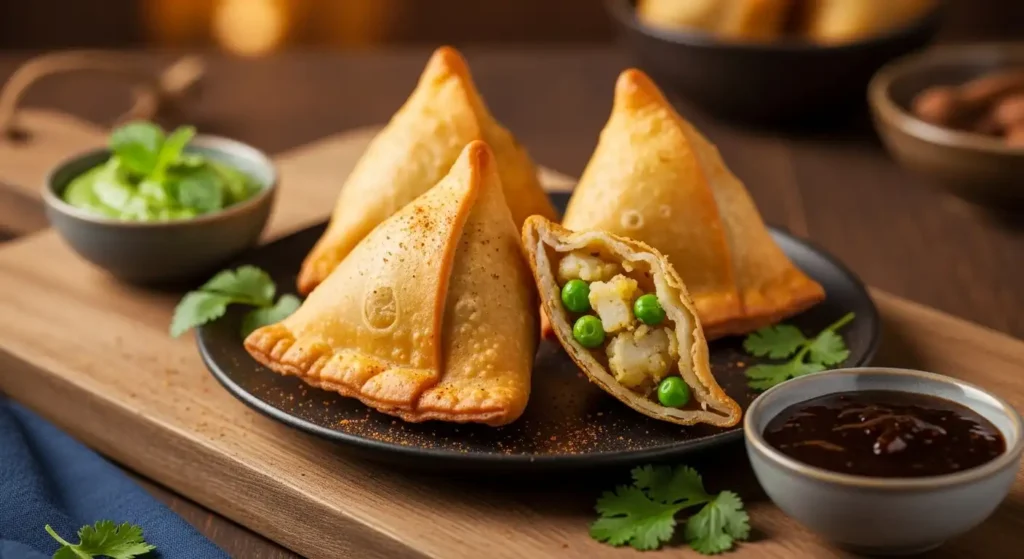
Samosa is more than just a snack—it’s a culinary icon that represents the perfect combination of crispy pastry and flavorful filling. Whether you stick to the classic potato and peas or experiment with meat or paneer, the joy of biting into a hot, fresh samosa is unmatched.
For an innovative twist, try pairing samosas with homemade sourdough bread or incorporating sourdough flour into the pastry. The subtle tang of sourdough complements the spiced filling beautifully and may inspire you to start your own sourdough baking adventure!