
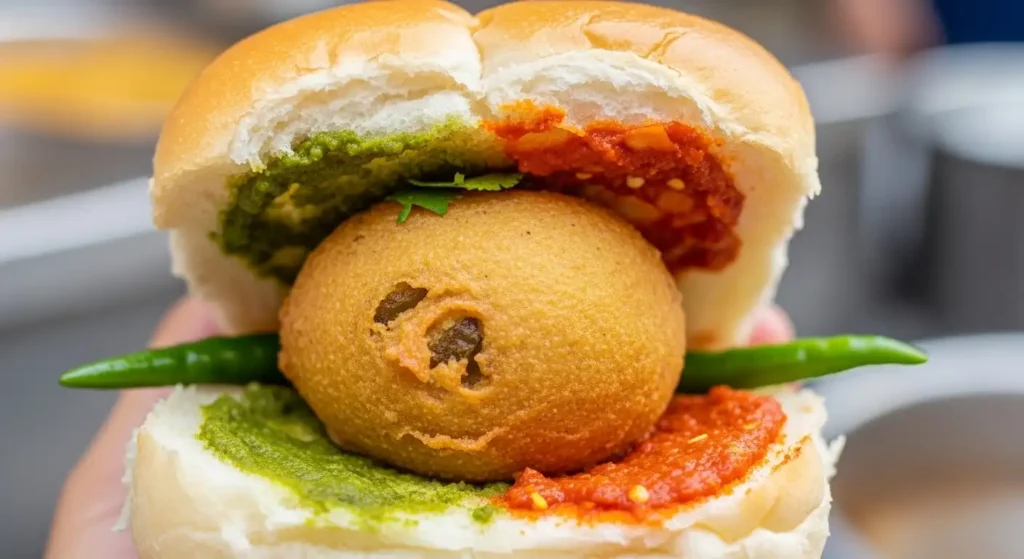
Vada Pav – Spiced Potato Fritter in a Bun, The Iconic Mumbai Street Snack
If there’s one dish that truly captures the vibrant street food culture of Mumbai, it has to be Vada Pav. Often called the Indian burger, Vada Pav features a crispy, spiced potato fritter (vada) sandwiched inside a soft bun (pav), usually served with tangy chutneys and fried green chilies. Affordable, filling, and delicious, this snack is a staple for commuters, students, and office-goers alike.
In this article, we will explore the history of Vada Pav, outline the ingredients, provide a step-by-step preparation guide, and highlight its health benefits. By the end, you’ll have all the knowledge you need to recreate Mumbai’s favorite street food at home.
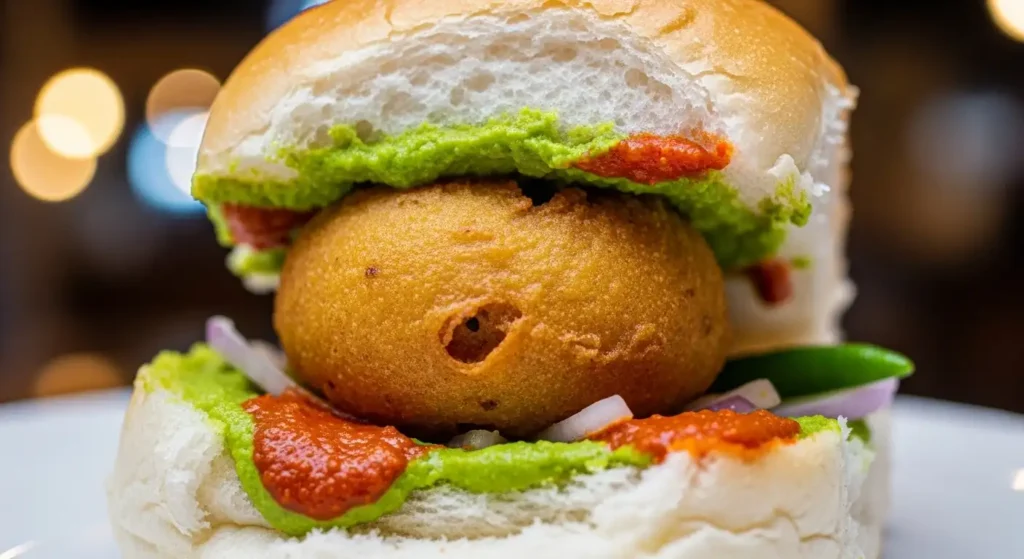
History of Vada Pav
Vada Pav is believed to have originated in the 1960s in Mumbai, created as an affordable and quick snack for the city’s working-class population. It combined the Portuguese-influenced pav (bread) introduced during colonial times with deep-fried potato vadas, flavored with Indian spices.
- Cultural Icon: Over time, Vada Pav became more than a snack; it is a symbol of Mumbai, sold at street stalls from CST to Dadar.
- Variations: Vendors added their twists, including different chutneys, fried chilies, and spicy masalas, creating unique regional flavors across the city.
- Global Recognition: Today, Vada Pav has gained popularity internationally as a vegetarian street food loved for its bold flavors and convenience.
Ingredients for Vada Pav
The dish consists of three main components: the vada (potato fritter), the pav (bun), and the chutneys.
For the Vada (Potato Fritter)
- 4 medium potatoes, boiled, peeled, and mashed
- 2 green chilies, finely chopped
- 1 teaspoon ginger-garlic paste
- 1 teaspoon mustard seeds
- 1 teaspoon turmeric powder
- 8–10 curry leaves
- Salt, to taste
- 2 tablespoons oil (for sautéing the masala)
For the Batter
- 1 cup gram flour (besan)
- ½ teaspoon turmeric powder
- A pinch of baking soda (optional, for fluffiness)
- Salt, to taste
- Water, as needed
For the Pav (Bun)
- 6–8 soft pav buns (available at Indian grocery stores or homemade)
For Chutneys
- Green Chutney: Coriander, mint, green chilies, lemon juice, salt
- Tamarind Chutney: Tamarind pulp, jaggery, red chili powder
- Garlic Chutney (optional): Dry garlic powder, red chili, coconut (regional variation)
For Frying
- Oil, enough for deep frying
Step-by-Step Preparation of Vada Pav
Step 1: Prepare the Potato Filling
- Heat 2 tablespoons oil in a pan.
- Add mustard seeds and let them splutter.
- Add curry leaves, green chilies, and ginger-garlic paste. Sauté for a minute.
- Add turmeric and salt.
- Stir in the mashed potatoes, mixing thoroughly until the spices coat the potatoes evenly.
- Cook for 3–4 minutes, then let it cool slightly. Form small round balls from the potato mixture.
Step 2: Prepare the Batter
- In a bowl, mix gram flour, turmeric, salt, and baking soda.
- Gradually add water to make a smooth, thick batter that can coat the potato balls.
Step 3: Fry the Vadas
- Heat oil in a deep pan over medium heat.
- Dip each potato ball in the batter, ensuring it is evenly coated.
- Carefully drop the coated balls into hot oil.
- Fry until golden brown and crisp, turning occasionally. Remove and drain on paper towels.
Step 4: Prepare the Chutneys
- Green Chutney: Blend coriander, mint, green chilies, lemon juice, and salt to a smooth paste.
- Tamarind Chutney: Cook tamarind pulp with jaggery, red chili powder, and salt until thick.
- Garlic Chutney: Mix dry garlic powder, chili powder, and coconut. Adjust spice to taste.
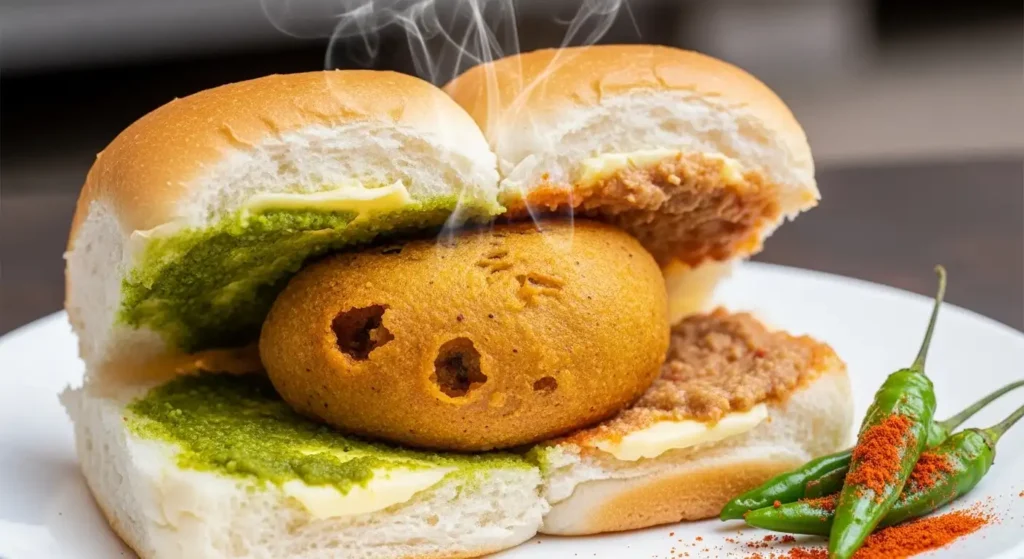
Step 5: Assemble the Vada Pav
- Slice the pav buns horizontally without cutting fully through.
- Spread chutney(s) generously on the inside of the buns.
- Place a hot vada inside each bun.
- Optional: Serve with fried green chilies for an authentic Mumbai street experience.
Health Benefits of Vada Pav
While Vada Pav is considered street food indulgence, it does offer some nutritional benefits when prepared thoughtfully.
1. Potatoes for Energy
Potatoes are rich in carbohydrates, providing quick energy for long workdays or travel.
2. Protein from Gram Flour
The gram flour batter used to coat the vadas is a source of plant-based protein.
3. Spices for Digestion
Ingredients like ginger, garlic, curry leaves, and chilies help boost digestion and add antioxidant properties.
4. Can Be Made Healthier
- Baking the vadas instead of deep-frying reduces oil content.
- Using whole wheat or multigrain pav increases fiber.
- Adding extra vegetables like peas or carrots to the potato mixture enhances nutrition.
Tips for Perfect Vada Pav
- Moderate Oil Temperature: Frying at medium heat ensures vadas cook through without burning.
- Crispy Vadas: Coat potato balls evenly in batter for uniform crispiness.
- Fresh Pav: Soft, fresh buns complement the spicy filling better than stale ones.
- Customize Chutneys: Adjust spice levels to your preference; some like it fiery, others mild.
- Serve Immediately: Vada Pav tastes best hot, straight from the pan to the bun.
Variations of Vada Pav
- Cheese Vada Pav: Add a slice of cheese inside the bun for a melty surprise.
- Paneer Vada Pav: Use spiced paneer with potato for extra protein.
- Baked Vada Pav: For a healthier version, bake the vadas instead of deep-frying.
- Special Chutney Vada Pav: Experiment with peanut, coconut, or sesame chutneys.
Why Vada Pav Is a Cultural Icon
Vada Pav is more than just food—it is a symbol of Mumbai’s fast-paced life and culinary ingenuity. Affordable, filling, and flavorful, it is a snack that crosses socio-economic barriers and is loved by people of all ages. Its influence has spread worldwide, appearing in Indian restaurants and fusion menus, yet the essence of street food remains unmatched.
Conclusion
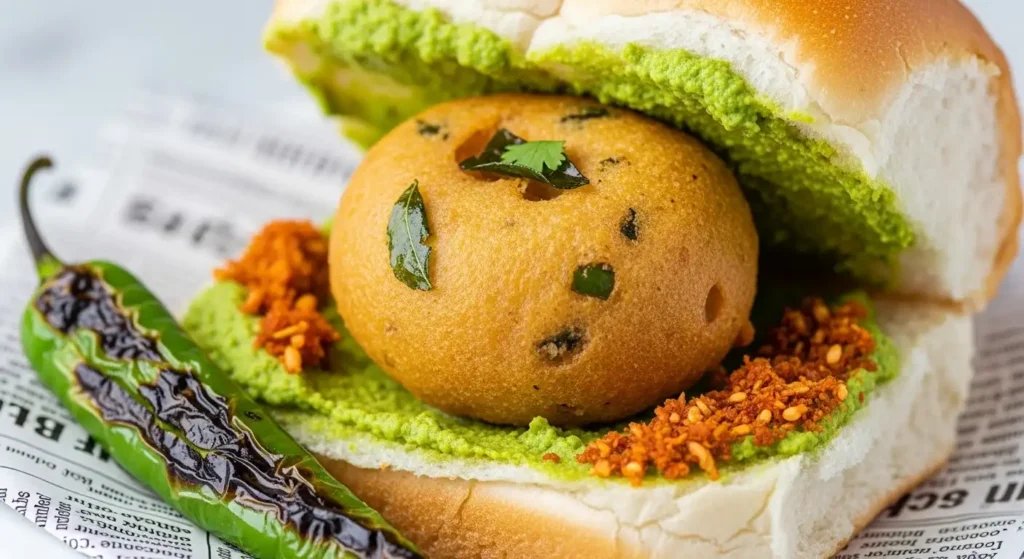
Vada Pav is a snack that perfectly balances flavor, texture, and convenience. The combination of a crisp potato vada, spicy chutneys, and a soft pav makes it irresistible. Whether you enjoy it as a midday snack, a party appetizer, or a street food indulgence, Vada Pav represents the heart of Mumbai on a plate.
For a creative twist, serve your vadas inside homemade sourdough buns. The tangy sourdough perfectly complements the spicy filling and may inspire you to try sourdough baking yourself, blending traditional street food with artisanal bread-making.