
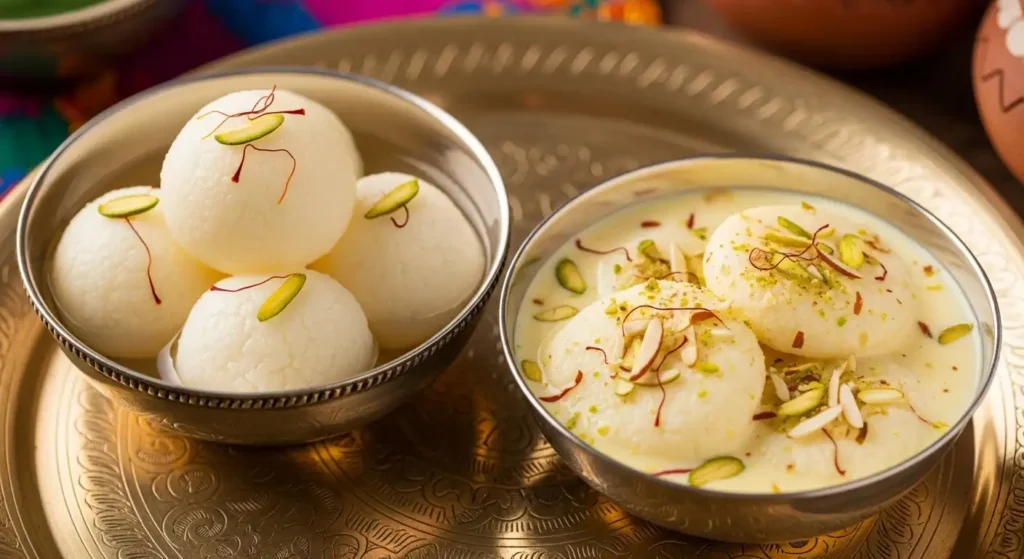
Rasgulla & Rasmalai – Soft, Syrupy, and Creamy Indian Sweets
Introduction
Indian sweets are celebrated worldwide for their rich flavors, textures, and cultural significance, and among them, Rasgulla and Rasmalai hold a special place. These soft, spongy, and syrup-soaked delights are staples at festivals, weddings, and family gatherings, embodying the warmth and tradition of Indian cuisine.
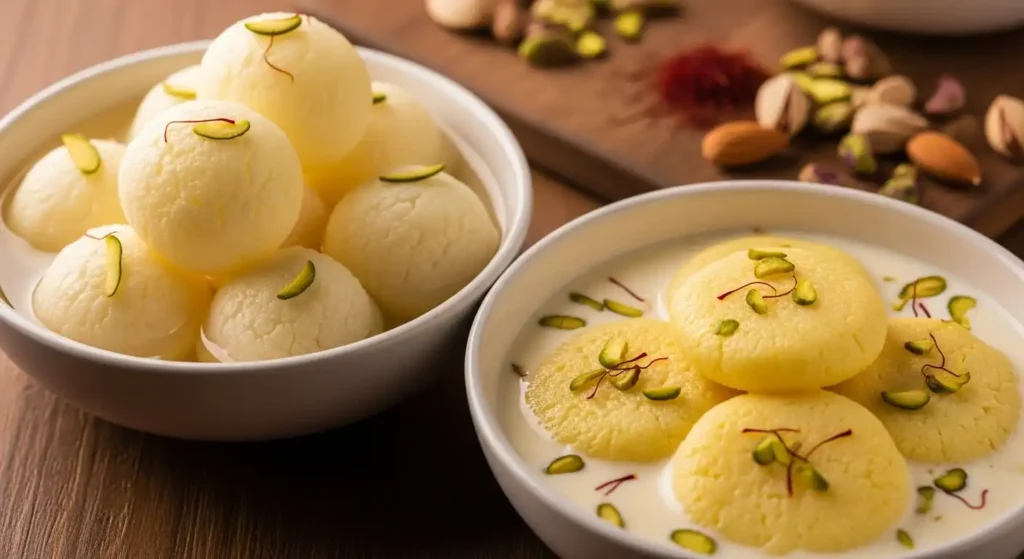
Rasgulla consists of soft cheese balls soaked in light sugar syrup, offering a melt-in-the-mouth experience. Its cousin, Rasmalai, takes this indulgence further by soaking the cheese balls in thickened, aromatic milk flavored with cardamom and saffron. Together, they represent the artistry of Indian sweets, combining simplicity with richness, and are beloved across generations.
In this guide, we’ll explore the history of Rasgulla and Rasmalai, outline the ingredients, walk you through step-by-step preparation, and discuss their health benefits. By the end, you’ll have everything needed to recreate these iconic desserts at home.

History of Rasgulla and Rasmalai
Rasgulla
The origin of Rasgulla is often debated between the Indian states of West Bengal and Odisha. It is traditionally made from chhena (fresh cheese) and semolina, kneaded into smooth balls and boiled in sugar syrup until soft and spongy.

Rasgulla became widely popular in the 19th century, with sweet makers in Kolkata (West Bengal) refining the recipe. Its light, syrupy texture and delicate sweetness made it a favorite for festivals like Durga Puja.
Rasmalai
Rasmalai is considered a variation of Rasgulla, where the cheese balls are soaked in thickened milk (rabri) flavored with cardamom, saffron, and nuts. This dessert originated in Bengal and is believed to have been created as an upscale version of Rasgulla for festive occasions and royal feasts.
Over time, both Rasgulla and Rasmalai have become household favorites across India, appearing on dessert platters during Diwali, Eid, and wedding celebrations, and are now enjoyed globally in Indian restaurants.
Ingredients for Rasgulla & Rasmalai
For the Chhena (Cheese Balls):
- 1 liter full-fat milk
- 2–3 tablespoons lemon juice or vinegar (for curdling milk)
- 2 tablespoons semolina (sooji)
- ¼ teaspoon cardamom powder (optional)
For the Sugar Syrup (Rasgulla):
- 2 cups sugar
- 4 cups water
- 1 teaspoon rose water (optional)
For the Milk Base (Rasmalai):
- 2 cups full-fat milk
- 2–3 tablespoons sugar (adjust to taste)
- ¼ teaspoon cardamom powder
- A few strands of saffron
- Chopped pistachios or almonds for garnish
Step-by-Step Preparation
Step 1: Prepare Chhena (Fresh Cheese)
- Boil the milk in a heavy-bottomed pan, stirring occasionally to prevent burning.
- Once it reaches a boil, add lemon juice or vinegar gradually to curdle the milk.
- Turn off the heat when the whey separates.
- Strain the curdled milk through a muslin cloth or fine sieve.
- Rinse the curds with cold water to remove residual acidity.
- Squeeze out excess water and knead the chhena with semolina until smooth and pliable.
Step 2: Shape the Cheese Balls
- Divide the kneaded chhena into small portions.
- Roll them into smooth, crack-free balls, slightly smaller than the desired final size, as they expand while cooking.
Step 3: Prepare Sugar Syrup
- In a large pan, combine sugar and water and bring to a boil.
- Add rose water if desired.
- Lower the flame to medium and gently add the chhena balls.
- Cover and cook for 15–20 minutes, ensuring the balls expand and absorb the syrup.
- Remove from heat and let them cool in the syrup for Rasgulla.
Step 4: Prepare Milk Base for Rasmalai
- Boil milk in a heavy-bottomed pan, stirring occasionally.
- Simmer until the milk reduces by about half, thickening into rabri.
- Add sugar, saffron, and cardamom powder. Stir well.
- Let the milk cool slightly before adding the Rasgulla balls.
- Soak the cheese balls in the milk base for at least 30 minutes to absorb flavors.
- Garnish with chopped pistachios or almonds before serving.
Step 5: Serve
- Serve Rasgulla chilled or at room temperature, straight from the sugar syrup.
- Serve Rasmalai chilled, making it a luxurious dessert perfect for celebrations.
Health Benefits of Rasgulla & Rasmalai
While these desserts are indulgent, they offer some nutritional benefits when enjoyed in moderation:
- Rich Source of Protein
Chhena is high in protein, supporting muscle health and satiety. - Calcium for Bone Health
Full-fat milk provides calcium and other essential minerals beneficial for bones and teeth. - Energy Boost
Sugar provides quick energy, making these sweets a festive treat or post-fasting snack. - Digestive Spices
Cardamom and saffron in Rasmalai aid digestion and provide antioxidants. - Mood-Enhancing Dessert
Sweets like Rasgulla and Rasmalai trigger the release of endorphins, creating feelings of happiness and comfort.
Tip: Enjoy these desserts occasionally and in small portions for a healthy balance. You can also experiment with low-fat milk or natural sweeteners to make lighter versions.
Tips for Perfect Rasgulla & Rasmalai
- Smooth Chhena: Knead well to ensure the cheese balls are smooth and free of cracks.
- Low Heat Cooking: Cook Rasgulla on medium heat to prevent them from collapsing or sticking.
- Proper Sugar Syrup Consistency: A light syrup works best for Rasgulla, while Rasmalai uses thickened milk for soaking.
- Uniform Balls: Ensures even cooking and visually appealing presentation.
- Garnishing: Chopped nuts not only enhance flavor but also add a delightful crunch.

Conclusion
Rasgulla and Rasmalai are timeless examples of the elegance and richness of Indian desserts. Their soft, spongy texture and aromatic flavors make them a must-have for celebrations, festivals, and special occasions.
Making these sweets at home may seem challenging, but with patience and attention to detail, the result is rewarding. Much like sourdough baking, preparing Rasgulla and Rasmalai teaches you the art of patience, fermentation, and precise cooking techniques.
So, gather your ingredients, knead the chhena with care, boil the syrup and milk patiently, and create these exquisite, melt-in-the-mouth desserts. With each bite, you’re not just enjoying a sweet—you’re savoring a piece of Indian culinary tradition.