
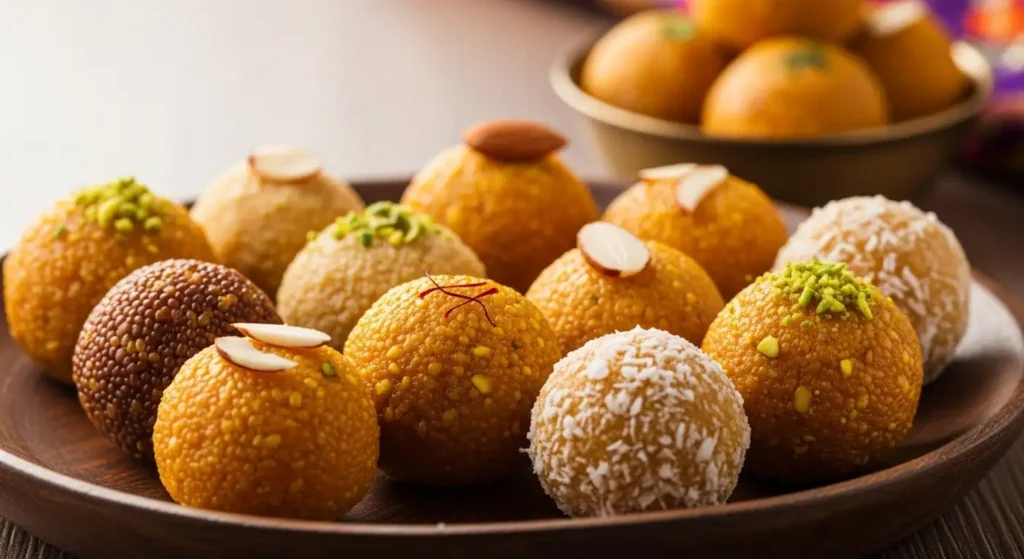
Ladoo / Laddu – The Sweet Sphere of Indian Celebrations
Table of Contents
Introduction
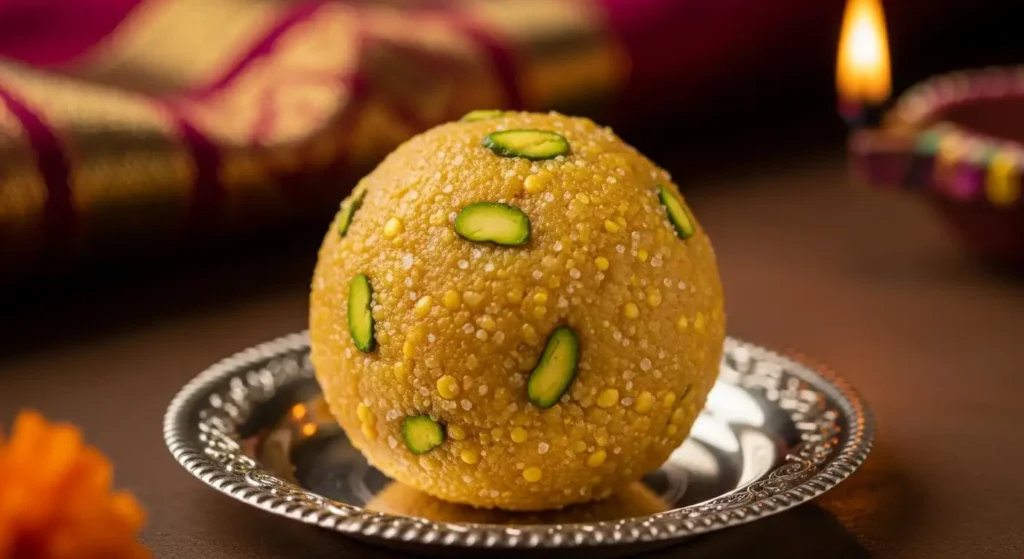
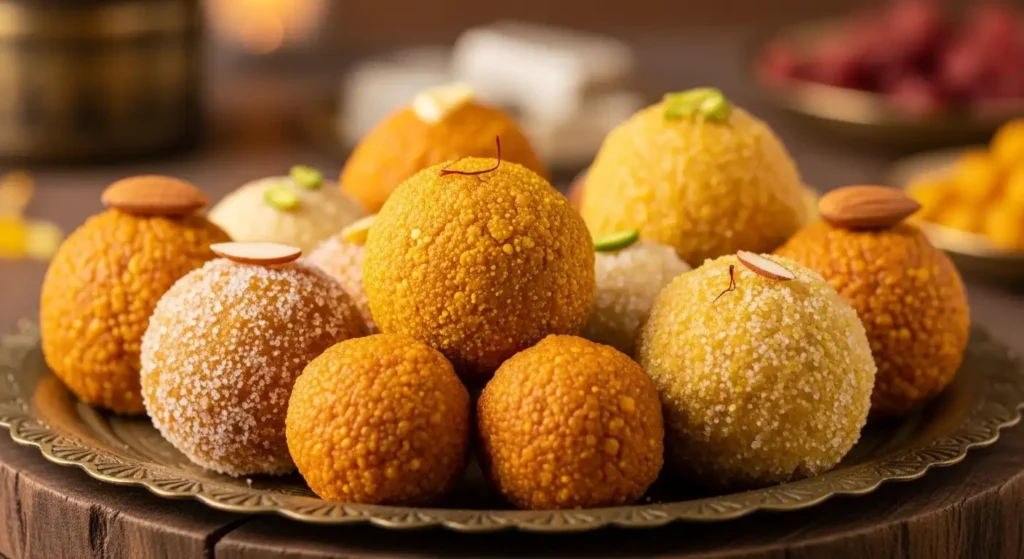
Few Indian sweets carry the warmth, tradition, and festivity of Ladoo (or Laddu). These small, round, bite-sized treats are not only delicious but also a symbol of celebration, offering, and togetherness. Whether it’s a wedding, festival, religious ceremony, or a simple family gathering, Ladoo finds its way onto the dessert table.
Made from a variety of ingredients such as gram flour (besan), semolina (sooji), coconut, or lentils, combined with ghee and sugar, Ladoo is both indulgent and wholesome. Often garnished with nuts and flavored with cardamom or saffron, these sweet spheres provide a rich texture and aromatic flavor that makes them irresistible.
In this article, we’ll explore the history of Ladoo, essential ingredients, provide a step-by-step preparation guide, and discuss its health benefits. By the end, you’ll have everything needed to make this iconic Indian sweet at home.
History of Ladoo
Ladoo has been a part of Indian culinary tradition for centuries, with roots tracing back to ancient texts that mention sweet balls made from cereals, lentils, and sugar as offerings to deities. They were not only consumed as festive treats but also considered sacred offerings during pujas and rituals.
Over time, Ladoo evolved into various regional forms across India:
- Besan Ladoo (North India): Made with gram flour, ghee, and sugar, often flavored with cardamom and garnished with nuts.
- Motichoor Ladoo (North India): Tiny chickpea flour balls fried and soaked in sugar syrup, then pressed into spheres.
- Coconut Ladoo (South India): Made with grated coconut, jaggery, and milk, often enjoyed during Onam and other festivals.
- Rava / Suji Ladoo: Made from semolina and sugar, flavored with cardamom, common during Diwali.
Ladoo’s versatility and simplicity have made it a popular sweet not only in homes but also in sweet shops, street vendors, and restaurants across India. Its enduring appeal lies in its ability to adapt to regional ingredients while maintaining a consistent, beloved form.
Ingredients for Ladoo / Laddu
The ingredients vary slightly depending on the type of Ladoo you are making. Here’s a basic set for besan and motichoor Ladoo, two of the most popular variants:
For Besan Ladoo:
- 1 cup gram flour (besan)
- ½ cup ghee (clarified butter)
- ¾ cup powdered sugar
- ¼ teaspoon cardamom powder
- 2 tablespoons chopped nuts (almonds, cashews, pistachios)
For Motichoor Ladoo:
- 1 cup gram flour (besan)
- ¼ cup water
- 1 ½ cups sugar
- ½ teaspoon cardamom powder
- ¼ teaspoon saffron strands (optional)
- 2 tablespoons ghee or oil
- Chopped nuts for garnish
Optional Variations:
- Coconut Ladoo: Replace gram flour with grated coconut and use jaggery instead of sugar.
- Rava / Suji Ladoo: Use semolina roasted in ghee, sweetened with sugar, and flavored with cardamom.
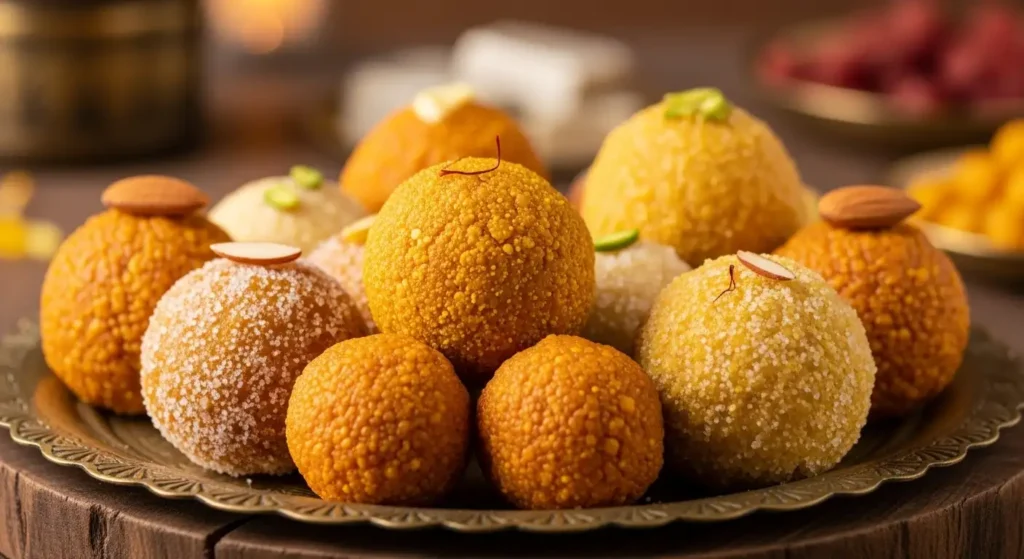
Step-by-Step Preparation
Besan Ladoo
Step 1: Roast the Gram Flour
- Heat ghee in a heavy-bottomed pan over low heat.
- Add gram flour and roast on low heat for 10–15 minutes until it turns golden brown and emits a nutty aroma.
- Stir continuously to prevent burning.
Step 2: Add Sugar and Flavoring
- Remove the roasted gram flour from heat and let it cool slightly.
- Add powdered sugar and cardamom powder. Mix well.
- Incorporate chopped nuts for added texture.
Step 3: Shape the Ladoo
- While the mixture is slightly warm, take small portions and roll into smooth balls using your palms.
- Let them cool completely. Store in an airtight container for up to 2 weeks.
Motichoor Ladoo
Step 1: Prepare the Batter
- Mix gram flour with water to form a smooth, flowing batter.
- Ensure no lumps are present for fine, soft balls.
Step 2: Fry Tiny Boondi Balls
- Heat ghee or oil in a deep pan.
- Using a perforated spoon or boondi ladle, drop tiny droplets of batter into hot oil.
- Fry until golden and crisp. Drain excess oil.
Step 3: Prepare Sugar Syrup
- Boil sugar and water to form a one-string syrup.
- Add cardamom powder and saffron strands.
Step 4: Mix Boondi with Syrup
- Immediately transfer fried boondi into warm sugar syrup.
- Let it soak for 5–10 minutes until fully absorbed.
Step 5: Shape the Ladoo
- Remove the syrup-soaked boondi and gently press small portions into round balls using your palms.
- Garnish with chopped nuts. Cool completely before serving.
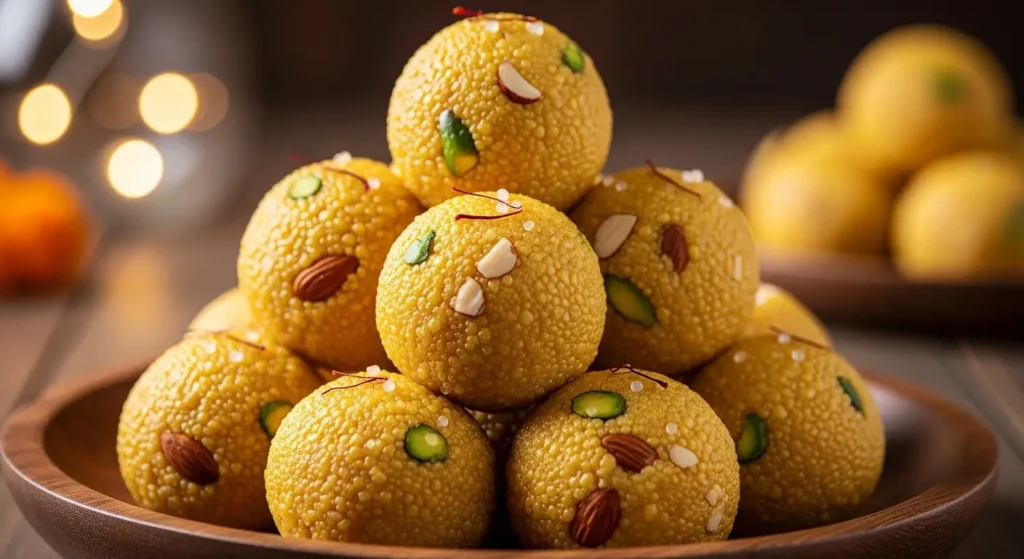
Health Benefits of Ladoo / Laddu
While Ladoo is primarily a festive treat, it also offers certain nutritional benefits:
- Energy Booster
Made from ghee, sugar, and gram flour, Ladoo provides quick energy, making it ideal for festive occasions or post-fasting nourishment. - Rich in Protein
Gram flour and lentil-based ladoos offer plant-based protein, supporting muscle health and satiety. - Contains Healthy Fats
Ghee supplies healthy fats and conjugated linoleic acid (CLA), which may support digestion and overall well-being. - Nutrient-Dense Nuts
Almonds, cashews, and pistachios contribute essential vitamins, minerals, and fiber. - Customizable for Healthier Versions
- Use jaggery instead of refined sugar for a low-glycemic alternative.
- Replace some ghee with coconut oil for a lighter version.
- Add oats or millets to enhance fiber content.
Tip: Enjoy Ladoo in moderation as part of a balanced diet to appreciate both its taste and nutritional benefits.
Tips for Perfect Ladoo / Laddu
- Even Roasting: For besan ladoo, roast flour slowly on low heat to avoid burning and to achieve a nutty flavor.
- Uniform Size: Ensures even presentation and consistent taste in each bite.
- Syrup Consistency: For motichoor ladoo, sugar syrup should be one-string consistency to bind the boondi properly.
- Cool Slightly Before Shaping: Avoid burns and ensure the mixture binds well.
- Garnish Creatively: Use edible silver leaves (varak), chopped nuts, or dried rose petals for festive occasions.
Regional Variations to Explore
- North India: Besan and motichoor ladoos dominate festivals like Diwali and Ganesh Chaturthi.
- South India: Coconut and rava ladoos are common during Onam and other regional festivals.
- Maharashtra: Tilgul ladoos made from sesame seeds and jaggery are prepared during Makar Sankranti.
- Bengal: Narkel ladoo, made from coconut and khoya, is popular during Durga Puja.
Each region adapts the basic concept of Ladoo to local ingredients, making it a versatile and culturally rich dessert.
Conclusion
Ladoo / Laddu is more than just a sweet—it’s a symbol of celebration, tradition, and togetherness. From the nutty aroma of besan roasted in ghee to the golden, syrup-soaked motichoor balls, each bite offers a taste of Indian culture and festivity.
Making Ladoo at home requires patience, attention to detail, and a love for the craft—much like sourdough baking. The process of roasting, mixing, frying, and shaping teaches culinary mindfulness and rewards you with a delicious, aromatic sweet that’s perfect for any celebration.
So gather your ingredients, embrace the sweet ritual, and create homemade Ladoos that will delight your family, friends, and guests. Each handcrafted sphere is not just a dessert—it’s a bite of Indian heritage, joy, and festivity.