
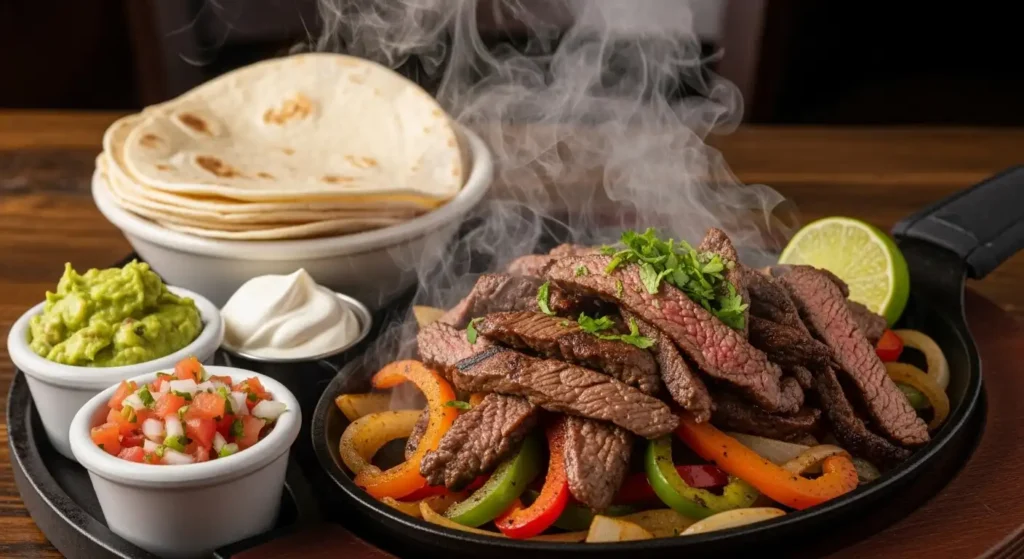
Fajitas – The Sizzling Mexican-Grilled Classic
Table of Contents
Introduction
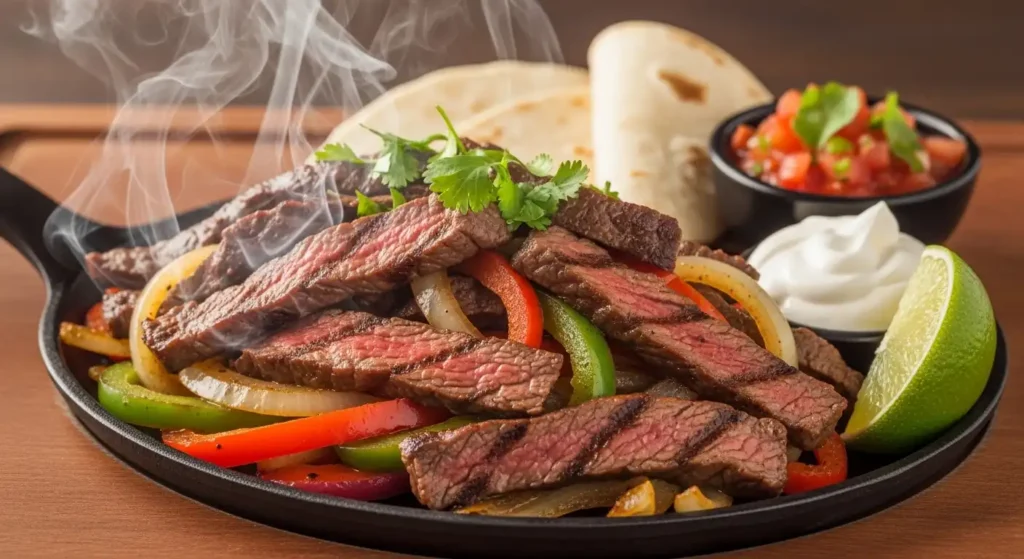
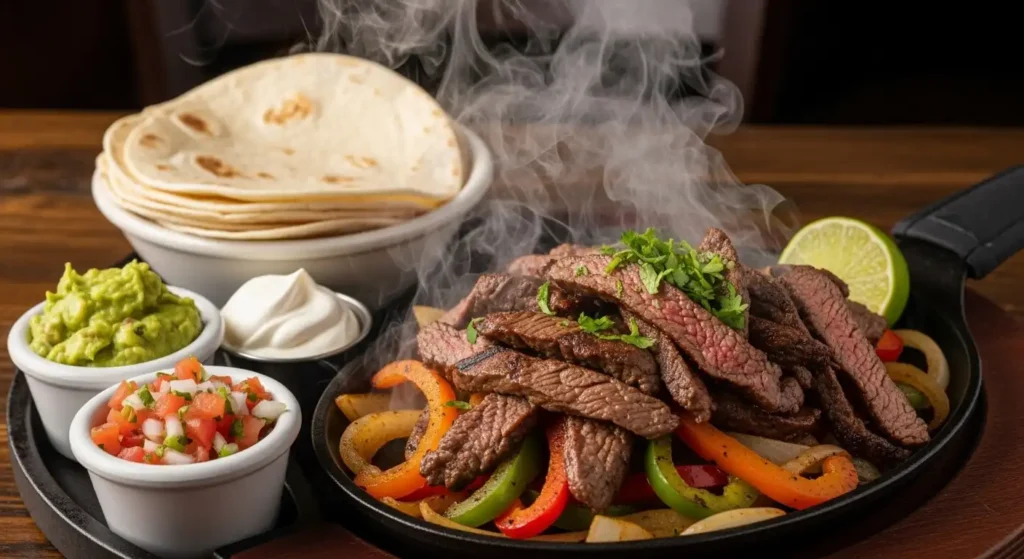
Few dishes capture the excitement of a sizzling skillet quite like fajitas. Imagine perfectly grilled strips of marinated meat, cooked alongside vibrant onions and bell peppers, served with warm tortillas ready to wrap up a bite of deliciousness. Fajitas have become a staple in Mexican-American cuisine, beloved for their flavor, versatility, and interactive presentation.
What makes fajitas so special is not just the taste—it’s the experience. Cooking them on a hot skillet or grill creates the signature sizzle that fills the kitchen with mouthwatering aromas. Guests can assemble their own tacos, adding toppings like guacamole, salsa, or cheese, making fajitas a fun, customizable meal for family dinners, parties, or casual gatherings.
In this article, we’ll explore the history of fajitas, the essential ingredients, a step-by-step preparation guide, and the health benefits of this iconic dish. Whether you’re a seasoned home cook or just starting, this guide will help you make fajitas that are flavorful, authentic, and satisfying.
A Brief History of Fajitas
Fajitas have their roots in Tex-Mex cuisine, which blends Mexican culinary traditions with influences from Texas. The term “fajita” comes from the Spanish word faja, meaning “belt” or “strip,” referring to the cut of meat originally used—typically skirt steak, which is a thin, flavorful cut.
Historically, fajitas were associated with Mexican cowboys, or vaqueros, who worked on ranches in Texas. They often received the less desirable cuts of meat as part of their pay. Rather than letting the meat go to waste, they marinated it, grilled it over open flames, and served it with tortillas, creating a simple but delicious meal.
By the 1970s and 1980s, fajitas became popular in restaurants across Texas and eventually spread nationwide. Today, fajitas are enjoyed with a variety of proteins—beef, chicken, shrimp, and even vegetarian options like portobello mushrooms or tofu—while retaining their sizzling, interactive appeal.
Ingredients for Fajitas
Fajitas are loved for their simplicity and bold flavors. The combination of marinated meat, sautéed vegetables, and warm tortillas allows for endless variations.
Essential Ingredients
- Meat – Skirt steak, flank steak, chicken breast, or shrimp.
- Bell peppers – Red, yellow, and green peppers for sweetness and crunch.
- Onions – Sliced for caramelized flavor and texture.
- Marinade – A mix of lime juice, garlic, olive oil, chili powder, cumin, paprika, and salt.
- Tortillas – Corn or flour, lightly warmed for wrapping.
Optional Toppings
- Salsa or pico de gallo
- Guacamole or sliced avocado
- Sour cream or crema
- Shredded cheese
- Jalapeños or hot sauce
- Fresh cilantro and lime wedges
These ingredients make fajitas both nutritionally balanced and flavorful, while offering room for personal customization.
Step-by-Step Preparation of Fajitas
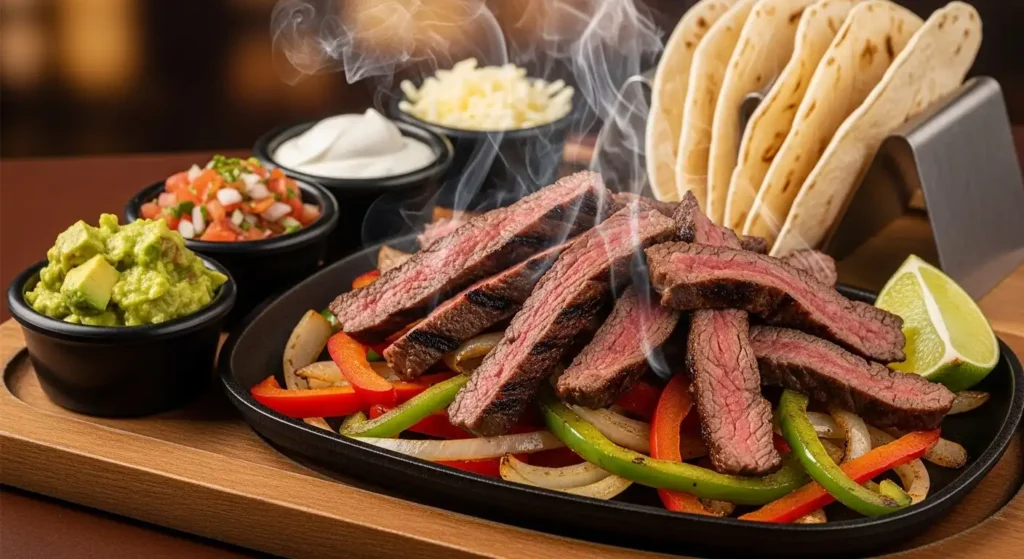
Fajitas may seem restaurant-worthy, but with the right approach, they’re simple to make at home.
Step 1: Prepare the Meat and Marinade
- Slice your protein into thin strips for quick, even cooking.
- In a bowl, combine lime juice, olive oil, minced garlic, chili powder, cumin, paprika, and salt.
- Add the meat and toss to coat. Marinate for at least 30 minutes (or up to 2 hours) in the refrigerator.
Step 2: Slice Vegetables
- Slice bell peppers and onions into thin strips.
- Keep vegetables uniform for even cooking.
Step 3: Cook the Meat
- Heat a skillet or grill over medium-high heat.
- Add the marinated meat and cook for 4–6 minutes, stirring occasionally until fully cooked and slightly charred.
- Remove meat from the pan and set aside.
Step 4: Sauté the Vegetables
- In the same skillet, add a touch of oil if needed.
- Cook bell peppers and onions for 3–5 minutes until tender-crisp and slightly caramelized.
Step 5: Combine and Serve
- Return the cooked meat to the skillet with the vegetables, tossing gently to mix.
- Serve immediately with warm tortillas and your choice of toppings.
Tip: For an extra touch of flavor, you can serve fajitas on a sizzling hot cast-iron skillet, just like in restaurants.
Health Benefits of Fajitas
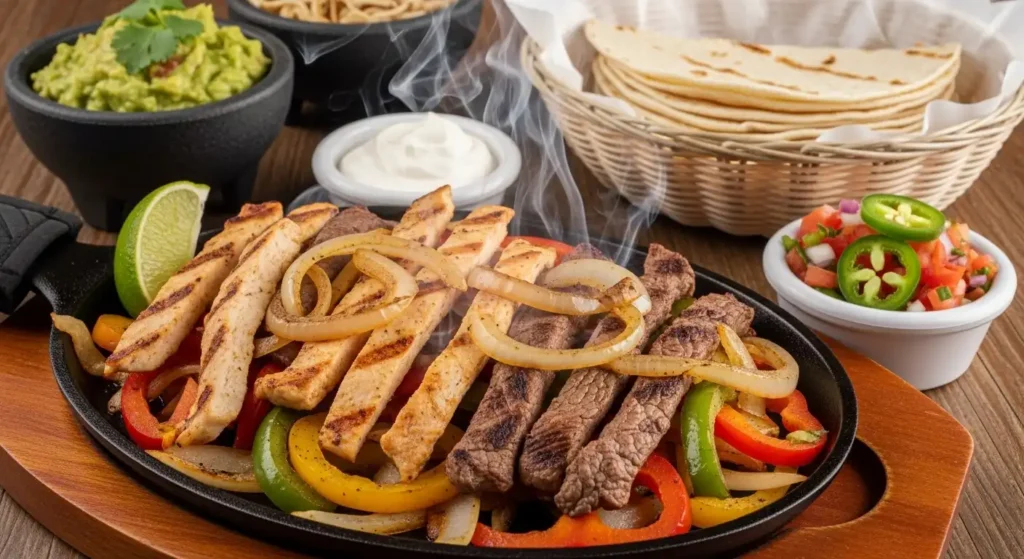
Fajitas are not just delicious—they also offer several nutritional advantages, especially when prepared with lean proteins and fresh vegetables.
1. High in Protein
Beef, chicken, and shrimp are excellent sources of protein, essential for muscle repair and satiety.
2. Rich in Vitamins and Minerals
Bell peppers, onions, and lime provide vitamin C, antioxidants, and potassium, supporting overall health.
3. Balanced with Healthy Fats
Using olive oil or avocado as part of the toppings adds heart-healthy monounsaturated fats.
4. Fiber from Vegetables and Tortillas
Vegetables and whole-grain tortillas contribute fiber, helping digestion and maintaining fullness.
5. Customizable for Dietary Needs
Fajitas can easily be adapted to low-carb, gluten-free, or vegetarian diets without losing their signature flavor.
Conclusion
Fajitas are more than just grilled meat and vegetables—they are a celebration of flavor, color, and community. From humble ranch origins to sizzling restaurant tables, fajitas have earned their place as a beloved dish worldwide.
Making fajitas at home allows you to control the ingredients, seasoning, and level of spice, ensuring a meal that’s both delicious and nutritious. And for a creative twist, try serving fajitas with homemade sourdough tortillas or bread. The tangy chewiness of sourdough pairs beautifully with smoky, marinated meat and caramelized vegetables, elevating this classic dish into something extraordinary.
So fire up your skillet or grill, gather your favorite toppings, and bring the sizzling flavors of fajitas into your kitchen today. With a little effort and creativity, you’ll have a meal that’s flavorful, fun, and truly unforgettable.