

French Toast (Pain Perdu): A Timeless Breakfast Favorite
Introduction
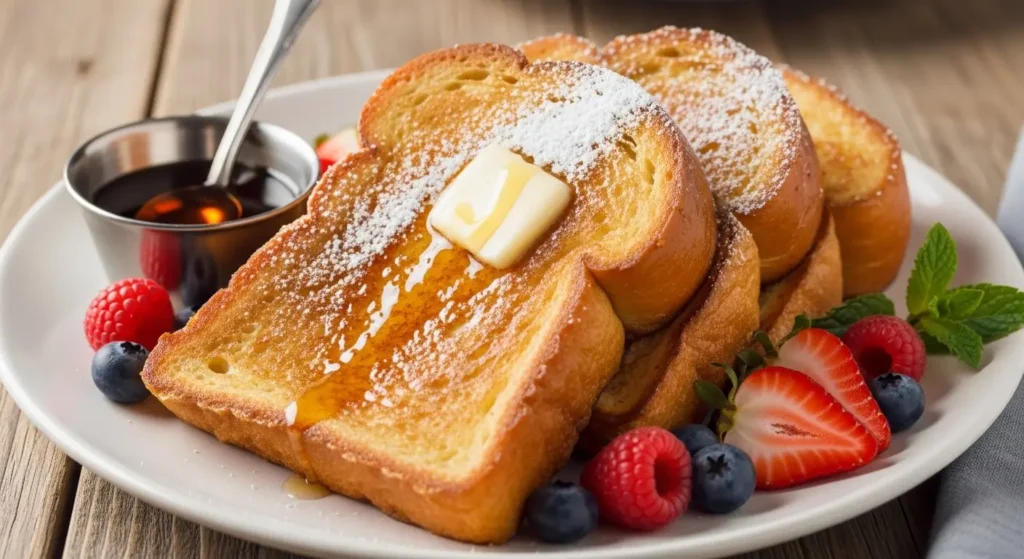
Few breakfasts are as universally loved as French Toast, known in its homeland as Pain Perdu, which translates to “lost bread.” Golden, custardy slices of bread soaked in a rich mixture of eggs and milk, then pan-fried until crisp on the outside and soft on the inside—it’s pure comfort food.
Whether topped with powdered sugar, drizzled with maple syrup, or served with fresh fruit, French Toast is one of those recipes that feels both nostalgic and endlessly versatile. The best part? It’s surprisingly easy to make, even for beginners.
In this article, we’ll take a closer look at the history of Pain Perdu, break down the essential ingredients, walk through a step-by-step recipe, and highlight some health benefits. By the end, you’ll feel ready to whip up your own French Toast—and maybe even try it with a slice of homemade sourdough.
A Brief History of French Toast (Pain Perdu)
Despite its name, French Toast did not actually originate in France. Versions of bread soaked in eggs and milk date back to ancient Rome. A Roman cookbook from the 4th or 5th century, Apicius, includes a recipe for bread dipped in milk and fried—remarkably similar to what we call French Toast today.
The dish evolved throughout Europe. In France, it became known as Pain Perdu, or “lost bread,” because it was traditionally made with stale or leftover bread that would otherwise go to waste. The custard mixture brought life back to the bread, transforming it into something indulgent.
In the United States, French Toast became especially popular in the 17th and 18th centuries, when European settlers brought the tradition with them. Today, it’s enjoyed worldwide, often customized with local ingredients and toppings.
So while French Toast may not be exclusively French, its spirit of transforming simple, humble ingredients into something delicious is very much in line with French culinary philosophy.
Key Ingredients for Classic French Toast
You don’t need many ingredients to make authentic French Toast, but each one plays an important role in creating the perfect balance of flavor and texture.
1. Bread
The foundation of French Toast is, of course, bread. Traditionally, stale bread was used, but for best results today, choose:
- Brioche – rich, buttery, and soft.
- Challah – slightly sweet and perfect for soaking.
- Sourdough – adds a tangy twist and hearty texture.
- Thick-cut white bread – simple and classic.
2. Eggs
Eggs create the custard base, providing structure and richness.
3. Milk or Cream
Whole milk is standard, but using a bit of heavy cream creates an even silkier texture. Plant-based alternatives like almond or oat milk also work well.
4. Sweetener
A touch of sugar, honey, or maple syrup enhances the custard.
5. Flavorings
- Vanilla extract – adds warmth and sweetness.
- Cinnamon or nutmeg – optional, but classic for spiced French Toast.
6. Butter
For frying the bread to golden perfection.
7. Toppings (Optional)
French Toast is endlessly customizable. Popular options include:
- Fresh berries
- Maple syrup
- Powdered sugar
- Whipped cream
- Nut butters
Step-by-Step Preparation of French Toast
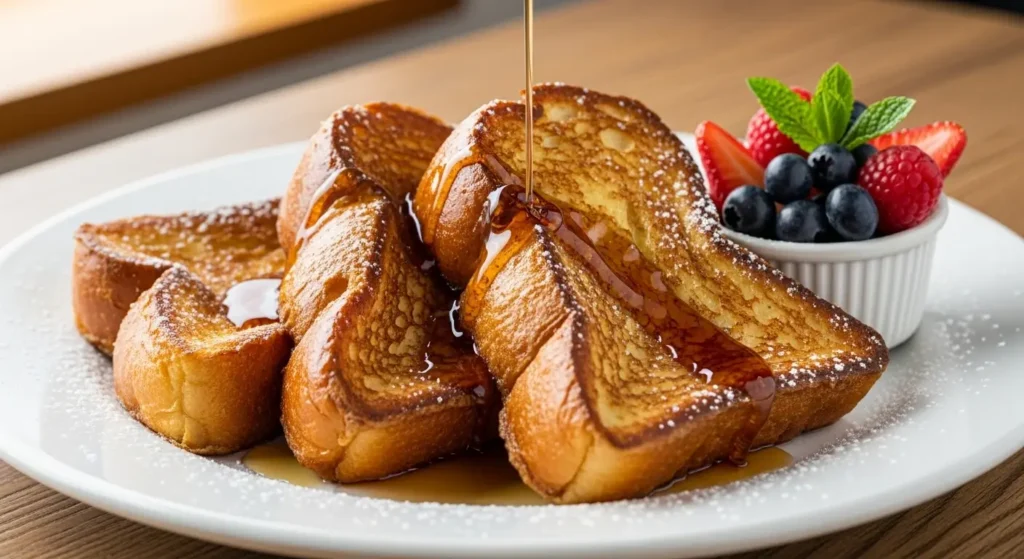
Here’s a simple, foolproof method for making French Toast at home:
Step 1: Prepare the Custard
- In a shallow bowl, whisk together 2–3 eggs, ¾ cup of milk (or half milk, half cream), 1 tablespoon sugar, 1 teaspoon vanilla extract, and a pinch of cinnamon.
- Whisk until well combined and smooth.
Step 2: Prepare the Bread
- Slice your bread into thick slices (about 1-inch). Slightly stale bread works best, as it absorbs the custard without falling apart.
Step 3: Soak the Bread
- Dip each slice of bread into the custard mixture.
- Let it soak for about 20–30 seconds per side, ensuring it absorbs enough liquid without becoming soggy.
Step 4: Heat the Pan
- Heat a large skillet or griddle over medium heat.
- Add a small knob of butter, letting it melt and coat the surface.
Step 5: Cook the French Toast
- Place the soaked bread slices onto the hot pan.
- Cook for 2–3 minutes per side, until golden brown and slightly crisp.
- Repeat with remaining slices, adding more butter as needed.
Step 6: Serve and Enjoy
- Plate the French Toast while warm.
- Add toppings of your choice: maple syrup, powdered sugar, fresh fruit, or a dollop of whipped cream.
Health Benefits of French Toast
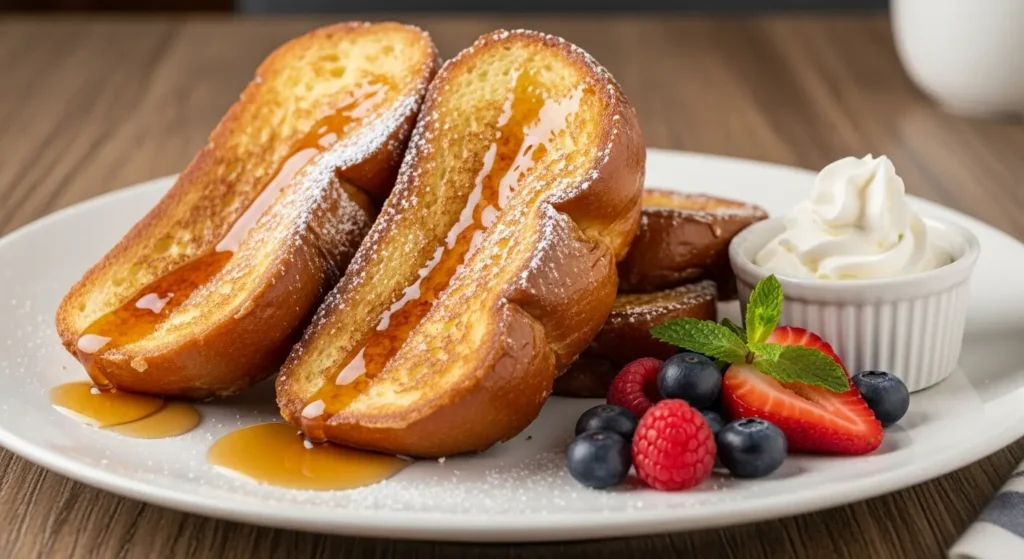
Though French Toast is often seen as a treat, it does offer some nutritional benefits when prepared thoughtfully.
1. Good Source of Protein
Eggs provide high-quality protein, supporting muscle repair and satiety.
2. Energy-Rich Carbohydrates
Bread provides carbohydrates, which give your body quick energy—perfect for starting the day.
3. Nutrient-Dense Toppings
Adding fresh fruit (like berries or bananas) boosts vitamins, fiber, and antioxidants.
4. Customizable for Healthier Versions
You can use whole-grain bread, low-fat milk, or natural sweeteners like honey to make French Toast more nutritious.
5. Portion Control and Balance
When enjoyed in moderation and paired with a balanced side—like yogurt, fruit, or a handful of nuts—French Toast can be part of a wholesome breakfast.
Tips for Making the Best French Toast
- Use stale bread – It absorbs custard better without falling apart.
- Don’t oversoak – A quick soak ensures the bread is moist but not mushy.
- Cook low and slow – Medium heat prevents burning while allowing the custard to cook through.
- Experiment with flavors – Try orange zest, cardamom, or nutmeg for creative twists.
- Pair wisely – Serve with fresh fruit or sourdough bread-based toppings for a nutritious balance.

Conclusion
French Toast, or Pain Perdu, is a dish that proves you don’t need fancy ingredients to create something memorable. Born from the idea of rescuing stale bread, it has become a beloved breakfast staple worldwide. Its versatility—whether enjoyed simply with powdered sugar or elevated with fruit, nuts, and cream—makes it a recipe worth mastering.
And here’s a delicious thought: why not try making French Toast with homemade sourdough bread? The tangy flavor and hearty texture of sourdough bring a whole new dimension to this classic dish. Plus, baking your own bread is a rewarding skill that complements the art of cooking beautifully.
So, next time you’re craving comfort in the morning, whip up a batch of French Toast and consider starting your own sourdough baking journey. You’ll have a breakfast that’s not just delicious, but also made with love and creativity.
Bon appétit—and happy sourdough baking!