

Massaman Curry (แกงมัสมั่น): Thailand’s Comforting, Aromatic Curry
Table of Contents
Introduction
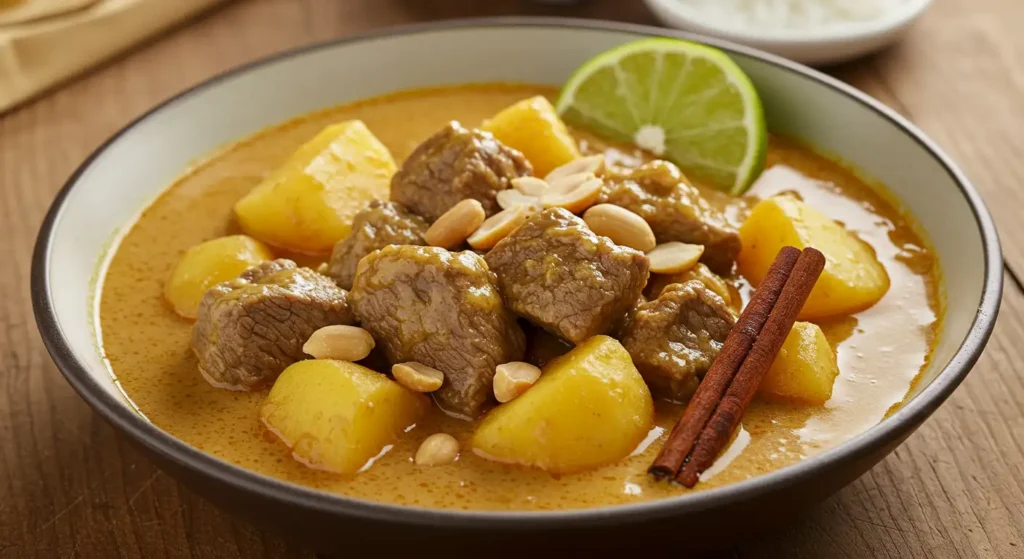
If Thai cuisine is a dance of flavors, then Massaman Cyumcrazyurry (แกงมัสมั่น) is its slow, soulful waltz. Unlike the fiery green or red curries Thailand is famous for, Massaman is gentle yet deeply aromatic—rich with spices, creamy coconut milk, and tender meat that melts in your mouth.

This curry isn’t just food; it’s comfort in a bowl. Warm, nutty, slightly sweet, and infused with flavors from both Thai and Persian culinary traditions, Massaman Curry has earned a reputation as one of the world’s most delicious dishes.
In this guide, we’ll explore the history, ingredients, step-by-step preparation, and health benefits of Massaman Curry. Whether you’re a home cook or simply a lover of Thai food, you’ll come away with both an appreciation of its roots and the confidence to try it yourself.
History of Massaman Curry
A Fusion of Cultures
The word Massaman is thought to come from Musulman, the old word for Muslim. This curry’s roots trace back to the Persian and Indian traders who traveled to Thailand (then Siam) centuries ago, bringing with them spices like cardamom, cinnamon, cumin, and cloves.
Unlike other Thai curries that rely heavily on local herbs, Massaman embraced these imported spices, blending them with Thai staples like lemongrass, galangal, and shrimp paste. The result was a curry unlike any other in Southeast Asia.
Royal Connections
Historical records suggest that King Rama II (early 19th century) praised Massaman Curry in poetry, cementing its reputation as a dish fit for royalty. From palaces to family kitchens, it became a beloved symbol of cross-cultural harmony in Thai cooking.
Modern Popularity
Today, Massaman Curry is often considered Thailand’s most “international” curry because of its mellow heat and universally appealing flavor. It frequently ranks on global lists of “the world’s most delicious foods.”
Essential Ingredients for Massaman Curry
Massaman Curry requires a combination of spices, herbs, coconut milk, and hearty ingredients that together create its unmistakable flavor.
The Massaman Curry Paste
A well-made curry paste is the heart of this dish. Traditionally pounded by hand in a mortar, it contains both Thai aromatics and Middle Eastern/Indian spices.
- Dried red chilies – mild heat and deep color
- Shallots and garlic – sweet, earthy base
- Lemongrass – citrusy freshness
- Galangal – warm, peppery note
- Kaffir lime peel – floral citrus aroma
- Coriander seeds – nutty depth
- Cumin seeds – earthy balance
- Cinnamon – sweet spice warmth
- Cardamom – fragrant and exotic
- Cloves – subtle sweetness
- Nutmeg – gentle richness
- Shrimp paste – umami depth
(Tip: Store-bought Massaman curry paste is convenient, but homemade paste brings unmatched freshness.)
Main Curry Ingredients
- Coconut milk: Creates the creamy, luscious base.
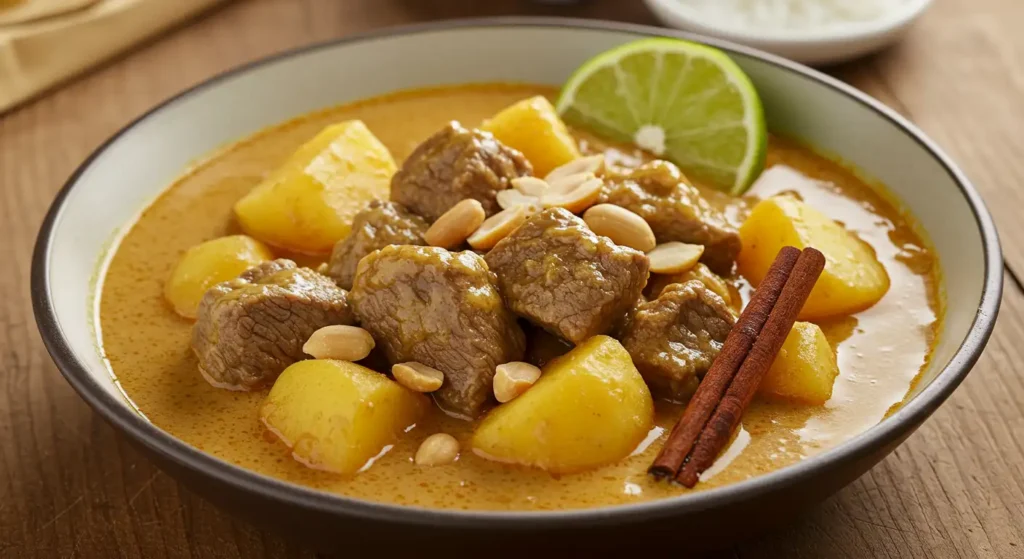
- Meat (beef, chicken, or lamb): Slow-cooked until tender.
- Potatoes: Soak up the curry’s flavor and add body.
- Onions: Sweetness that balances the spices.
- Roasted peanuts or cashews: Signature nutty crunch.
- Tamarind paste: Adds a tangy sourness.
- Palm sugar: Natural sweetness.
- Fish sauce: Salty depth and umami.
- Bay leaves: Herbal fragrance.
Step-by-Step Preparation of Massaman Curry
Cooking Massaman Curry is an act of patience and love. Unlike quick stir-fries, this curry simmers slowly, allowing flavors to mingle and deepen.
Step 1: Make (or Prepare) the Curry Paste
- Toast spices (coriander, cumin, cinnamon, cloves, cardamom, nutmeg) in a dry pan until fragrant.
- Grind with soaked dried chilies, lemongrass, galangal, shallots, garlic, and shrimp paste.
- Pound into a smooth, aromatic paste.
(Skip this step if using ready-made curry paste.)
Step 2: Simmer the Coconut Milk
- Heat a wok or deep pan.
- Add 1 cup of thick coconut cream (the top layer from the can).
- Stir in 3–4 tablespoons of curry paste and fry until the oil separates and the aroma fills your kitchen.
Step 3: Cook the Meat
- Add your chosen protein (beef is traditional, but chicken and lamb are common).
- Stir to coat with the paste.
- Sear lightly before adding liquids.
Step 4: Build the Curry
- Pour in the rest of the coconut milk and 1–2 cups of water or stock.
- Add potatoes, onions, and bay leaves.
- Simmer on low heat for 30–60 minutes, until the meat is fork-tender and the potatoes are soft.
Step 5: Balance the Flavors
- Stir in tamarind paste (for sourness), palm sugar (for sweetness), and fish sauce (for saltiness).
- Taste and adjust—Massaman should be mild, slightly sweet, tangy, and deeply aromatic.
Step 6: Add Nuts and Serve
- Add roasted peanuts or cashews just before serving for crunch and nuttiness.
- Garnish with fresh herbs if desired.
- Serve with steamed jasmine rice or roti bread.
Health Benefits of Massaman Curry
Though rich and hearty, Massaman Curry has several healthful qualities thanks to its spice blend and fresh ingredients.
1. Anti-Inflammatory Properties
- Cinnamon, cloves, and cardamom contain compounds that reduce inflammation and support joint health.
2. Heart Health
- Peanuts and cashews provide healthy fats and plant-based protein.
- Coconut milk, when enjoyed in moderation, offers medium-chain triglycerides (MCTs), which may support energy metabolism.
3. Rich in Antioxidants
- Spices like cumin, coriander, and nutmeg are loaded with antioxidants that help protect cells from damage.
4. Good Source of Energy
- The combination of protein, healthy fats, and carbohydrates (potatoes and rice) makes it a balanced, filling meal.
5. Digestive Benefits
- Lemongrass, galangal, and tamarind aid digestion and ease bloating.
Tips for Perfecting Massaman Curry at Home
- Low and slow cooking is key. Don’t rush—Massaman tastes best when simmered until the meat and potatoes are tender.
- Balance the flavors. Too sour? Add palm sugar. Too sweet? Add tamarind. Too salty? Add a splash of coconut milk.
- Make it vegetarian. Swap meat for tofu or chickpeas and use soy sauce instead of fish sauce.
- Next-day magic. Like many curries, Massaman often tastes even better the next day as the flavors deepen.
- Pair wisely. Serve with jasmine rice for a classic touch or flatbreads like roti for dipping.
Conclusion
Massaman Curry (แกงมัสมั่น) is more than just a dish—it’s a story of cultural exchange, patience, and comfort. With its mellow spices, creamy coconut milk, and tender chunks of meat and potatoes, it’s no wonder this curry is often called the “gentle giant” of Thai cuisine.
Cooking it at home may take time, but the reward is a pot of curry that brings people together around the table. Much like learning the art of sourdough baking, preparing Massaman Curry invites you to slow down, experiment, and savor the journey.
So, gather your spices, simmer your coconut milk, and let the rich aromas fill your kitchen. Your Massaman Curry adventure awaits!