
Paella: Spain’s Iconic Rice Dish That Captures the Taste of Tradition
Table of Contents
Introduction
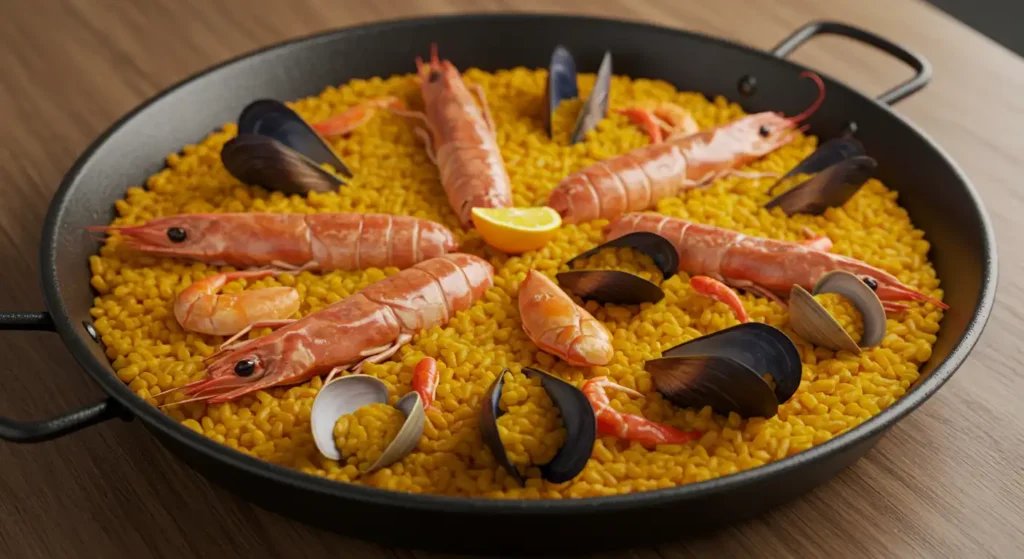
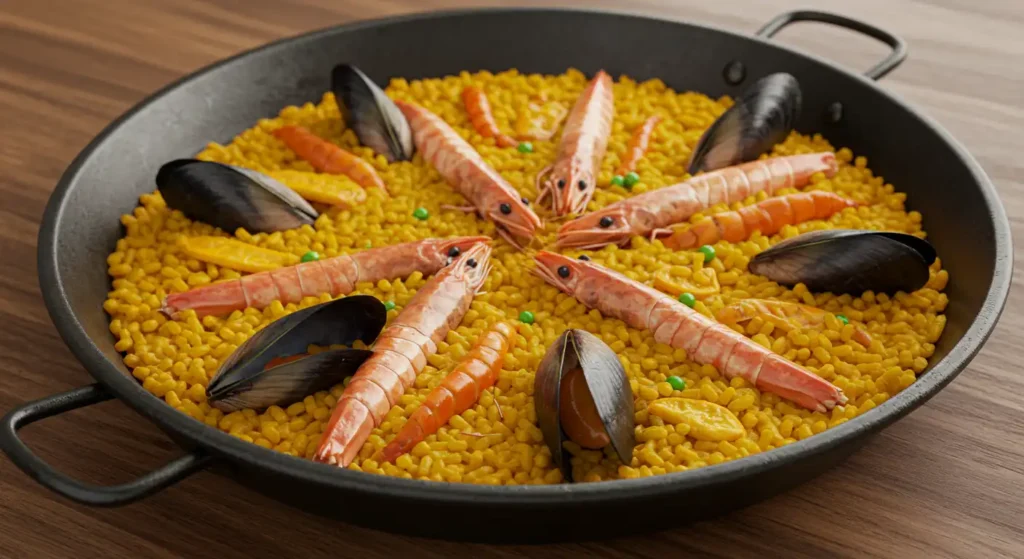
Few dishes capture the heart of Spain quite like Paella. With its golden saffron-tinted rice, fresh seafood, tender meats, and a medley of vegetables, paella is more than just a meal—it’s an experience. Originating in Valencia, this vibrant dish has become a symbol of Spanish cuisine, enjoyed worldwide for its bold flavors, rich textures, and festive presentation.
Whether you’re strolling through the streets of Valencia, sharing a large paella pan at a family gathering, or preparing it at home for the first time, paella has a magical way of bringing people together. In this article, we’ll dive into the history of paella, explore its traditional ingredients, walk through a step-by-step preparation guide, and highlight some surprising health benefits of this Spanish classic.
By the end, you’ll not only understand why paella has stood the test of time but also feel inspired to try it yourself.
History of Paella
Origins in Valencia
The story of paella begins in the fertile lands of Valencia, on Spain’s eastern coast. In the 15th and 16th centuries, farmers and laborers would prepare rice dishes outdoors, cooking them over open flames in wide, shallow pans. The ingredients were simple and practical—rice, beans, and whatever meat was available, such as rabbit, duck, or chicken. This rustic cooking method laid the foundation for what we now know as paella.
The Rise of Seafood Paella
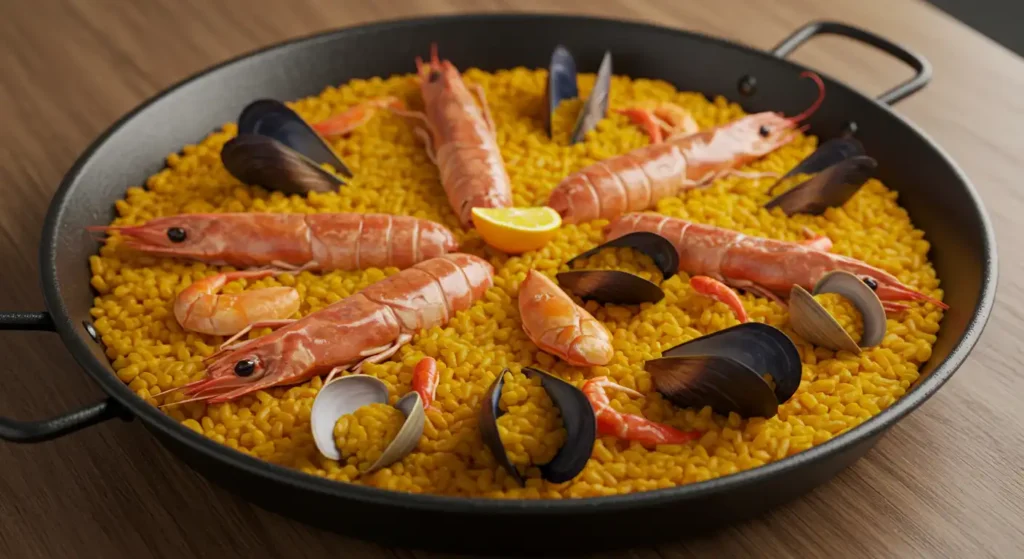
With Valencia’s proximity to the Mediterranean Sea, seafood eventually became a natural addition. Mussels, prawns, clams, and fish transformed paella into a coastal delicacy. This variation, known as Paella de Marisco (Seafood Paella), grew in popularity and spread across Spain, captivating both locals and travelers.
A Symbol of Spanish Identity
Over time, paella became more than just a regional dish—it became a national symbol of Spain’s culinary heritage. Today, paella is celebrated around the world, with countless variations from modern vegetarian versions to luxurious adaptations featuring lobster or squid ink.
But no matter how it evolves, paella’s essence remains the same: a dish meant to be shared, savored, and remembered.
Key Ingredients in Paella
The magic of paella lies in the balance of its ingredients. While recipes may vary, there are a few essentials that give this dish its unmistakable identity.
1. Rice
The foundation of paella is short-grain rice, specifically varieties like Bomba, Calasparra, or Senia. These absorb liquid beautifully without becoming mushy, creating the perfect texture.
2. Saffron
Known as “red gold,” saffron gives paella its signature golden hue and delicate aroma. While expensive, just a small pinch infuses the dish with an irreplaceable flavor.
3. Olive Oil
High-quality Spanish olive oil adds richness and depth, helping to sauté vegetables and coat the rice evenly.
4. Proteins
- Traditional Valencian Paella: rabbit, chicken, and sometimes duck.
- Seafood Paella: shrimp, mussels, squid, clams, and fish.
- Mixed Paella: a combination of meats and seafood.
- Vegetarian Paella: beans, artichokes, peppers, zucchini, and other seasonal vegetables.
5. Vegetables & Aromatics
Onions, garlic, tomatoes, and bell peppers are commonly used, creating a sofrito base that enhances depth and flavor.
6. Stock
A rich chicken, seafood, or vegetable stock infuses the rice with layers of taste as it cooks slowly.
Step-by-Step Preparation of Paella
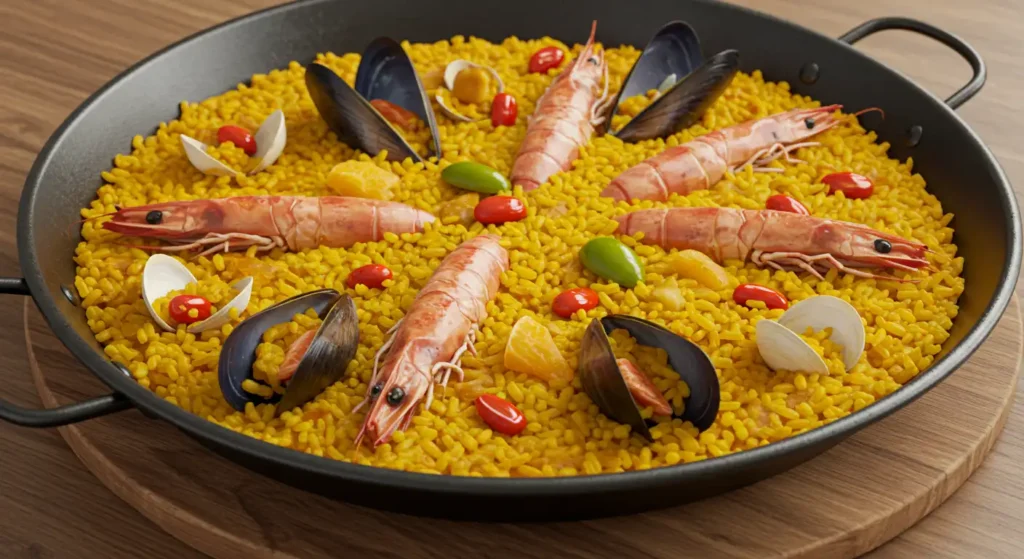
Making paella may seem intimidating, but with patience and the right technique, it becomes a rewarding and even meditative process. Here’s a beginner-friendly guide:
Step 1: Gather Your Ingredients
Before cooking, prepare all ingredients—chop vegetables, clean seafood, and measure rice and stock. Having everything ready makes the process seamless.
Step 2: Heat the Pan
Use a paellera, the wide shallow pan designed for paella. Heat a generous drizzle of olive oil over medium heat until shimmering.
Step 3: Build the Sofrito
Sauté onions, garlic, and peppers until soft, then add grated or crushed tomatoes. Cook slowly until the mixture thickens into a rich base.
Step 4: Add the Proteins
- For meat-based paella: brown chicken or rabbit pieces until golden.
- For seafood paella: lightly sear shrimp or squid (set aside to avoid overcooking).
Step 5: Stir in the Rice and Spices
Add the rice, stirring to coat it with the sofrito and oil. Sprinkle in saffron (soaked in warm water) and paprika for depth of flavor.
Step 6: Pour in the Stock
Add hot stock in a ratio of about 3 parts liquid to 1 part rice. Spread the rice evenly across the pan.
Step 7: Let It Simmer
Here’s the golden rule of paella: do not stir the rice once the stock is added. Allow it to cook undisturbed so the rice forms the coveted socarrat—a crispy, caramelized layer at the bottom of the pan.
Step 8: Add Seafood or Vegetables
Place mussels, shrimp, or vegetables decoratively on top during the last 10–15 minutes of cooking. Cover the pan with foil or a lid if needed to steam them gently.
Step 9: Rest Before Serving
Once the liquid is absorbed and the rice is tender, remove the pan from heat. Let it rest for about 5 minutes, allowing flavors to meld.
Step 10: Garnish and Enjoy
Sprinkle with fresh parsley, add lemon wedges on the side, and serve straight from the pan.
Health Benefits of Paella
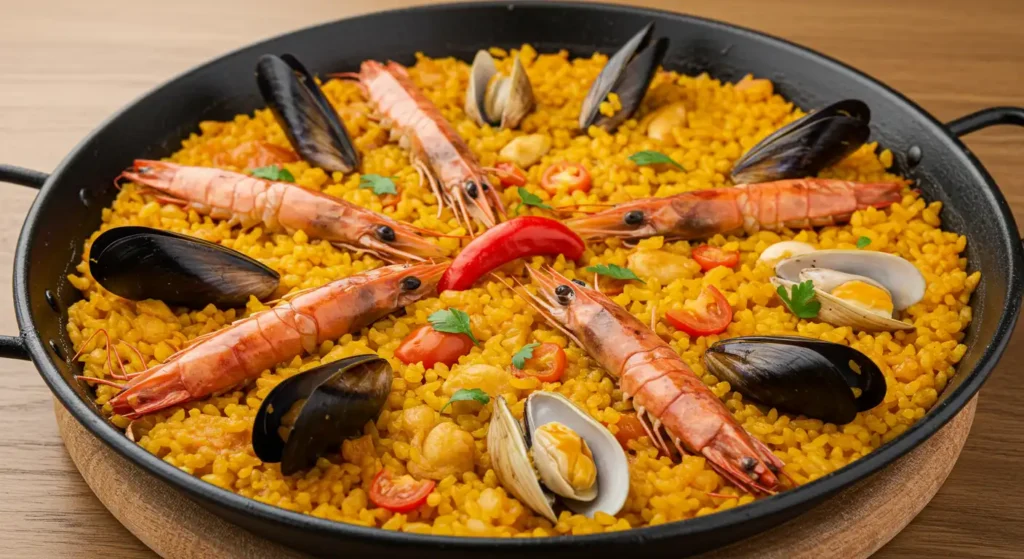
While paella is indulgent and festive, it also offers a surprising range of nutritional benefits, depending on the variation you prepare.
Balanced Nutrients
- Rice provides energy-rich carbohydrates.
- Seafood and meats deliver lean proteins and essential minerals like zinc and iron.
- Vegetables contribute fiber, vitamins, and antioxidants.
Heart-Healthy Fats
Spanish olive oil is rich in monounsaturated fats, which can support heart health and reduce inflammation.
Low in Processed Ingredients
Traditional paella relies on fresh, whole foods rather than processed items, making it a wholesome choice for family meals.
Customizable for Diets
- Seafood paella is high in omega-3 fatty acids.
- Vegetarian paella can be rich in plant-based proteins and fiber.
- Gluten-free diets are easily accommodated, since rice is naturally gluten-free.
Portion Control and Sharing
Paella is designed to be shared. Eating together naturally encourages moderation, connection, and mindfulness—an often-overlooked aspect of healthy eating.
Conclusion
Paella is more than just a dish—it’s a celebration of Spanish culture, tradition, and togetherness. From its humble origins in Valencia’s farmlands to its place on tables around the world, paella continues to inspire and delight. With its blend of saffron-kissed rice, fresh vegetables, hearty proteins, and festive presentation, it’s no wonder paella remains one of the most beloved dishes in global cuisine.
Now that you know the history, ingredients, and steps to prepare this Spanish classic, why not try making it at home? Cooking paella is about more than just following a recipe—it’s about patience, creativity, and the joy of sharing food with others.
And while you’re at it, why not explore other kitchen adventures too? Just like paella, sourdough baking offers a rewarding experience that connects tradition, flavor, and community. So grab your ingredients, fire up your stove, and let your culinary journey begin!