
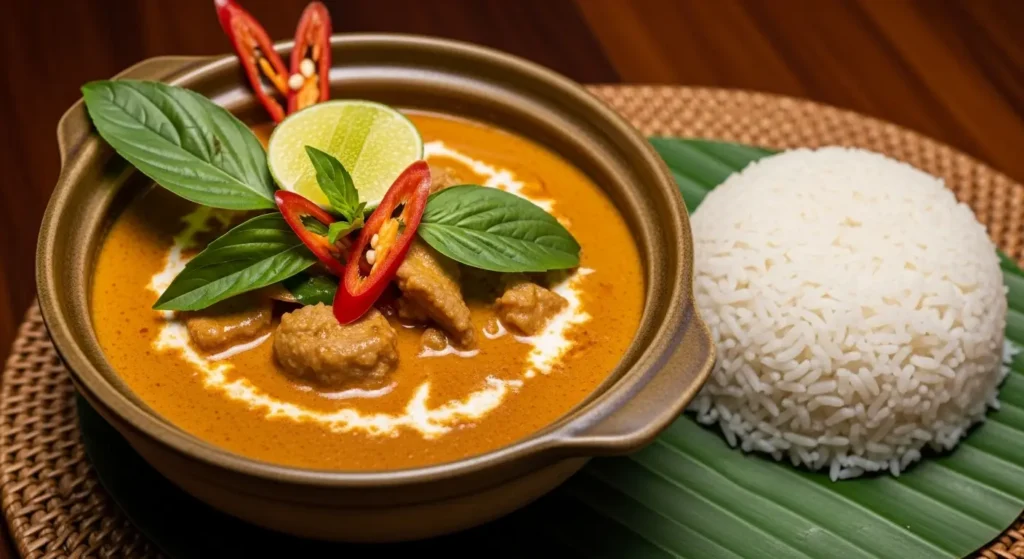
Panang Curry (พะแนง): Thailand’s Rich and Aromatic Curry
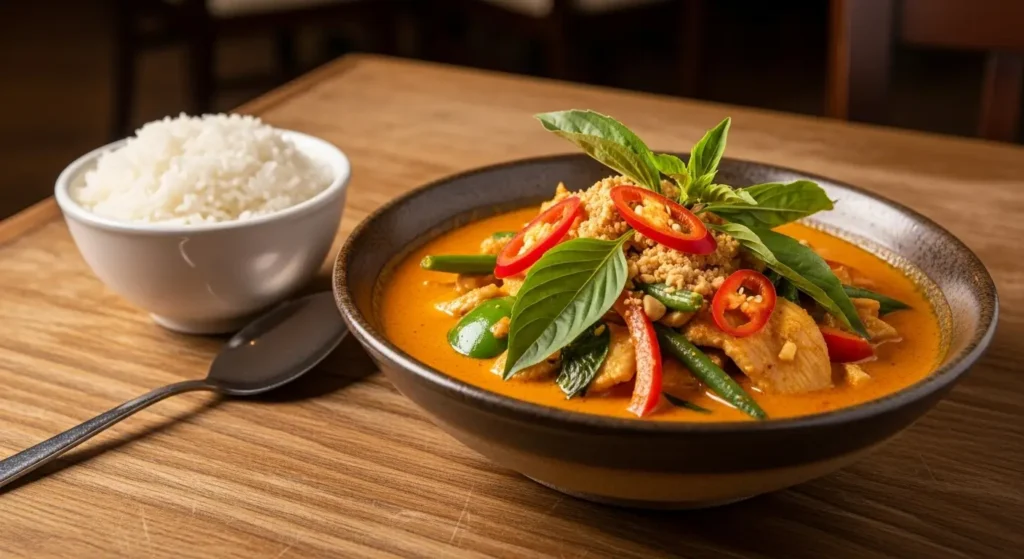
Introduction
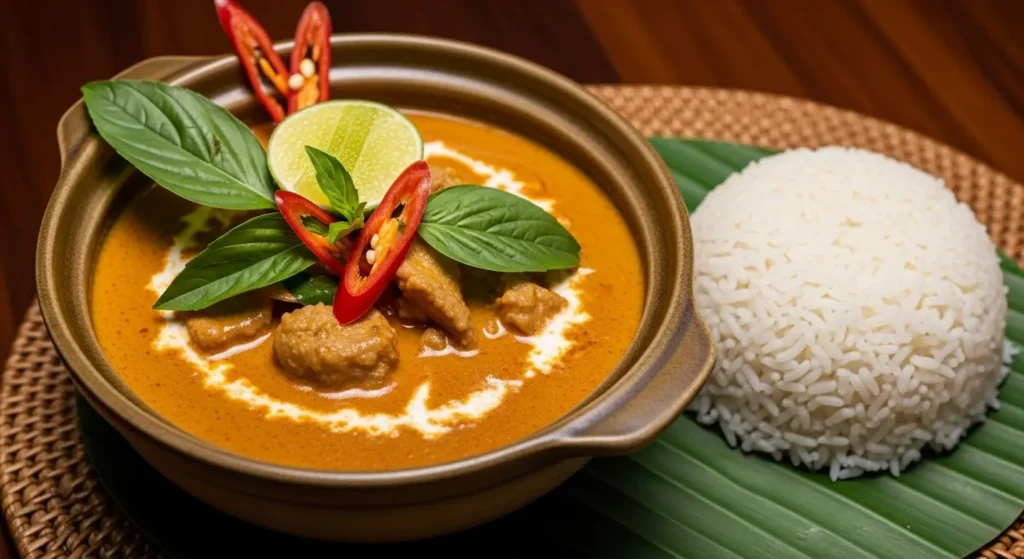
If there’s a Thai curry that perfectly balances creamy richness with bold flavor, it’s Panang Curry (พะแนง). Often described as a slightly sweeter, milder cousin of red curry, Panang Curry is a favorite in Thai households and restaurants alike. With its thick, aromatic sauce, tender meat, and fragrant spices, it’s a dish that delights the senses and warms the soul.
Whether served with jasmine rice or enjoyed with fresh vegetables, Panang Curry is both comforting and indulgent. Its unique flavor comes from a careful blend of coconut milk, Panang curry paste, and aromatic herbs, making it a standout in the world of Thai cuisine.
In this guide, we’ll explore the history of Panang Curry, highlight its key ingredients, provide a step-by-step preparation guide, and discuss its health benefits. By the end, you’ll be ready to recreate this iconic Thai dish in your own kitchen.
History of Panang Curry
Origins in Thailand
Panang Curry is believed to have originated in central Thailand, named after the Malaysian island of Penang. While the exact origins are debated, it’s clear that cross-cultural influences shaped this rich curry, blending Thai culinary traditions with flavors from Malaysia.
Evolution of the Dish
Traditionally, Panang Curry was prepared with beef, although modern variations include chicken, pork, or even tofu for vegetarian options. Over time, it became a staple in Thai homes and a signature dish in Thai restaurants worldwide.
Distinctive Features
Unlike other Thai curries such as Red Curry (แกงเผ็ด) or Green Curry (แกงเขียวหวาน), Panang Curry is thicker and creamier, with a subtle sweetness that complements the mild heat. The addition of ground peanuts in some recipes adds a nutty depth, making it instantly recognizable.
Global Popularity
Today, Panang Curry enjoys international acclaim. Its approachable spice level and rich flavor make it a favorite for both Thai cuisine newcomers and seasoned food enthusiasts. It’s frequently paired with rice, noodles, or steamed vegetables, making it versatile for home cooking and restaurant menus alike.
Ingredients of Panang Curry
The secret to Panang Curry’s richness lies in the quality and balance of ingredients.
Core Ingredients
- Panang Curry Paste – The heart of the dish, typically made from dried chilies, lemongrass, galangal, garlic, shallots, kaffir lime zest, coriander roots, and cumin.
- Coconut Milk – Provides a creamy base and balances the spiciness.
- Meat or Protein – Common choices include beef, chicken, pork, or tofu for a vegetarian version.
- Fish Sauce – Adds umami and saltiness.
- Palm Sugar – Balances heat and enhances sweetness.
- Kaffir Lime Leaves – Infuse the curry with citrusy aroma.
- Thai Basil or Holy Basil – Optional garnish for fragrance and color.
- Peanuts (Optional) – Ground peanuts or peanut butter can add nuttiness for extra depth.
Optional Additions
- Vegetables – Bell peppers, zucchini, or baby corn.
- Chilies – For extra heat, depending on taste.
- Lime Juice – For a touch of tanginess to balance the creaminess.
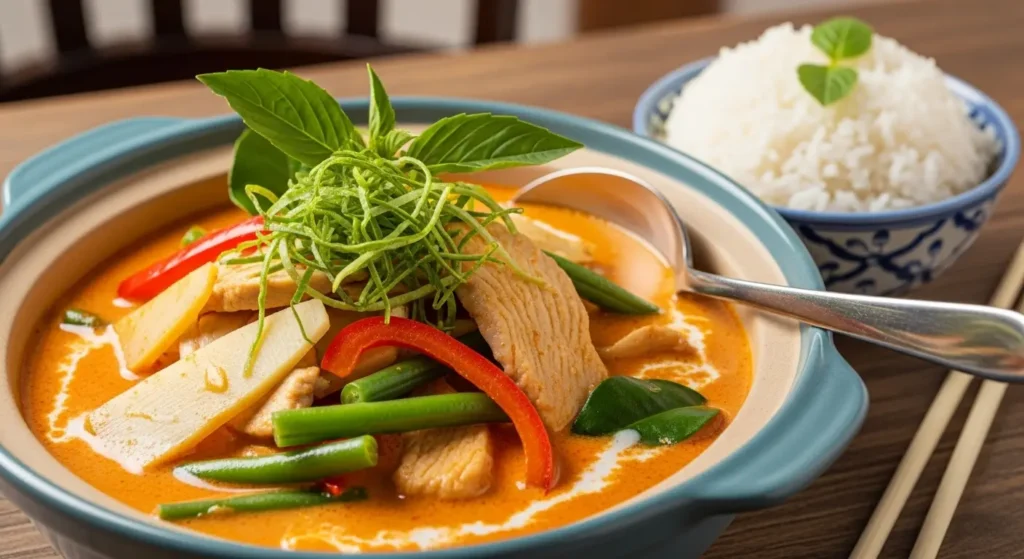
Step-by-Step Preparation
Making Panang Curry at home is straightforward if you follow these steps:
Step 1: Prepare the Curry Paste
- If using store-bought Panang curry paste, measure 2–3 tablespoons.
- For homemade curry paste, grind dried red chilies, lemongrass, galangal, garlic, shallots, kaffir lime zest, coriander roots, and cumin into a smooth paste.
Step 2: Cook the Paste
- In a medium saucepan, heat 1–2 tablespoons of oil over medium heat.
- Add the curry paste and sauté for 1–2 minutes until fragrant.
Step 3: Add Coconut Milk
- Pour in 1–2 cups of coconut milk, stirring to blend with the paste.
- Simmer gently for 2–3 minutes to allow flavors to meld.
Step 4: Add Meat or Protein
- Slice 300–400 grams of beef, chicken, pork, or tofu into bite-sized pieces.
- Add to the curry and simmer until cooked through, about 5–10 minutes depending on protein choice.
Step 5: Season the Curry
- Stir in 2 tablespoons fish sauce, 1–2 teaspoons palm sugar, and adjust salt to taste.
- Tear 4–5 kaffir lime leaves into pieces and add to the curry.
Step 6: Add Vegetables (Optional)
- Add sliced bell peppers, zucchini, or baby corn.
- Cook until vegetables are tender but still crisp.
Step 7: Finish and Serve
- Garnish with fresh Thai basil or holy basil leaves.
- For extra nutty flavor, sprinkle with ground peanuts.
- Serve hot with steamed jasmine rice or noodles.
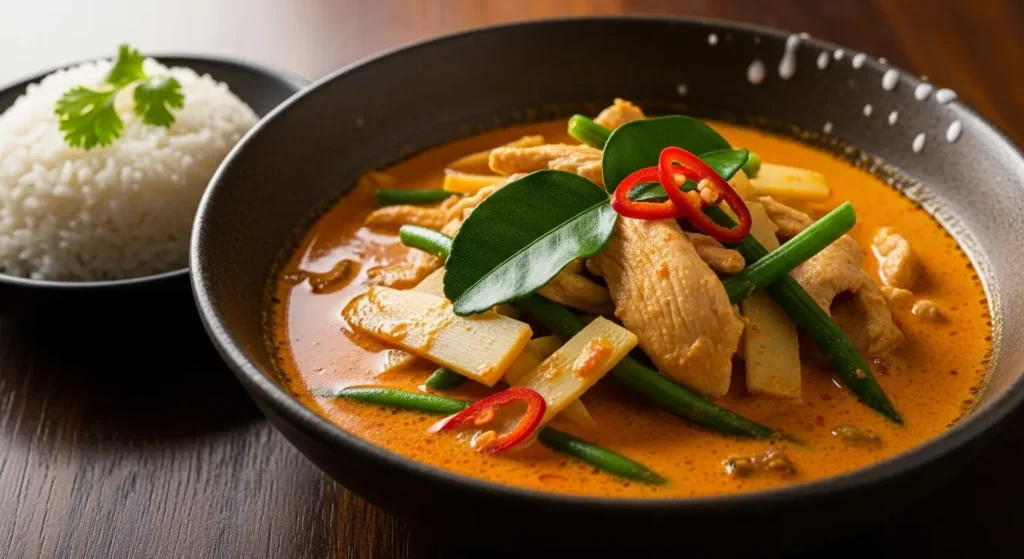
Health Benefits of Panang Curry
Despite its rich appearance, Panang Curry can be healthy and nourishing when prepared mindfully:
1. Protein-Rich
Meats or tofu provide high-quality protein, supporting muscle health and energy.
2. Nutrient-Dense Herbs and Spices
Galangal, lemongrass, kaffir lime, and basil contribute antioxidants and anti-inflammatory compounds, promoting overall well-being.
3. Healthy Fats from Coconut Milk
Coconut milk contains medium-chain triglycerides (MCTs), which may support metabolism and brain function.
4. Digestive Benefits
Spices like lemongrass and galangal can aid digestion and improve gut health.
5. Balanced Flavor Profile
The combination of sweet, salty, spicy, and savory creates satisfying meals that can prevent overeating by balancing flavors naturally.
Tips for Perfect Panang Curry
- Use high-quality curry paste – Homemade paste enhances flavor, but store-bought is convenient for beginners.
- Simmer gently – Avoid boiling coconut milk to prevent curdling.
- Balance flavors carefully – Adjust sugar, fish sauce, and lime juice to taste.
- Choose tender cuts of meat – Beef or chicken slices cook evenly and stay tender.
- Add fresh herbs at the end – Preserves aroma and color.
Why Panang Curry Is Loved Worldwide
Panang Curry’s appeal lies in its creamy texture, bold flavor, and approachable spice level. Unlike some Thai curries that are very hot, Panang strikes a balance that is flavorful yet mild enough for international palates.
It’s versatile, too: you can make it with chicken, beef, pork, or tofu, and add vegetables for a complete meal. Its richness makes it perfect for special dinners, casual family meals, or even meal prep, as it reheats beautifully.
Conclusion
Panang Curry (พะแนง) is more than just a Thai curry—it’s a harmony of flavors, textures, and aromas. With its creamy coconut base, tender protein, fragrant herbs, and optional nutty depth, it’s a dish that satisfies both the palate and the soul.
The best part? You can recreate this iconic Thai dish at home. Preparing Panang Curry is a hands-on, rewarding experience, much like baking sourdough bread. It requires attention, care, and patience—but the result is a flavorful, aromatic dish that brings the essence of Thailand to your kitchen.
So gather your curry paste, coconut milk, and fresh herbs, and embark on a culinary journey with Panang Curry tonight. Each spoonful is a taste of authentic Thai tradition that’s both comforting and unforgettable.