
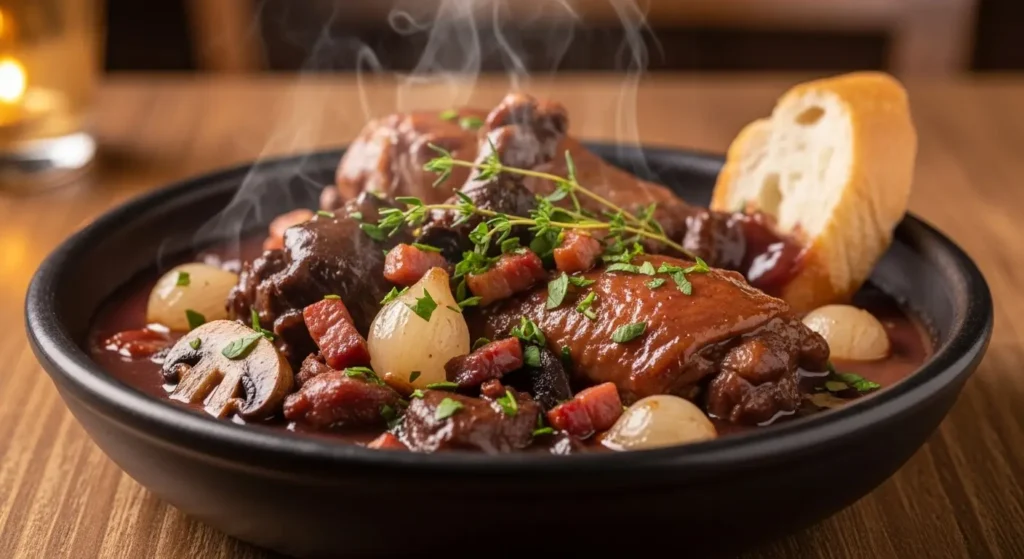
Coq au Vin: A French Classic You Can Master at Home
Table of Contents
Introduction
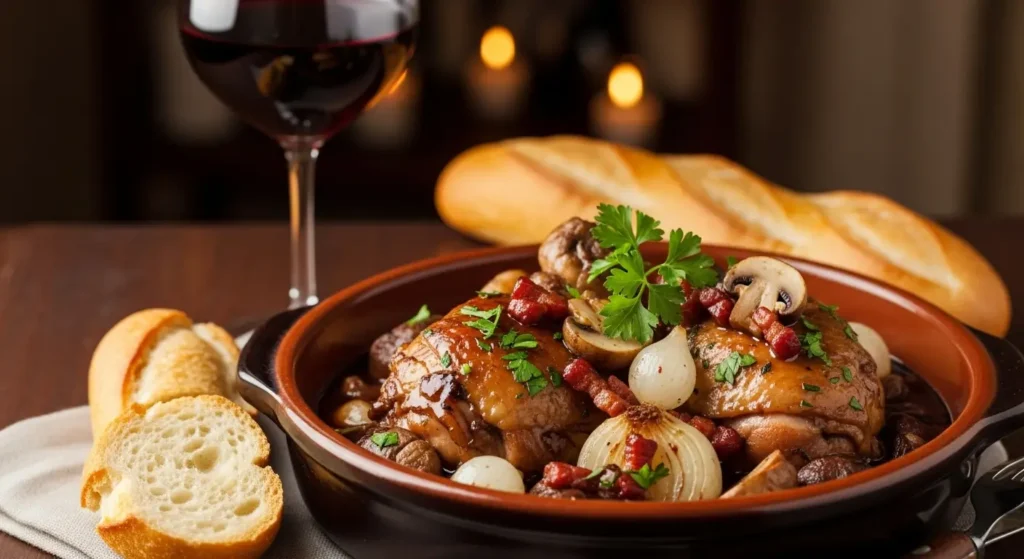
French cuisine has a way of transforming simple, rustic ingredients into something truly extraordinary. One dish that beautifully captures this magic is Coq au Vin. Literally translated as “chicken in wine”, this traditional recipe is all about slow cooking, patience, and letting flavors develop into something rich and comforting.
At first glance, Coq au Vin might sound intimidating, but it’s much more approachable than you might think. With chicken, red wine, mushrooms, onions, and bacon as the foundation, it’s a dish that feels both hearty and sophisticated. It’s also the perfect meal for cozy family dinners, weekend cooking projects, or even a centerpiece for entertaining guests.
In this article, we’ll walk through the history of Coq au Vin, the key ingredients you’ll need, a step-by-step recipe that beginners can follow, and even explore some health benefits that might surprise you. By the end, you’ll not only understand the art of this French classic but also feel inspired to serve it alongside homemade sourdough bread for the ultimate dining experience.
A Brief History of Coq au Vin
Like many iconic recipes, Coq au Vin has humble beginnings. It originated in rural France, where farmers relied on resourceful cooking techniques to make the most of what they had. Traditionally, the dish was prepared using an old rooster (coq), which tended to be tough and lean. The solution? Braising it slowly in wine until the meat became tender and infused with flavor.
The Burgundy region is often credited with popularizing the dish, thanks to its world-famous wines. However, variations of Coq au Vin exist across France. In Alsace, for example, the chicken is braised in Riesling, while in Champagne, sparkling wine is the star ingredient. Each region added its own twist, but the essence of the dish—chicken cooked slowly in wine with vegetables and herbs—remains the same.
Coq au Vin gained international fame in the 20th century, especially after Julia Child showcased it in Mastering the Art of French Cooking. Today, it’s not just a French farmhouse recipe but a celebrated dish in kitchens worldwide.
Key Ingredients for Authentic Coq au Vin
Before we dive into the recipe, let’s look at the essential ingredients that make Coq au Vin unforgettable.
1. Chicken
Traditionally made with rooster, modern recipes use chicken for convenience. Opt for bone-in, skin-on chicken thighs and drumsticks for the best flavor and texture.
2. Red Wine
The heart of the dish. Burgundy red wine is classic, but Pinot Noir, Merlot, or Cabernet Sauvignon also work beautifully. The wine adds depth, acidity, and richness to the braising liquid.
3. Bacon or Lardons
These add a smoky, savory flavor base that elevates the entire dish.
4. Aromatic Vegetables
- Onions – pearl onions for sweetness, yellow onions for depth.
- Carrots – balance the richness with natural sweetness.
- Garlic – adds a bold, aromatic punch.
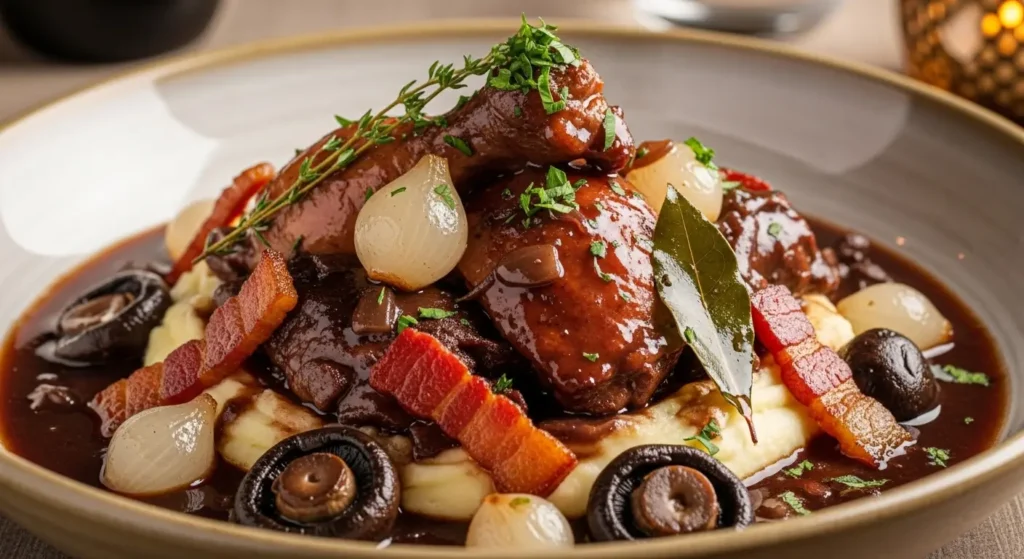
5. Mushrooms
Earthy mushrooms soak up the wine sauce, adding texture and umami.
6. Herbs and Seasonings
Classic choices include:
- Thyme
- Bay leaves
- Fresh parsley
- Salt and pepper
7. Stock
A splash of chicken stock balances the wine and keeps the sauce full-bodied without being overpowering.
Step-by-Step Preparation of Coq au Vin
Coq au Vin requires patience more than technical skill. Here’s a detailed, beginner-friendly recipe:
Step 1: Prepare the Ingredients
- Cut chicken into serving pieces (or use thighs and drumsticks).
- Slice carrots and onions.
- Clean and halve the mushrooms.
- Mince garlic.
- Pat chicken pieces dry to ensure a good sear.
Step 2: Render the Bacon
In a large Dutch oven, cook diced bacon until crisp. Remove with a slotted spoon, leaving the rendered fat behind—this becomes your cooking base.
Step 3: Brown the Chicken
Season chicken pieces with salt and pepper. In batches, sear them skin-side down until golden brown. This step is key to building flavor. Transfer the chicken to a plate.
Step 4: Cook the Aromatics
Add onions, carrots, and garlic to the pot. Sauté until softened and lightly caramelized, scraping up any browned bits.
Step 5: Deglaze with Wine
Pour in the red wine, stirring to release all the flavor from the bottom of the pot. Let it simmer for about 10 minutes to reduce slightly.
Step 6: Combine Ingredients
Return the chicken and bacon to the pot. Add chicken stock, thyme, and bay leaves. The liquid should mostly cover the chicken.
Step 7: Slow Braise
Cover and place in a preheated oven at 325°F (160°C) for about 1.5 to 2 hours. The chicken should be tender and infused with wine’s deep flavors.
Step 8: Cook Mushrooms and Onions Separately
Sauté mushrooms and pearl onions in butter until golden. Add them to the stew during the last 30 minutes of cooking to preserve their texture.
Step 9: Thicken the Sauce (Optional)
If the sauce is too thin, remove the chicken and vegetables, then simmer the liquid on the stovetop until it reduces. Alternatively, whisk in a butter-flour mixture (beurre manié) for a velvety finish.
Step 10: Serve and Garnish
Sprinkle fresh parsley on top before serving. Coq au Vin pairs beautifully with:
- Creamy mashed potatoes
- Buttered egg noodles
- Crusty sourdough bread (perfect for soaking up the sauce!)
Health Benefits of Coq au Vin
While Coq au Vin feels indulgent, it’s also surprisingly balanced and nutritious.
1. Lean Protein from Chicken
Chicken provides high-quality protein, supporting muscle health and keeping you full longer.
2. Antioxidants from Red Wine
Red wine adds depth of flavor but also delivers resveratrol and polyphenols, antioxidants linked to heart health (when consumed in moderation).
3. Nutrient-Dense Vegetables
Carrots, onions, and mushrooms contribute fiber, vitamins, and minerals, making the dish more well-rounded than it might appear at first glance.
4. Moderately Calorie-Friendly
Compared to cream-based stews, Coq au Vin is relatively light, as the richness comes from wine and stock rather than heavy cream.
5. Comfort and Satiety
Slow-cooked meals like Coq au Vin are deeply satisfying, which can help prevent overeating by keeping you fuller for longer.
Tips for Making the Best Coq au Vin
- Choose good wine – If it’s not good enough to drink, it’s not good enough to cook with.
- Don’t skip the searing – Browning the chicken and bacon adds essential depth of flavor.
- Cook in advance – Coq au Vin tastes even better the next day, once the flavors meld together.
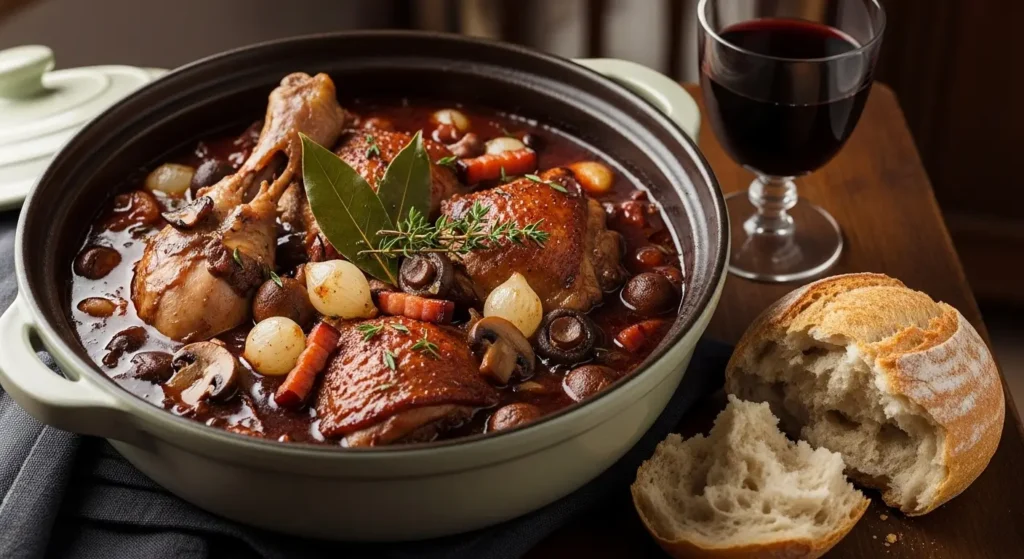
- Use a Dutch oven – It provides even heat for braising.
- Garnish before serving – Fresh parsley adds brightness to the rich stew.
Conclusion
Coq au Vin may have humble origins, but today it stands as a shining example of how simple ingredients can be elevated into something extraordinary. With tender chicken, a rich wine sauce, and layers of flavor from vegetables, herbs, and bacon, this French classic deserves a place in your kitchen.
The best part? You don’t need to be a professional chef to make it at home. With a little patience and the right ingredients, you can prepare a dish that feels both rustic and elegant. And when you pair it with freshly baked sourdough bread, you’ll not only have a meal—you’ll have an experience.
So, why not give Coq au Vin a try this weekend? And while you’re at it, start experimenting with sourdough baking. The rich, savory sauce of Coq au Vin deserves the perfect homemade loaf to soak it up.
Bon appétit—and happy baking!