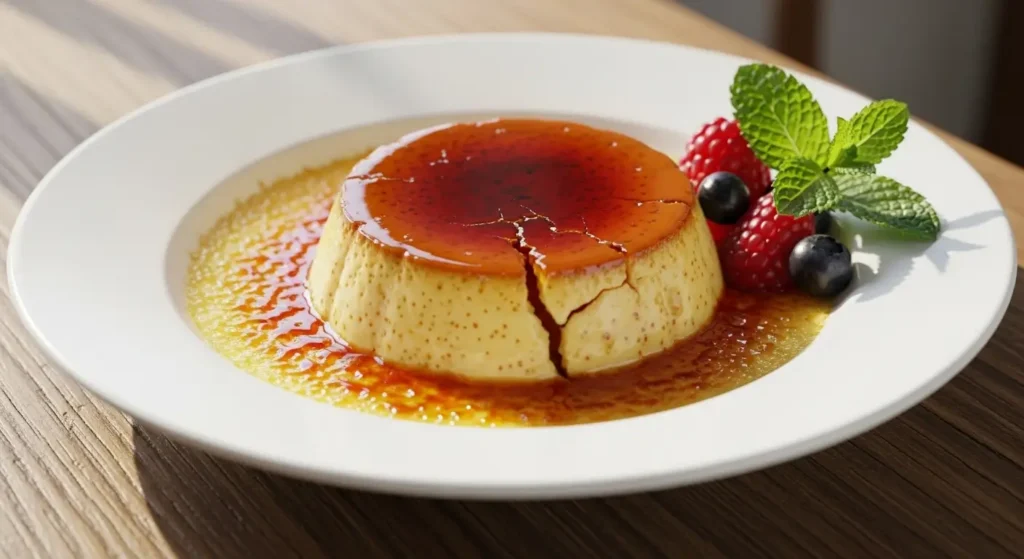
Crème Brûlée: A Classic French Dessert with a Modern Twist
Few desserts capture elegance and indulgence quite like Crème Brûlée. With its silky smooth custard base and a perfectly caramelized sugar crust, this French classic has won hearts worldwide. Whether you’ve enjoyed it at a fine dining restaurant or dreamed of making it at home, Crème Brûlée continues to be one of the most beloved desserts of all time.
In this blog, we’ll take you through the history of Crème Brûlée, the essential ingredients, a step-by-step preparation guide, and even discuss its health benefits. By the end, you’ll not only know how to prepare this dessert but also appreciate its cultural significance.
A Brief Introduction to Crème Brûlée
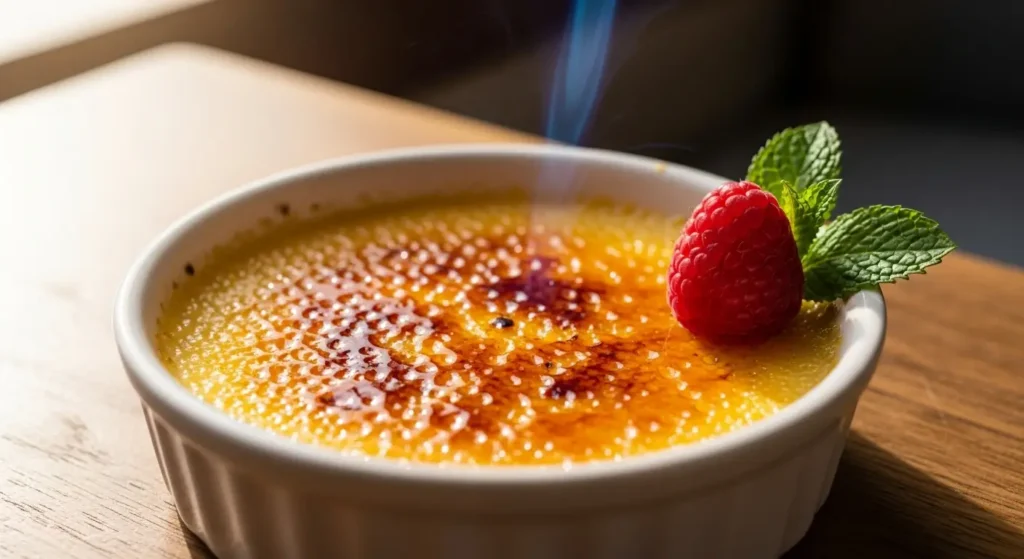
Crème Brûlée, which literally means “burnt cream” in French, is a custard dessert topped with a thin layer of caramelized sugar. The magic lies in its contrast of textures: a crackly, brittle top that gives way to creamy custard beneath.
This dessert is cherished for its simplicity, elegance, and versatility. Though it looks luxurious, Crème Brûlée is surprisingly approachable for home bakers. With just a handful of ingredients and a few careful techniques, you can recreate this French masterpiece in your own kitchen.
The History of Crème Brûlée
Like many classic dishes, the origins of Crème Brûlée are a matter of culinary debate.
- French Roots: The dish first appeared in François Massialot’s 1691 cookbook, Le Cuisinier Royal et Bourgeois. This is often credited as the earliest written recipe for Crème Brûlée.
- English Influence: Some food historians argue that “Trinity Cream,” a similar dish served at Trinity College in Cambridge in the 17th century, may have inspired Crème Brûlée. Trinity’s version was branded with the college crest using a hot iron, much like the torching technique used today.
- Spanish Cousin: Spain has its own variation called Crema Catalana, made with milk instead of cream and flavored with citrus and cinnamon.
Regardless of its exact birthplace, Crème Brûlée has stood the test of time. Today, it remains a staple of French cuisine and is adored in kitchens and restaurants worldwide.
Ingredients for Crème Brûlée
One of the beautiful aspects of Crème Brûlée is that it relies on just a few simple ingredients. Here’s what you’ll need for a classic recipe:
- Heavy Cream (2 cups) – Provides richness and creaminess.
- Vanilla Bean or Extract (1 pod or 1 tsp) – Infuses the custard with aromatic depth.
- Egg Yolks (5 large) – Give the custard its structure and velvety texture.
- Granulated Sugar (½ cup, plus extra for topping) – Sweetens the custard and caramelizes to form the iconic crunchy crust.
- Salt (a pinch) – Enhances overall flavor.
Optional Variations: You can experiment by adding flavors like espresso, lavender, orange zest, or even matcha for a unique twist.
Step-by-Step Preparation of Crème Brûlée
Making Crème Brûlée may seem intimidating, but it’s surprisingly straightforward when broken down into steps. Here’s how you can create it at home:
Step 1: Prepare the Cream
- Pour the heavy cream into a saucepan.
- Split the vanilla bean lengthwise, scrape the seeds, and add both the seeds and the pod to the cream.
- Heat gently until the cream is just simmering, then remove from heat and let it infuse for 10–15 minutes.
Step 2: Whisk the Egg Yolks and Sugar
- In a separate bowl, whisk together the egg yolks and sugar until pale and slightly thickened.
- This mixture should be smooth, without being overly frothy.
Step 3: Temper the Eggs
- Slowly pour the warm cream into the egg yolk mixture while whisking continuously.
- This process, known as tempering, prevents the eggs from scrambling.
Step 4: Strain the Mixture
- Strain the custard base through a fine-mesh sieve to remove any lumps or cooked egg bits.
- This step ensures a smooth, luxurious custard.
Step 5: Bake the Custard
- Preheat your oven to 325°F (160°C).
- Pour the custard into ramekins and place them in a baking dish.
- Create a water bath by pouring hot water halfway up the sides of the ramekins.
- Bake for 35–45 minutes, or until the custard is set but still slightly wobbly in the center.
Step 6: Chill and Set
- Remove the ramekins from the water bath and allow them to cool to room temperature.
- Refrigerate for at least 2 hours (or overnight) to fully set the custard.
Step 7: Caramelize the Sugar
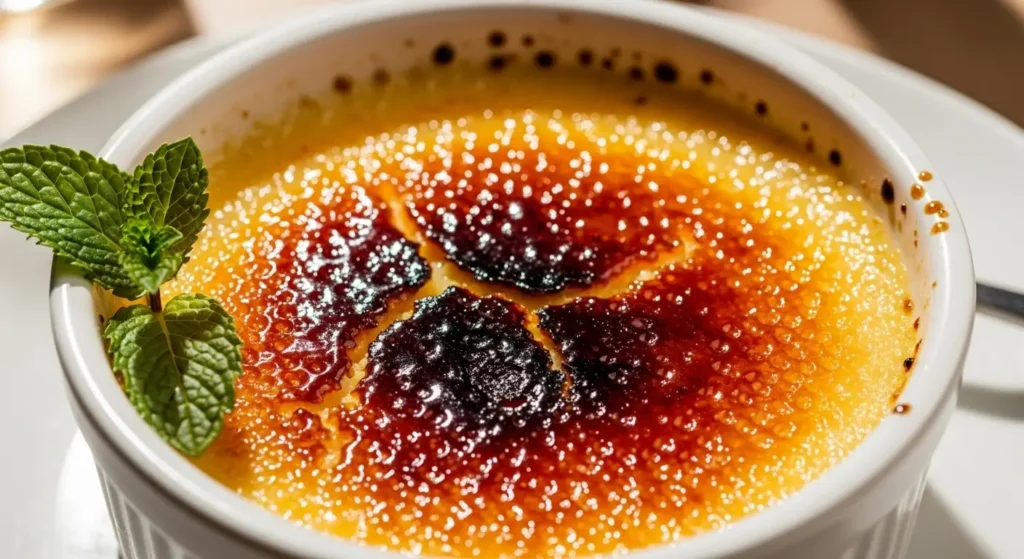
- Just before serving, sprinkle a thin, even layer of sugar over each custard.
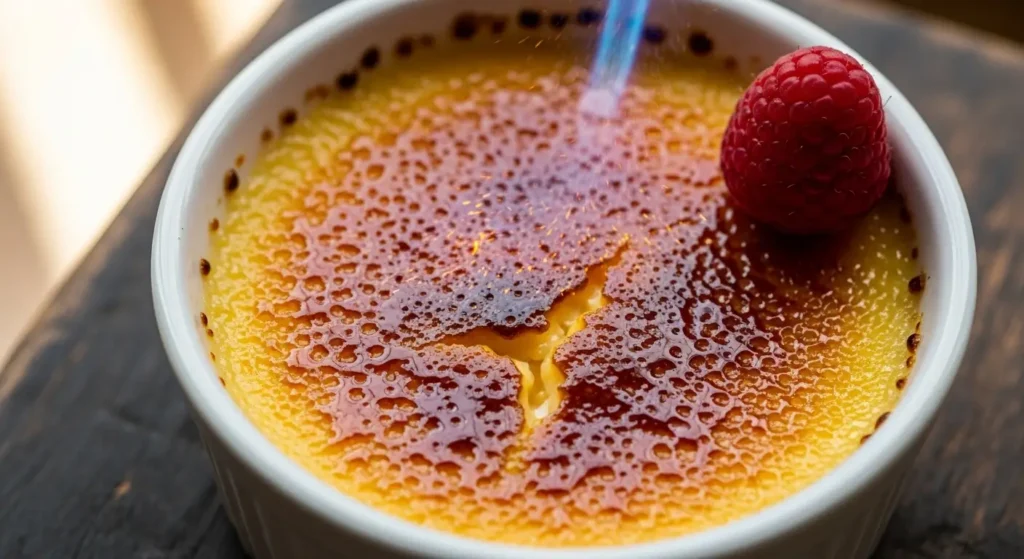
- Using a kitchen torch, melt and caramelize the sugar until it forms a golden, crackly crust.
- Alternatively, you can place the ramekins under a broiler for a similar effect, though a torch gives more control.
Step 8: Serve and Enjoy
- Let the caramelized sugar harden for a minute, then tap it gently with a spoon to break through the crisp top.
- Savor the delightful contrast of textures and flavors.
Health Benefits of Crème Brûlée
While Crème Brûlée is undoubtedly a rich dessert, it does have some nutritional elements worth noting:
- Protein from Eggs – Egg yolks provide high-quality protein, essential for muscle repair and overall health.
- Calcium from Cream – Dairy cream is a source of calcium, which supports strong bones and teeth.
- Mood-Boosting Properties – Indulging in sweet, creamy desserts like Crème Brûlée can stimulate serotonin release, improving mood and reducing stress.
- Antioxidants from Vanilla – Natural vanilla extract contains antioxidants that support overall wellness.
Of course, moderation is key, as Crème Brûlée is high in sugar and fat. But as an occasional treat, it can be part of a balanced lifestyle.
Tips for Perfecting Your Crème Brûlée
- Use Fresh Ingredients – Quality eggs, cream, and vanilla make a big difference in flavor.
- Avoid Overbaking – The custard should be set at the edges but still slightly jiggly in the center.
- Torch with Care – A thin, even sugar layer caramelizes best. Too much sugar can result in a burnt taste.
- Experiment with Flavors – Try seasonal variations like pumpkin spice Crème Brûlée in the fall or citrus zest in spring.
Conclusion: The Joy of Creating Crème Brûlée
Crème Brûlée is more than just a dessert—it’s an experience. From the satisfying crack of its caramelized top to the silky custard beneath, every spoonful is a celebration of flavor and texture. Its rich history, simple ingredients, and timeless appeal make it a dessert worth learning and enjoying.
So why not try making it at home? Once you master the art of Crème Brûlée, you’ll feel confident taking on more baking adventures. And speaking of baking, if you’re eager to keep exploring the world of homemade creations, why not take the next step and try sourdough baking? It’s just as rewarding, offering a mix of tradition, technique, and delicious results that you’ll love sharing with family and friends.