Focaccia: Italy’s Beloved Flatbread
Table of Contents
Introduction
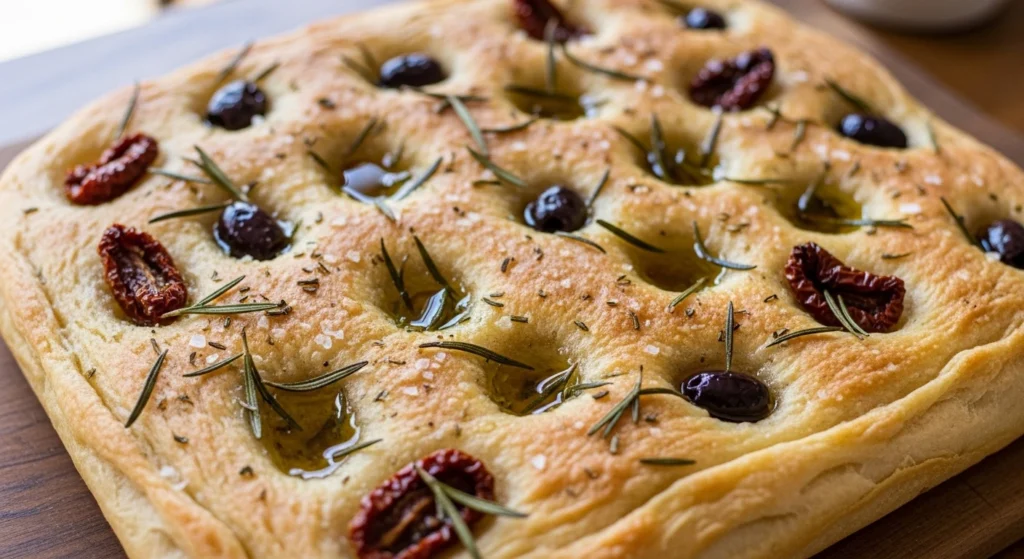
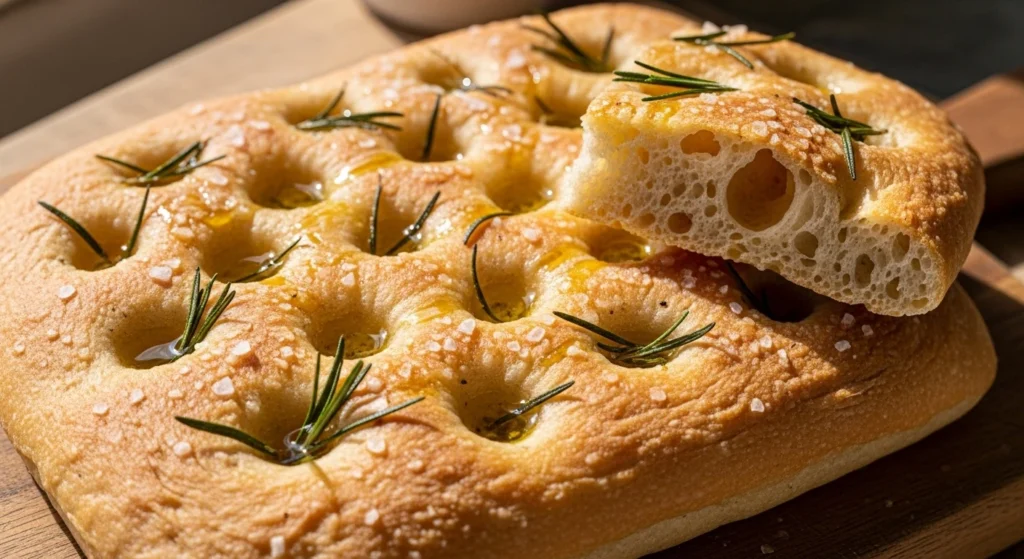
Soft, airy, and drizzled with golden olive oil—focaccia is one of Italy’s most loved breads. With its pillowy texture and flavorful toppings, this rustic flatbread is more than just bread; it’s a symbol of Italian hospitality and tradition. Whether served as a side dish, a sandwich base, or simply enjoyed warm from the oven, focaccia brings comfort to every bite.
In this guide, we’ll take a closer look at the history of focaccia, explore the core ingredients, walk through a step-by-step recipe, and highlight the health benefits of this Mediterranean classic. By the end, you’ll not only appreciate focaccia’s cultural significance but also feel inspired to bake it in your own kitchen.
The History of Focaccia
Ancient Origins
The word focaccia comes from the Latin term focus, meaning “hearth” or “fireplace.” This makes sense, as focaccia was originally baked on hot stones or in wood-fired ovens. Early versions of flatbreads appeared across ancient civilizations, from the Greeks to the Etruscans, but Italy perfected its own version, which eventually became today’s focaccia.
Focaccia in Liguria
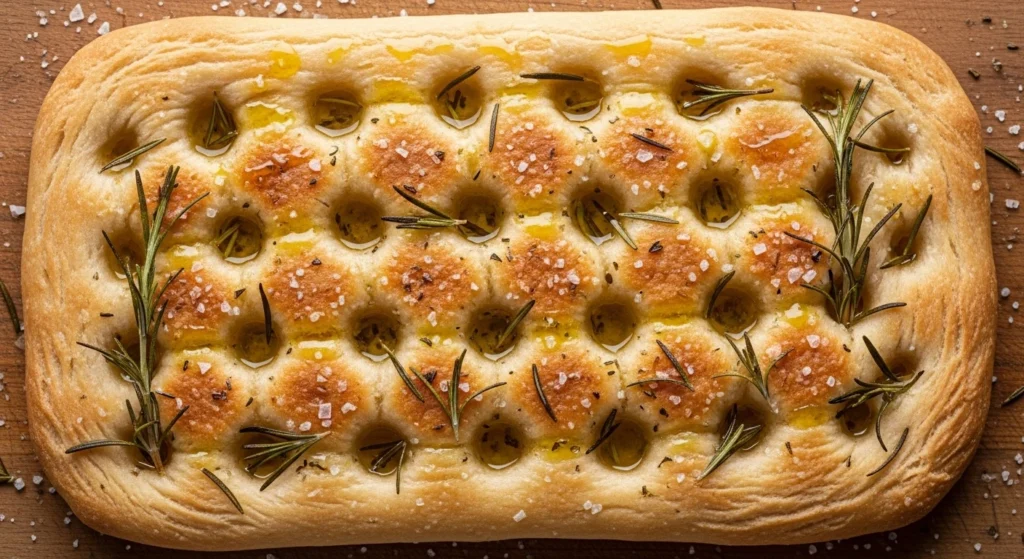
While focaccia is popular throughout Italy, its spiritual home is Liguria, particularly the port city of Genoa. Known as focaccia Genovese, this variation is brushed generously with olive oil and sprinkled with sea salt, giving it a distinctive golden crust. Locals often enjoy it for breakfast, dipped in cappuccino—a true testament to its versatility.
Regional Variations
Across Italy, focaccia takes on different forms:
- Focaccia Genovese (Liguria): Classic olive oil and sea salt topping.
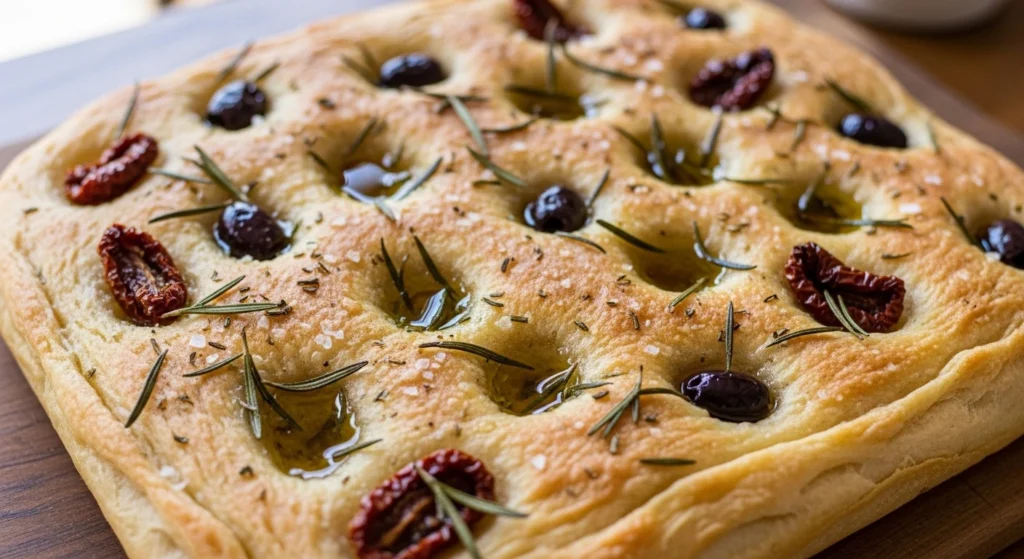
- Focaccia Barese (Puglia): Made with semolina flour and often topped with cherry tomatoes and olives.
- Focaccia di Recco (Liguria): Thin, crispy dough filled with creamy stracchino cheese.
- Sweet Focaccia: Found in northern Italy, flavored with sugar, honey, or raisins.
These regional differences highlight how focaccia has adapted to local ingredients while maintaining its essential character: simple, flavorful, and communal.
Ingredients for Focaccia
What makes focaccia so delightful is its simplicity. You don’t need a long list of fancy ingredients—just a few pantry staples and some good-quality olive oil.
Core Ingredients
- Flour: All-purpose flour or bread flour. Bread flour adds extra chewiness.
- Yeast: Active dry yeast or instant yeast to help the dough rise.
- Water: Lukewarm, to activate the yeast.
- Olive oil: The soul of focaccia—used in the dough and generously brushed on top.
- Salt: Enhances flavor and balances the richness of the oil.
Optional Toppings
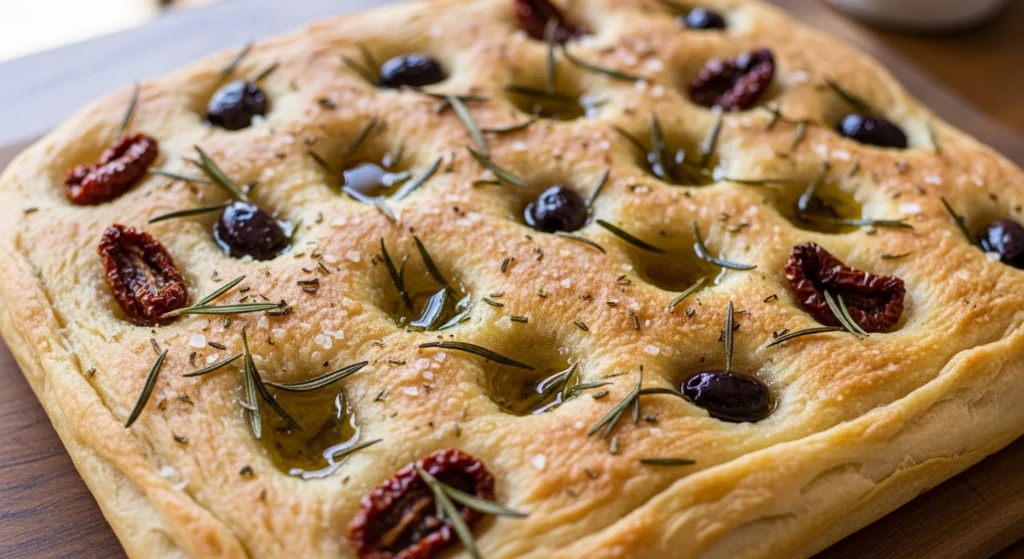
One of the joys of focaccia is its versatility. You can keep it classic or get creative with toppings such as:
- Fresh herbs (rosemary, thyme, oregano)
- Cherry tomatoes
- Caramelized onions
- Olives
- Garlic
- Cheese (Parmesan, mozzarella, or goat cheese)
Step-by-Step Preparation of Focaccia
Making focaccia is easier than you might think. It does require some rising time, but the steps are simple and beginner-friendly.
Step 1: Activate the Yeast
- In a bowl, mix warm water with yeast and a pinch of sugar.
- Let it sit for 5–10 minutes until it becomes frothy.
Step 2: Make the Dough
- In a large bowl, combine flour and salt.
- Add the yeast mixture and olive oil.
- Mix until a sticky dough forms.
- Knead on a floured surface for 8–10 minutes until smooth and elastic.
Step 3: First Rise
- Place the dough in a greased bowl, cover with a damp cloth, and let it rise in a warm spot for 1–2 hours, or until doubled in size.
Step 4: Shape the Dough
- Grease a baking tray with olive oil.
- Spread the dough evenly into the tray, gently pressing it out to fit the pan.
- Cover and let it rise again for 30–40 minutes.
Step 5: Dimple the Dough
- Preheat your oven to 220°C (425°F).
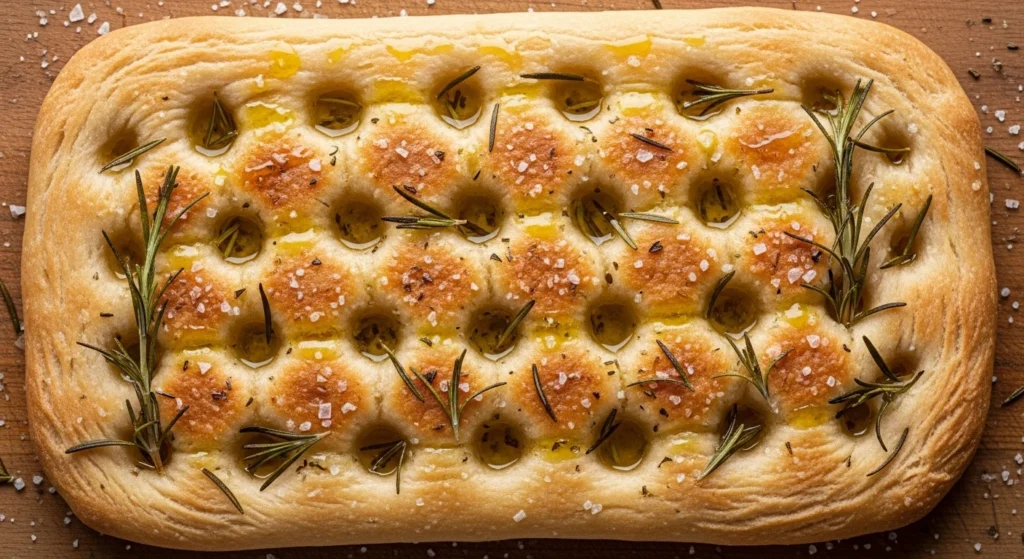
- Using your fingers, press deep dimples all over the dough surface.
- Drizzle generously with olive oil and sprinkle with sea salt.
- Add your choice of toppings.
Step 6: Bake
- Bake for 20–25 minutes, or until golden brown.
- Remove from the oven and brush lightly with olive oil.
- Let cool slightly before slicing and serving.
Health Benefits of Focaccia
While focaccia is considered indulgent, it also offers some surprising nutritional benefits, especially when made with wholesome ingredients.
1. Rich in Healthy Fats
Olive oil is at the heart of focaccia, and it’s a great source of monounsaturated fats. These “good fats” support heart health, reduce inflammation, and help maintain healthy cholesterol levels.
2. Source of Energy
The carbohydrates from the flour provide quick and sustained energy, making focaccia an excellent accompaniment to meals or a satisfying snack.
3. Packed with Antioxidants
If topped with tomatoes, herbs, or garlic, focaccia becomes a carrier for antioxidants like lycopene and vitamin C, which support immune function and cell health.
4. Customizable for Dietary Needs
Focaccia can be adapted to fit various diets:
- Use whole wheat flour for added fiber.
- Add seeds (chia, flax, sesame) for protein and omega-3s.
- Make gluten-free versions with alternative flours.
5. Mood-Boosting Comfort Food
Like many breads, focaccia is more than just nutrition—it’s emotional nourishment. Sharing a freshly baked tray of focaccia with friends or family can provide a sense of warmth, comfort, and connection.
Tips for Perfect Focaccia
- Use high-quality olive oil: It makes all the difference in flavor.
- Be generous with oil: Don’t skimp—it creates the signature golden crust.
- Dimple deeply: Those little wells catch the olive oil and toppings.
- Don’t rush the rise: Patience ensures a light, airy crumb.
- Experiment with toppings: From sweet to savory, focaccia is endlessly versatile.
Conclusion
Focaccia is more than just bread—it’s a piece of Italian history and culture, baked into a golden, flavorful flatbread. With just a handful of ingredients, you can create a dish that’s both simple and extraordinary.
Whether you enjoy it plain with olive oil and sea salt, topped with fresh herbs, or loaded with tomatoes and cheese, focaccia is a crowd-pleaser that works for any occasion.
Much like sourdough baking, making focaccia is a hands-on, rewarding process that connects you to tradition and craftsmanship. So why not roll up your sleeves and give it a try? The smell of fresh focaccia baking in your kitchen will be worth every step.
Buon appetito! 🍞✨