
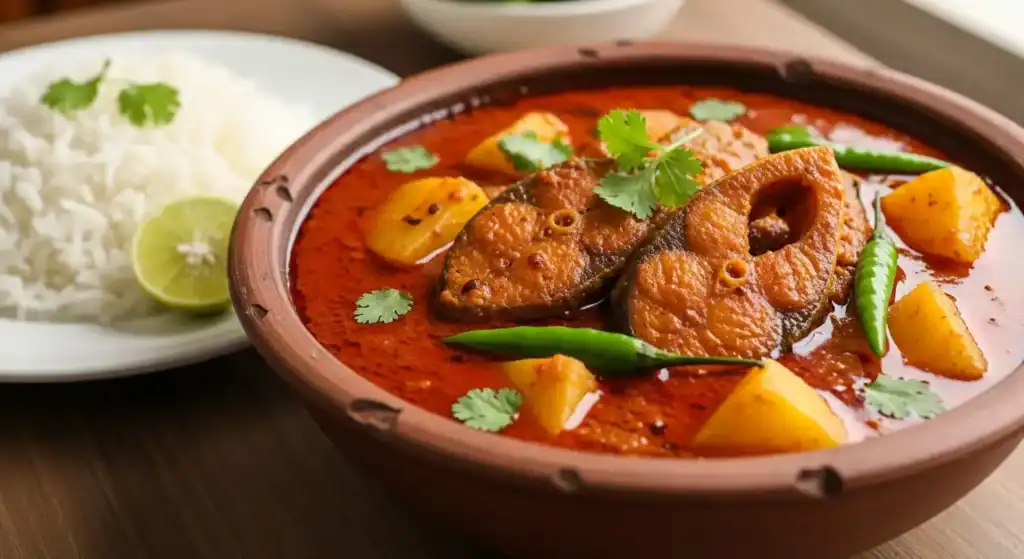
Kolkata Macher Jhol – Light Bengali Fish Curry with Mustard and Spices
Table of Contents
Introduction
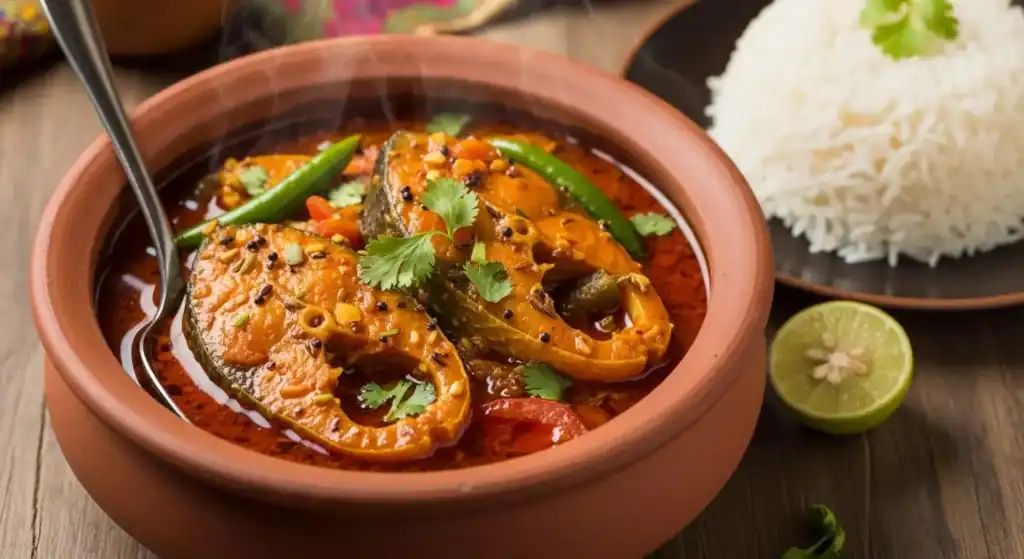
Few dishes capture the warmth of a Bengali kitchen like Macher Jhol, a light and aromatic fish curry that symbolizes comfort, tradition, and love. This humble yet flavorful dish is a staple in nearly every Bengali household—from the bustling streets of Kolkata to the quiet villages along the Hooghly River.
Macher Jhol, which literally translates to “fish curry,” is more than just a meal—it’s a part of Bengal’s soul. Made with fresh fish, mustard oil, potatoes, and a delicate blend of spices, it’s a dish that perfectly balances simplicity and sophistication. The mustard adds a signature pungent kick, while the light broth keeps it refreshing and comforting.
Whether served with steaming white rice for lunch or enjoyed as part of a festive meal, Kolkata Macher Jhol is pure nostalgia for anyone with Bengali roots—and a delightful discovery for those new to this regional treasure.
In this article, you’ll learn the history of this iconic dish, the traditional ingredients, step-by-step preparation, and its health benefits, all explained in an easy, beginner-friendly way.
History of Macher Jhol
The story of Macher Jhol is deeply entwined with Bengal’s geography and culture. Blessed with numerous rivers, ponds, and the Bay of Bengal itself, the region has always had an abundance of fish—especially freshwater varieties like Rohu (Rui), Catla, and Hilsa (Ilish).
Historically, Bengalis have been known as passionate fish lovers. The phrase “Mache Bhate Bangali” (fish and rice make a Bengali) perfectly captures this cultural identity. Fish was not just a source of nourishment but a symbol of prosperity and celebration.
The origin of Macher Jhol dates back to the early agrarian societies of Bengal, where families cooked freshly caught fish in a light, spiced broth to complement the day’s rice harvest. Over time, as trade routes expanded, ingredients like turmeric, cumin, and mustard seeds became essential to Bengali cooking.
The Kolkata version of Macher Jhol, known for its mustard-forward flavor, reflects the city’s multicultural evolution. Influences from neighboring states and even British colonial times shaped its mild yet deeply aromatic flavor profile. Today, it remains a cornerstone of Bengali cuisine—a dish that bridges generations and continues to define the comfort food of millions.
Ingredients
The magic of Macher Jhol lies in its simplicity. Each ingredient plays an essential role in creating the perfect harmony of flavors—light, spicy, and subtly tangy.
Main Ingredients:
- 500g fresh fish (Rohu, Catla, or Hilsa preferred)
- 2 medium potatoes, peeled and cut into wedges
- 2 medium tomatoes, chopped
- 1 onion, finely sliced
- 1 teaspoon ginger paste
- 1 teaspoon garlic paste
- 2 green chilies, slit
- ½ teaspoon cumin seeds
- ½ teaspoon black mustard seeds
- 1 teaspoon turmeric powder
- 1 teaspoon red chili powder
- 1 teaspoon coriander powder
- 1 tablespoon mustard oil (for frying fish) + 1 tablespoon for curry
- 2 cups water
- Salt to taste
- Fresh coriander leaves for garnish
Optional for Mustard Paste (for an authentic Kolkata touch):
- 1 tablespoon yellow mustard seeds
- 1 teaspoon black mustard seeds
- 1 green chili
- A pinch of salt
- 2 tablespoons water
Grind these into a smooth paste for a distinct mustard kick that defines authentic Kolkata-style Macher Jhol.
Step-by-Step Preparation
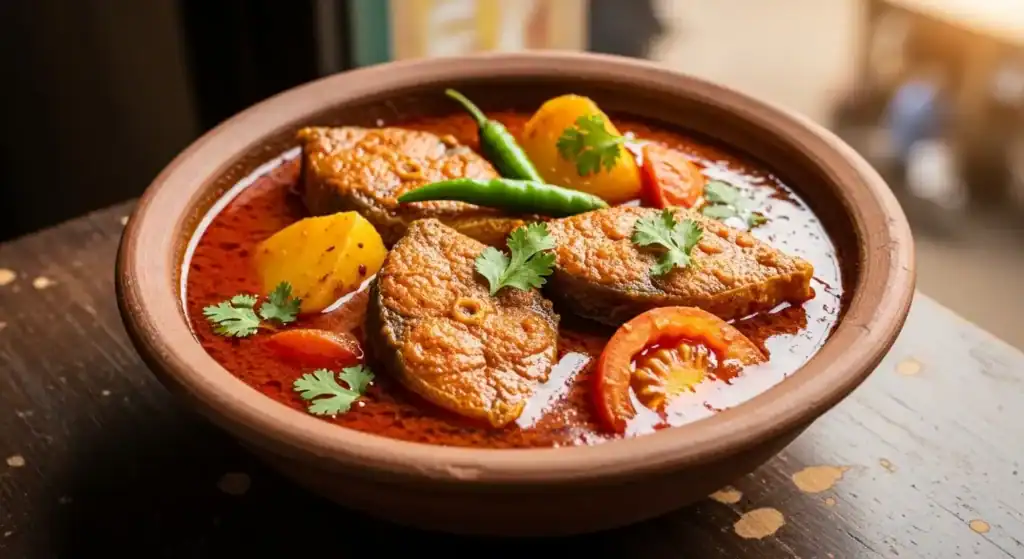
Cooking Macher Jhol is not complicated—it’s about patience, balance, and the right blend of spices. Let’s go through the process step by step:
Step 1: Prepare the Fish
Clean and wash the fish pieces thoroughly. Pat them dry and rub with turmeric powder and salt. Marinate for about 10 minutes.
Step 2: Fry the Fish
Heat mustard oil in a deep pan until it begins to smoke lightly (this removes its raw smell). Reduce the heat to medium and gently fry the fish pieces until golden on both sides. Remove them from the pan and keep aside.
💡 Pro Tip: Mustard oil adds a sharp, earthy aroma that defines Bengali cuisine. Don’t skip this step—it’s essential for authentic flavor.
Step 3: Sauté the Potatoes and Onions
In the same pan, add a little more mustard oil if needed. Fry the potato wedges until they turn golden brown. Remove and set aside.
Add cumin seeds and mustard seeds to the remaining oil. Once they start to splutter, add onions and sauté until they become soft and translucent.
Step 4: Add Aromatics and Spices
Now, add ginger-garlic paste and cook for a minute until fragrant.
Stir in the turmeric, red chili, and coriander powders. Mix well so the spices coat the onions evenly.
Step 5: Build the Curry Base
Add the chopped tomatoes and cook until they soften and the oil begins to separate from the masala.
If you’re using the mustard paste, add it now and stir gently—it will give your curry its characteristic flavor and aroma.
Step 6: Simmer the Broth
Pour in about 2 cups of warm water and bring the curry to a gentle boil. Add the fried potatoes and let them cook until tender. This should take about 10 minutes on medium heat.
Step 7: Add the Fried Fish
Once the potatoes are cooked, carefully slide in the fried fish pieces. Reduce the heat to low and simmer for 5–7 minutes. This allows the fish to soak up the flavors of the curry.
Step 8: Finish and Garnish
Taste and adjust salt or spice levels as needed. Turn off the heat and garnish with fresh coriander leaves and a few green chilies for aroma.
Serve hot with steamed white rice, the traditional companion to Macher Jhol.
Health Benefits of Macher Jhol
One of the reasons Macher Jhol remains a household favorite is not just its taste—but its nutritional value. It’s a wholesome, light, and balanced meal that’s as healthy as it is comforting.
1. High in Lean Protein
Fish, especially freshwater varieties like Rohu and Catla, are excellent sources of lean protein that help build and repair body tissues.
2. Heart-Healthy Omega-3s
Fish provides essential omega-3 fatty acids that support cardiovascular health, reduce inflammation, and improve brain function.
3. Nutrient-Rich Spices
The spices in Macher Jhol—like turmeric, cumin, and mustard—are packed with antioxidants and have anti-inflammatory benefits.
4. Mustard Oil for Good Cholesterol
Used in moderation, mustard oil is rich in monounsaturated fats that help regulate cholesterol and improve metabolism.
5. Light and Digestible
Unlike heavy curries, Macher Jhol’s broth-like consistency makes it easy to digest, making it ideal for all ages and even for those recovering from illness.
6. A Balanced Meal
Paired with rice, Macher Jhol forms a complete and balanced meal, offering carbohydrates, proteins, and healthy fats—all in one delicious plate.
Tips for Perfect Macher Jhol
- Always use fresh fish—frozen fish won’t give the same texture or flavor.
- Mustard oil should always be heated until it smokes slightly before use.
- For a more intense flavor, add a few drops of raw mustard oil at the end of cooking.
- Avoid overcooking the fish; it can become dry and lose its tenderness.
- Adjust the spice level with green chilies instead of extra red chili powder for authentic Bengali heat.
Conclusion
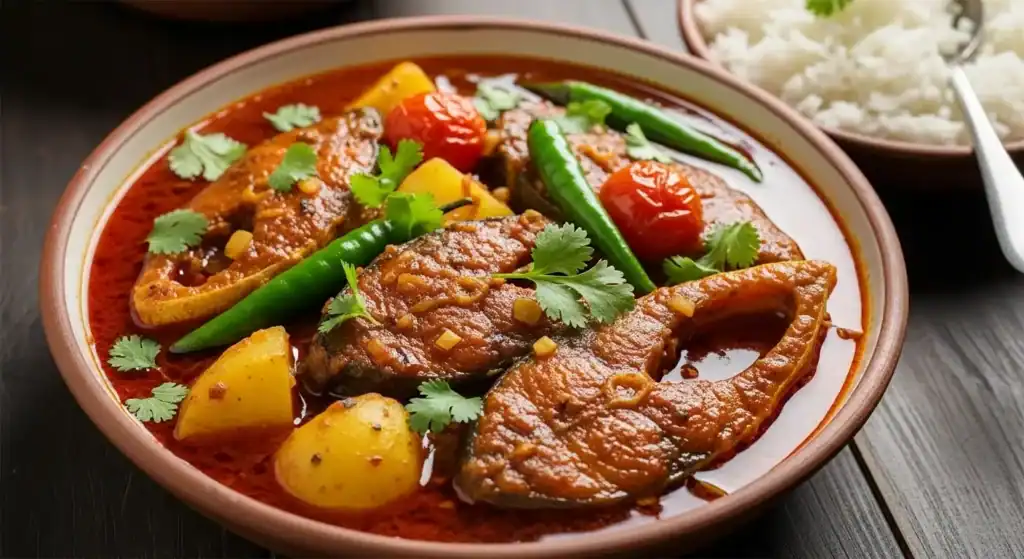
Kolkata Macher Jhol isn’t just food—it’s a piece of Bengal’s heart and heritage. Each spoonful brings together the earthiness of mustard, the warmth of spices, and the comfort of home-cooked simplicity. It’s light, soulful, and packed with authentic regional flavors that speak of centuries of culinary tradition.
If you’ve never tried making it before, this is your sign to dive into Bengali cuisine. It’s simple, nourishing, and endlessly rewarding. Once you master this, you’ll understand why Macher Jhol holds such an emotional place in every Bengali household.
And once you’ve savored this comforting fish curry, why not continue your kitchen adventure? Try your hand at sourdough baking—another beautiful, patient, and satisfying culinary art that fills your home with warmth and joy.