
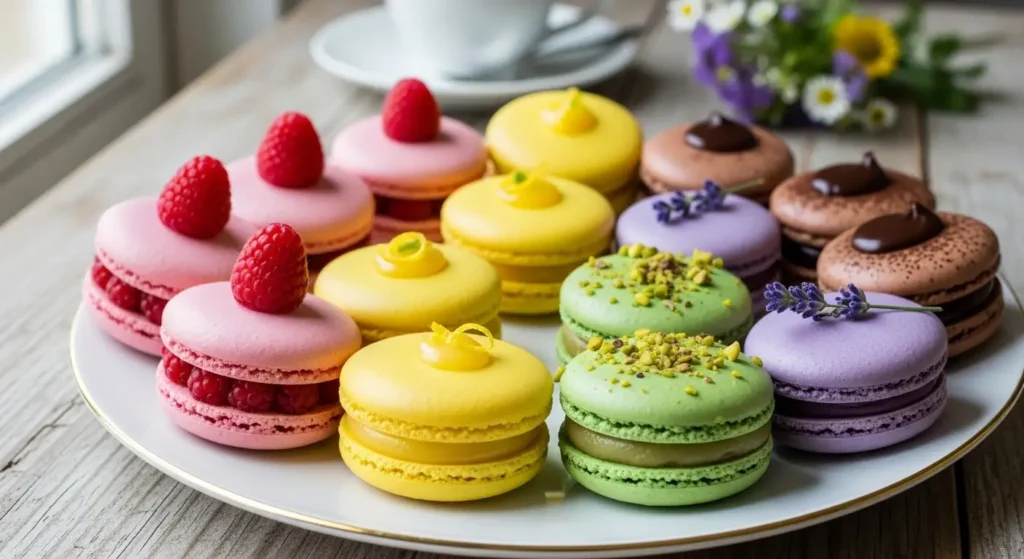
Macarons: The Delicate French Cookie That Captivates the World
Introduction
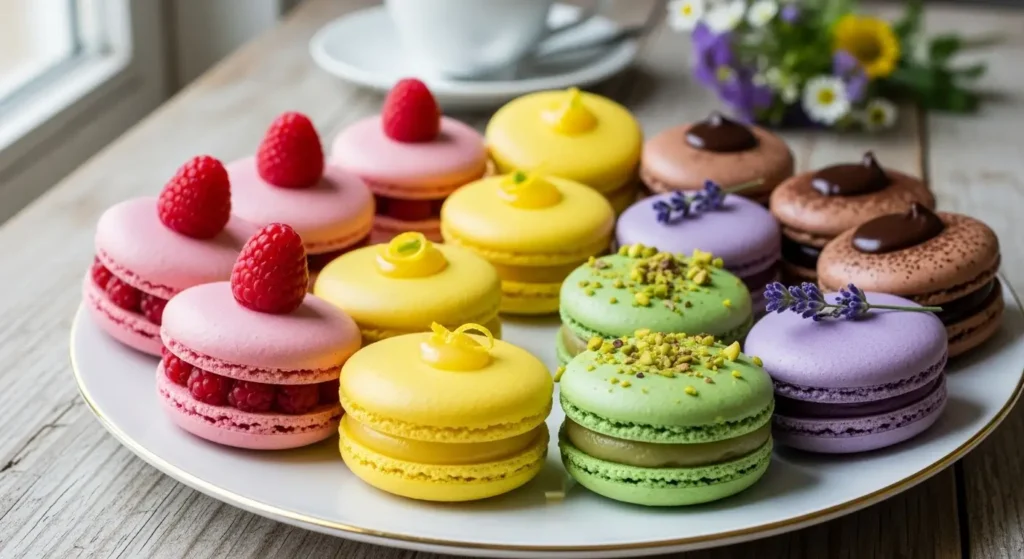
Few desserts have captured global attention quite like the French macaron. With their crisp, airy shells, chewy interiors, and rich fillings, macarons are more than just cookies—they’re edible works of art. Available in an endless array of flavors and colors, from pistachio green to raspberry pink, macarons bring a touch of elegance to any occasion.
But while these dainty treats may look intimidating, they can be made at home with the right ingredients, techniques, and patience. In this guide, we’ll explore the fascinating history of macarons, their essential ingredients, how to make them step by step, and even their surprising health benefits. By the end, you’ll be inspired to try baking them yourself—and maybe even venture into sourdough baking later on!
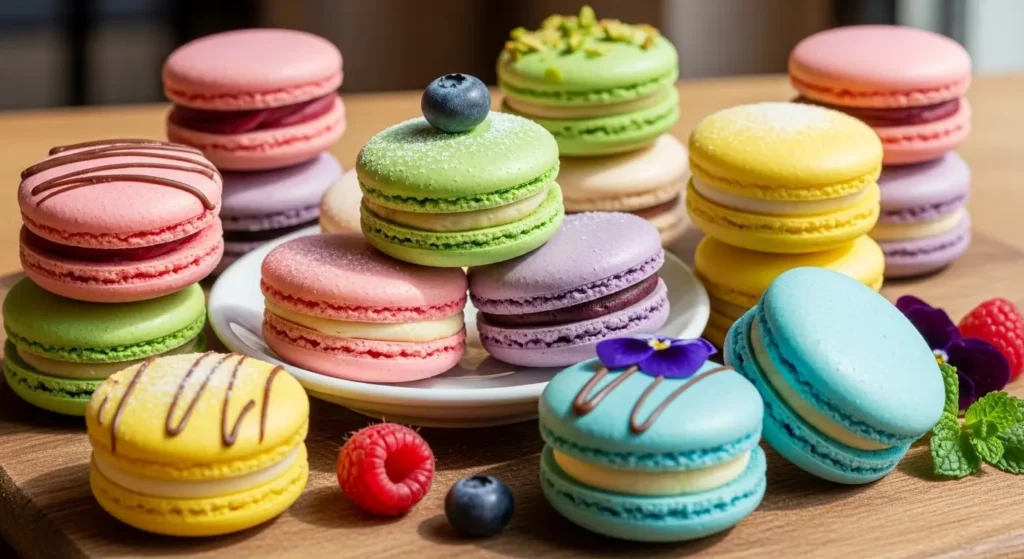
A Brief History of Macarons
The story of macarons is as layered as the cookies themselves.
- Italian Roots: The earliest form of macaron dates back to the 8th century in Venetian monasteries, where they were simple almond-flour cookies.
- Arrival in France: In the 16th century, Catherine de’ Medici, an Italian noblewoman who married King Henry II of France, introduced the almond-based cookies to the French court.
- Parisian Twist: The modern macaron as we know it today—two meringue-based shells sandwiched with ganache, buttercream, or jam—was developed in Paris during the 19th century. Legendary French pastry shops like Ladurée and Pierre Hermé helped elevate the macaron into a luxury treat celebrated around the globe.
Today, the macaron is considered a symbol of French sophistication and is enjoyed not just in Parisian cafés but in bakeries from New York to Tokyo.
Essential Ingredients for Macarons
Though they look complex, macarons are made with surprisingly few ingredients. What makes them challenging is the precision required in preparation.
Here’s what you’ll need:
- Almond Flour – Finely ground almonds give macarons their signature nutty flavor and delicate texture.
- Powdered Sugar – Sweetens and blends seamlessly with almond flour for smooth shells.
- Egg Whites – Whipped into a meringue, they provide structure and lightness.
- Granulated Sugar – Stabilizes the meringue during whipping.
- Food Coloring (optional) – Gel or powdered food color works best for vibrant shells.
- Filling Options – Buttercream, chocolate ganache, fruit jam, or even salted caramel.
Step-by-Step Preparation: How to Make Macarons
Macarons can be tricky at first, but once you master the basics, they become incredibly rewarding to make. Follow these steps carefully for the best results:
Step 1: Preparing the Dry Ingredients
- Sift together 120 g almond flour and 200 g powdered sugar into a bowl.
- Discard any coarse bits to ensure smooth, shiny shells.
Step 2: Making the Meringue
- In a clean bowl, whip 100 g egg whites (about 3 eggs) on medium speed until foamy.
- Gradually add 100 g granulated sugar, a spoonful at a time.
- Continue whipping until stiff peaks form—your meringue should be glossy and hold its shape.
Step 3: Macaronage (Mixing the Batter)
- Gently fold the sifted almond flour–sugar mixture into the meringue in batches.
- The batter should flow like lava—thick but able to ribbon off the spatula smoothly.
- Be careful not to overmix; this is the most crucial step.
Step 4: Piping the Shells
- Transfer the batter into a piping bag fitted with a round tip.
- Pipe 1.5-inch circles onto parchment paper or a silicone mat.
- Tap the tray firmly on the counter to release air bubbles.
Step 5: Resting the Shells
- Let the piped shells sit at room temperature for 30–60 minutes until a skin forms.
- They should no longer stick to your finger when gently touched.
Step 6: Baking
- Preheat the oven to 150°C (300°F).
- Bake for 15–18 minutes, rotating trays halfway through.
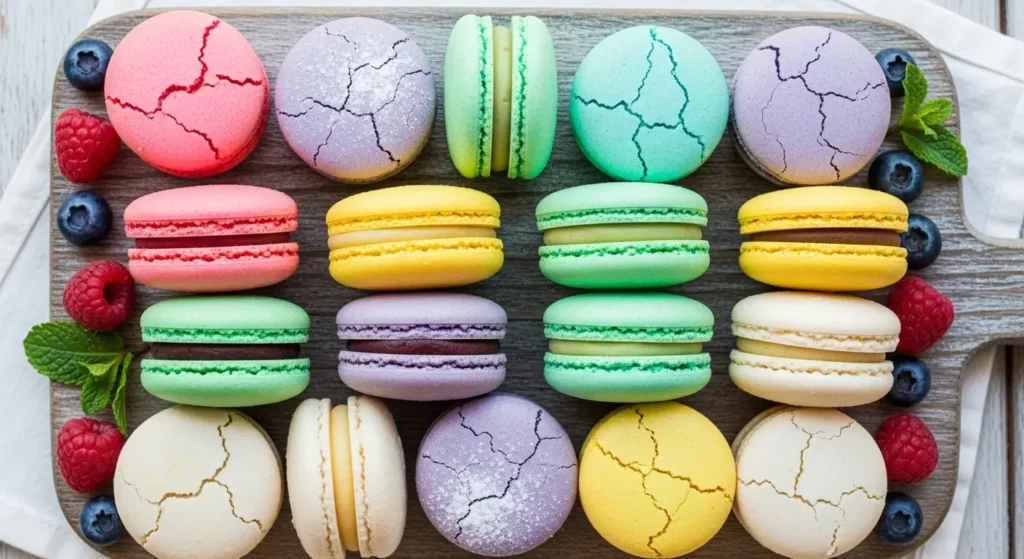
- Perfect macarons will have “feet”—the ruffled edges at the bottom.
Step 7: Cooling and Filling
- Allow shells to cool completely before removing from the baking mat.
- Pair similar-sized shells together.
- Pipe your desired filling (buttercream, ganache, or jam) onto one shell, then sandwich with another.
Step 8: Maturing (Optional but Recommended)
- Place filled macarons in an airtight container in the refrigerator for 24–48 hours.
- This resting time allows flavors to meld and shells to soften slightly for the perfect bite.
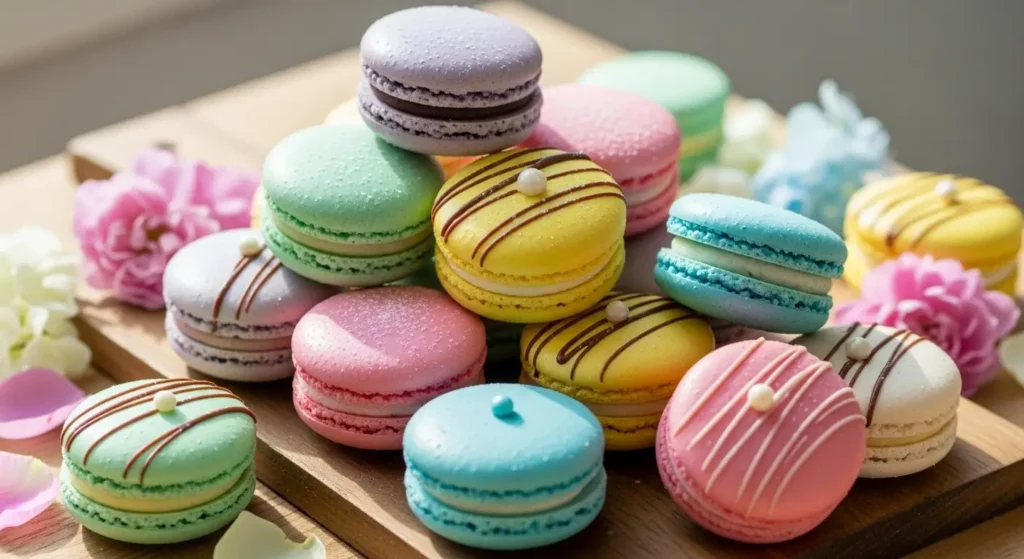
Health Benefits of Macarons
While macarons are definitely a treat, they also offer some surprising benefits when enjoyed in moderation:
1. Naturally Gluten-Free
Since they’re made with almond flour instead of wheat, macarons are a great option for those who avoid gluten.
2. Rich in Protein and Healthy Fats
Almonds provide plant-based protein and heart-healthy fats, making macarons slightly more nutritious than many other desserts.
3. Portion-Control Friendly
Macarons are small and delicate, making them a great way to satisfy a sweet craving without overindulging.
4. Emotional Well-Being
Food isn’t just about physical health—it’s also about joy. Sharing a box of colorful macarons can brighten your mood and strengthen social bonds.
Tips for Perfect Macarons
- Use aged egg whites (leave them covered in the fridge for 24–48 hours) for better stability.
- Weigh your ingredients with a kitchen scale—precision is key.
- Avoid humid environments, as moisture can ruin the shells.
- Experiment with flavors like lavender, matcha, or salted caramel to personalize your creations.
Conclusion
Macarons are more than just cookies—they’re a blend of history, artistry, and precision that makes them one of the most beloved desserts worldwide. With almond flour, sugar, egg whites, and patience, you can recreate these iconic French treats in your own kitchen.
If you’ve mastered macarons or are simply inspired by their delicate process, why not take your baking journey further and try sourdough baking? Just like macarons, sourdough celebrates technique, timing, and tradition—offering a new challenge with delicious rewards.
So, gather your ingredients, put on your apron, and step into the world of French patisserie. Once you bite into your first homemade macaron, you’ll understand why these little gems continue to enchant the world.