
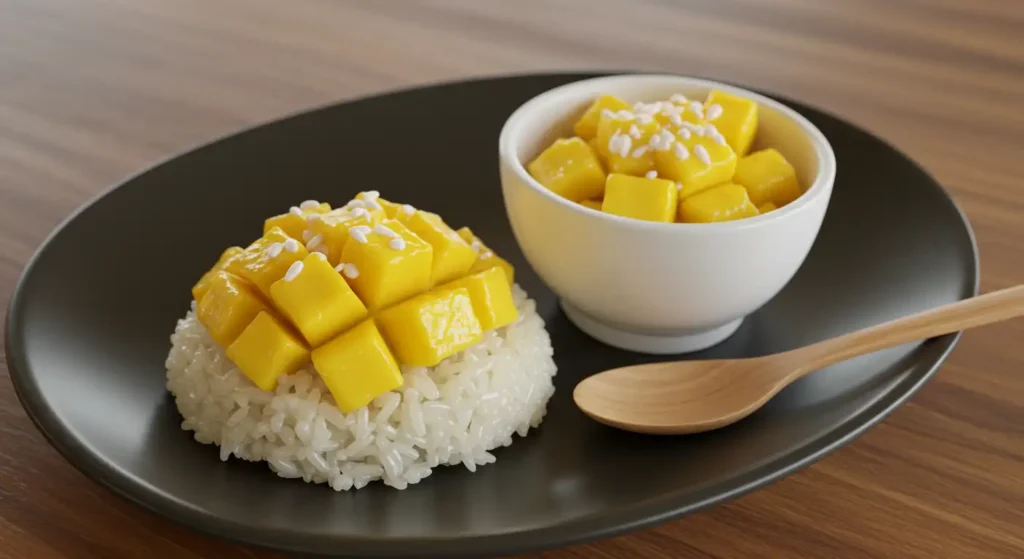
Mango Sticky Rice (ข้าวเหนียวมะม่วง): Thailand’s Sweet Tropical Classic
Table of Contents
Introduction
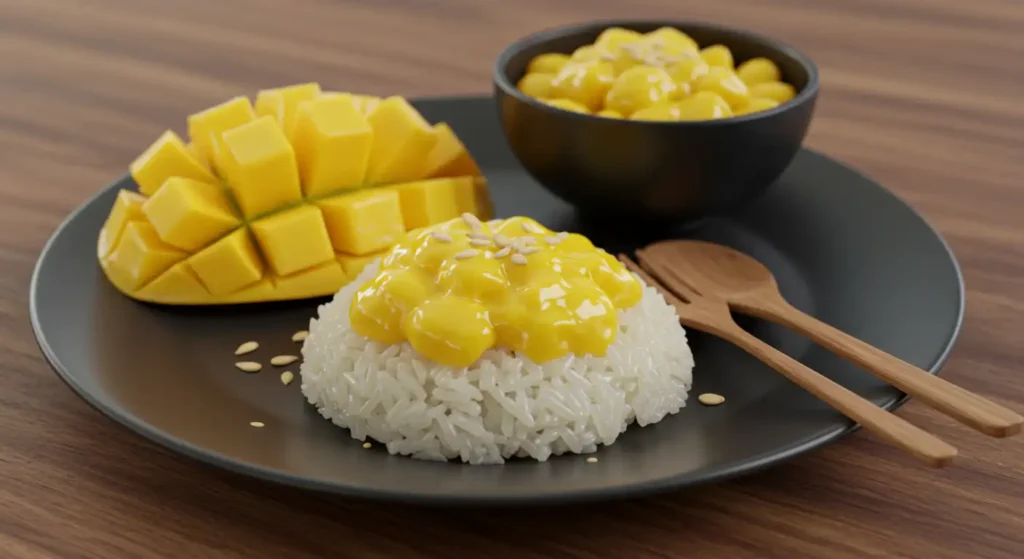
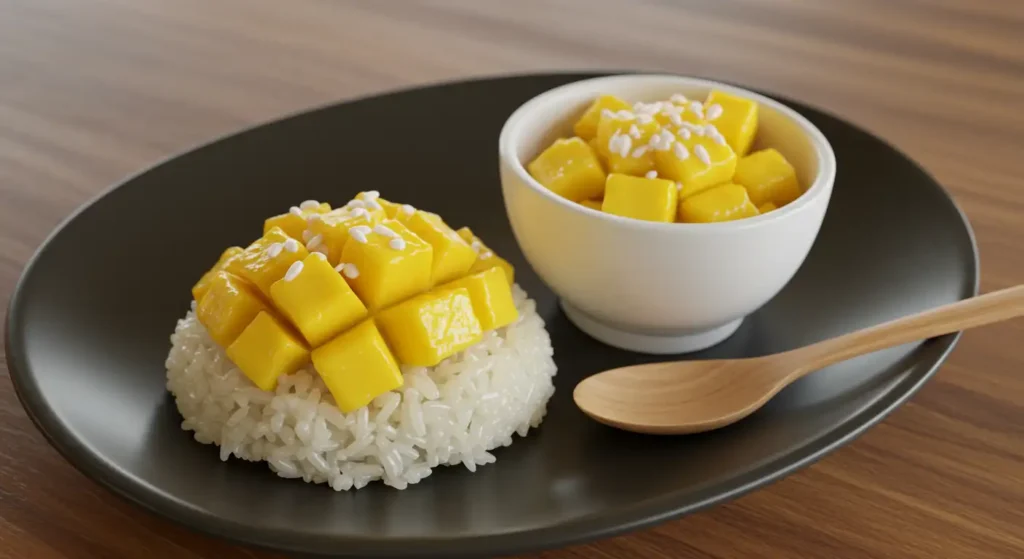
Few desserts capture the essence of Thai cuisine as beautifully as Mango Sticky Rice (ข้าวเหนียวมะม่วง). This beloved dish combines three simple elements—fragrant sticky rice, creamy coconut milk, and ripe mangoes—into a harmony of textures and flavors. It’s sweet yet slightly salty, rich yet refreshing, and always satisfying.
Often served during mango season, this dessert has become a global favorite, appearing on menus from Bangkok street stalls to fine dining restaurants abroad. But the best part? You don’t need to travel to Thailand to enjoy it. With a few key ingredients and a little preparation, you can easily make Mango Sticky Rice at home.
In this guide, we’ll explore the history of Mango Sticky Rice, walk through its ingredients, provide a detailed step-by-step recipe, and highlight the health benefits of this tropical treat.
History of Mango Sticky Rice
Roots in Thai Tradition
Mango Sticky Rice is deeply connected to Thai culture and cuisine. Known locally as Khao Niew Mamuang, the dish is believed to have originated centuries ago in central Thailand, where sticky rice and coconut milk were commonly paired in desserts. Mangoes, introduced from South Asia, became the perfect seasonal complement.
Seasonal Significance
Traditionally, Mango Sticky Rice is enjoyed during the Thai mango season (April to June), which coincides with Songkran, the Thai New Year festival. Sharing this dessert is a way of celebrating abundance, togetherness, and the joy of seasonal harvests.
Rise to Global Popularity
As Thai food spread across the globe, Mango Sticky Rice became one of the most iconic dishes, often featured on restaurant menus as the sweet finale to a spicy Thai meal. Its worldwide fame comes from its simplicity and universal appeal—after all, who can resist sweet mango paired with creamy rice?
Ingredients of Mango Sticky Rice
The beauty of Mango Sticky Rice lies in its simplicity. With just a few ingredients, it delivers an unforgettable flavor experience.
Core Ingredients
- Glutinous Rice (Sticky Rice) – The base of the dish, known for its chewy, slightly sticky texture.
- Coconut Milk – Rich and creamy, it’s the key to flavoring the sticky rice.
- Ripe Mangoes – Fresh, sweet mangoes are essential; the best varieties in Thailand are Nam Dok Mai and Ok Rong.
- Sugar – Balances the flavors and sweetens the coconut milk.
- Salt – A pinch enhances the sweetness and brings out the creaminess of coconut milk.
Optional Garnishes
- Toasted Mung Beans or Sesame Seeds – Add crunch and nutty flavor.
- Coconut Cream – Drizzled on top for an extra-rich finish.
- Pandan Leaf – Sometimes infused in the coconut milk for aroma.
Step-by-Step Preparation
Making Mango Sticky Rice at home is straightforward, though it requires some patience with soaking and steaming the rice. Here’s a beginner-friendly recipe:
Step 1: Soak the Sticky Rice
- Measure about 1 cup of glutinous rice.
- Rinse several times until the water runs clear.
- Soak the rice in water for at least 4 hours or overnight for best texture.
Step 2: Steam the Sticky Rice
- Drain the soaked rice.
- Steam the rice in a bamboo or metal steamer lined with cheesecloth for about 25–30 minutes, until tender and translucent.
Step 3: Prepare the Coconut Sauce
- In a saucepan, combine:
- 1 cup coconut milk
- ½ cup sugar
- ½ teaspoon salt
- Heat gently, stirring until the sugar dissolves. Do not boil, as coconut milk can curdle.
Step 4: Mix Rice with Coconut Sauce
- Transfer the hot steamed rice to a mixing bowl.
- Gradually pour about two-thirds of the coconut sauce over the rice.
- Stir well, cover, and let sit for 20–30 minutes. The rice will absorb the coconut milk, becoming soft and flavorful.
Step 5: Prepare the Mangoes
- Peel and slice ripe mangoes into even, attractive slices.
- Aim for mangoes that are sweet, juicy, and slightly firm.
Step 6: Assemble the Dish
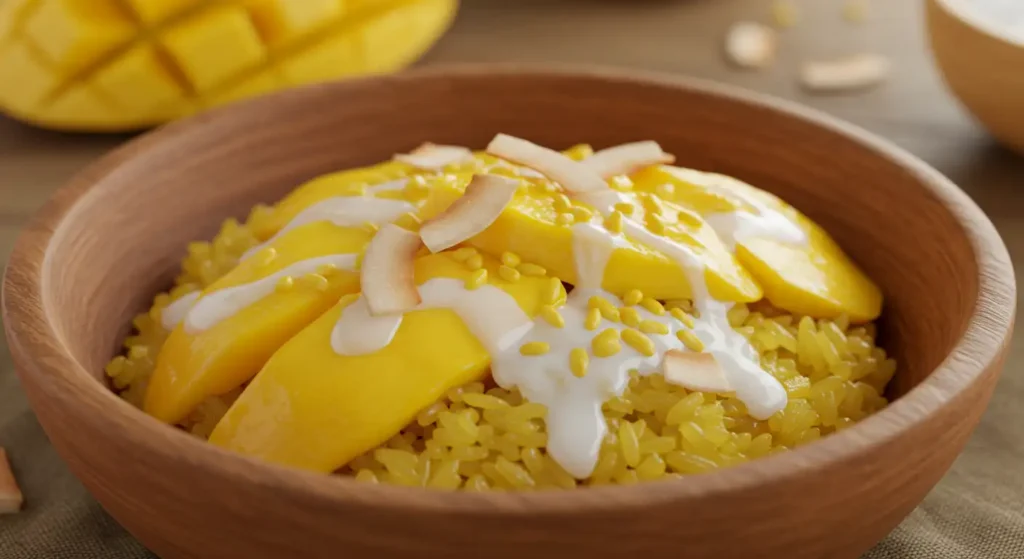
- Place a portion of coconut sticky rice on a plate.
- Arrange mango slices neatly on the side.
- Drizzle with the remaining coconut sauce.
- Garnish with toasted mung beans or sesame seeds.
And there you have it—authentic Mango Sticky Rice, ready to enjoy!
Health Benefits of Mango Sticky Rice
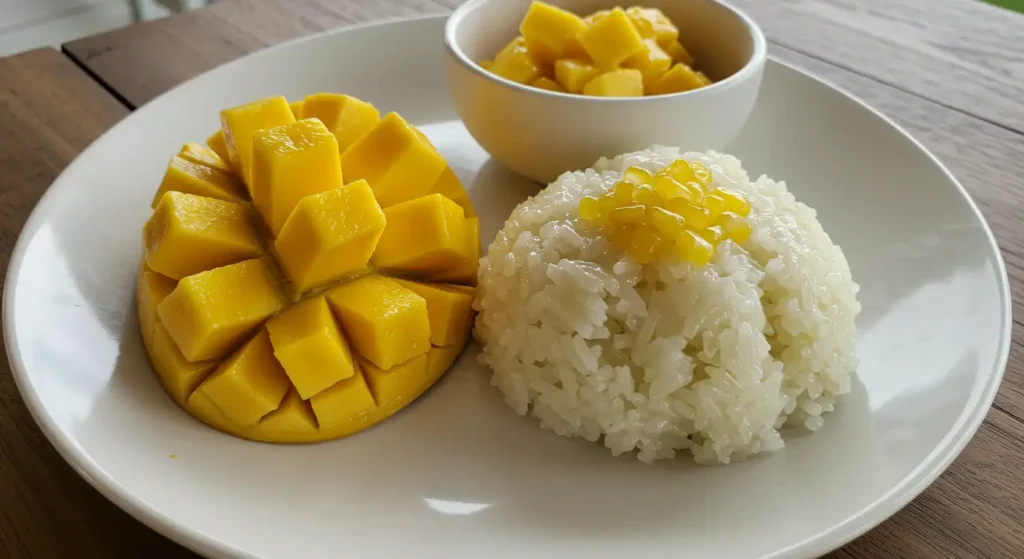
Though often seen as a decadent dessert, Mango Sticky Rice has several nutritional benefits:
1. Rich in Vitamins and Minerals
- Mangoes are packed with vitamin C, vitamin A, and antioxidants, which boost immunity, improve skin health, and aid digestion.
2. Provides Energy
- Sticky rice is a good source of carbohydrates, making it a quick energy booster. Perfect as a post-meal treat or light afternoon snack.
3. Healthy Fats
- Coconut milk contains medium-chain triglycerides (MCTs), which may support metabolism and provide sustainable energy.
4. Gluten-Free Dessert
- Since sticky rice is naturally gluten-free, Mango Sticky Rice is a safe option for those with gluten sensitivities.
5. Balances Sweet and Salty
- Unlike many desserts, the slight saltiness in the coconut milk balances the sweetness, preventing sugar overload and enhancing overall satisfaction.
Tips for Perfect Mango Sticky Rice
- Choose ripe mangoes – Sweet, juicy varieties make all the difference.
- Don’t skip the salt – A little salt balances the sweetness beautifully.
- Soak rice properly – This ensures the sticky rice cooks evenly and develops the right texture.
- Serve fresh – The dessert tastes best when the mango is fresh and the rice is slightly warm.
Conclusion
Mango Sticky Rice (ข้าวเหนียวมะม่วง) is more than just a dessert—it’s a taste of Thai culture, tradition, and tropical abundance. With fragrant sticky rice, creamy coconut milk, and sweet ripe mangoes, it’s no wonder this dish is cherished across Thailand and loved worldwide.
The good news? You don’t have to wait for your next trip to Bangkok to enjoy it. With a few ingredients and a little preparation, you can recreate this delicious treat in your own kitchen.
And just like baking your first loaf of sourdough bread, making Mango Sticky Rice at home is a joyful, hands-on experience that connects you to tradition while giving you a taste of something truly special. Why not give it a try?