
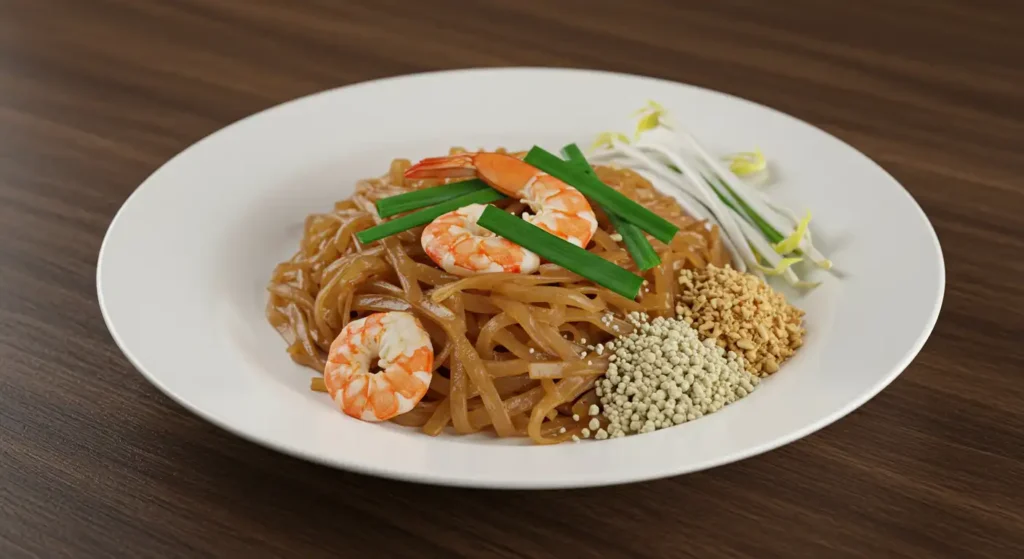
Pad Thai (ผัดไทย): The Ultimate Guide to Thailand’s Iconic Stir-Fried Noodles
Pad Thai (ผัดไทย) is more than just a dish—it’s a cultural icon that represents the vibrant flavors, rich history, and culinary creativity of Thailand. Known for its perfect balance of sweet, sour, salty, and umami, Pad Thai has captured the hearts of food lovers worldwide. This guide will take you through the history, ingredients, step-by-step preparation, and health benefits of this beloved Thai noodle dish, so you can recreate it in your own kitchen with confidence.
Table of Contents
Introduction: What is Pad Thai?
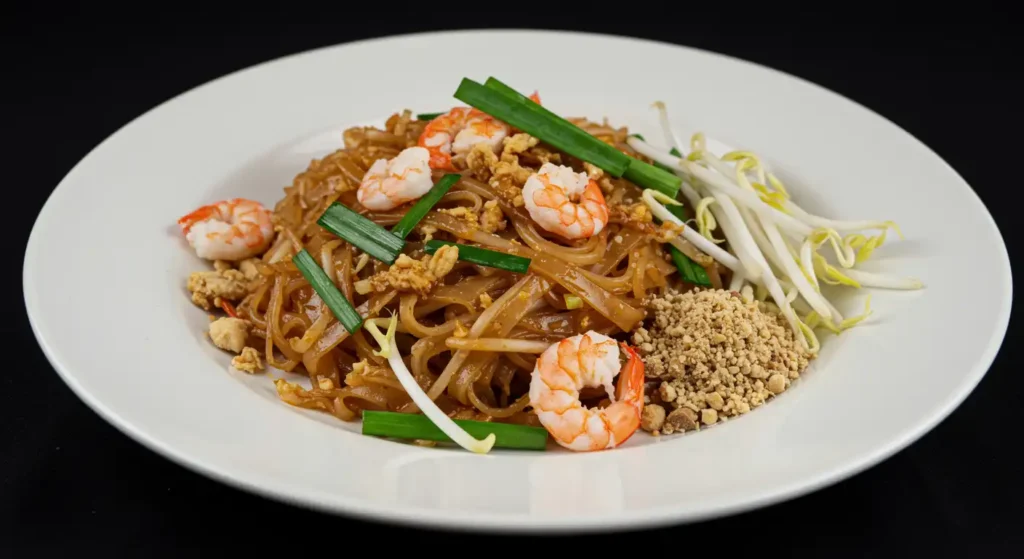
Pad Thai is a stir-fried noodle dish that combines rice noodles, proteins like shrimp, chicken, or tofu, fresh vegetables, and a unique sauce made from tamarind, fish sauce, and palm sugar. It’s usually garnished with crushed peanuts, lime wedges, and fresh herbs, creating a symphony of textures and flavors in every bite.
Whether enjoyed at a bustling street stall in Bangkok or cooked at home, Pad Thai offers a quick, flavorful, and satisfying meal. Its popularity is not just limited to Thailand—restaurants around the world serve it as a staple of Asian cuisine.
SEO keywords: Pad Thai recipe, Thai noodles, authentic Pad Thai, stir-fried noodles
History of Pad Thai
The history of Pad Thai is as fascinating as its taste. Although often associated with traditional Thai cuisine, Pad Thai is a relatively modern invention. It gained prominence in the 1930s and 1940s during the government of Prime Minister Plaek Phibunsongkhram, who promoted it as a national dish to encourage Thai identity and nutrition during a time of economic hardship.
Before its rise to national fame, noodles were introduced to Thailand by Chinese immigrants. Over time, the Thai adapted these ingredients with local flavors, creating the sweet, tangy, and savory combination we know today.
Interestingly, Pad Thai’s invention was also practical—it was quick to cook, affordable, and could feed large numbers of people. Its street food origin remains strong, making it a staple in Thai markets and festivals.
SEO keywords: history of Pad Thai, origin of Pad Thai, Thai street food
Ingredients for Authentic Pad Thai
Creating authentic Pad Thai at home starts with gathering the right ingredients. While variations exist, the essential components include:
Noodles
- Rice noodles (sen lek or sen yai): Thin or medium-width rice noodles work best. They are soft, slightly chewy, and absorb the flavorful sauce beautifully.
Proteins
- Shrimp, chicken, or tofu: Depending on your preference, Pad Thai can be made vegetarian by omitting meat and using tofu.
Vegetables & Aromatics
- Garlic: Adds a fragrant base flavor.
- Shallots or onions: Provide a subtle sweetness.
- Bean sprouts: For crunch and freshness.
- Scallions: Adds color and mild onion flavor.
Sauce Ingredients
- Tamarind paste: Gives Pad Thai its signature tangy taste.
- Fish sauce: Adds umami and depth.
- Palm sugar: Balances the sourness of tamarind with sweetness.
- Chili flakes or fresh chili (optional): For a spicy kick.
Garnishes
- Crushed peanuts: Adds crunch and nuttiness.
- Lime wedges: Enhances the tangy flavor.
- Fresh herbs (cilantro or Thai basil): Adds aroma and freshness.
SEO keywords: Pad Thai ingredients, how to make Pad Thai, authentic Thai noodles
Step-by-Step Preparation of Pad Thai
Cooking Pad Thai may seem intimidating, but with a few tips and careful timing, you can achieve restaurant-quality results at home.
Step 1: Prepare the Noodles
- Soak rice noodles in warm water for 20–30 minutes until they are soft but not mushy.
- Drain and set aside.
Step 2: Make the Sauce
- In a small bowl, mix 3 tablespoons tamarind paste, 3 tablespoons fish sauce, 2 tablespoons palm sugar, and 1–2 teaspoons chili flakes (if desired).
- Stir until smooth. Taste and adjust the balance of sweet, sour, and salty.
Step 3: Cook the Protein
- Heat 2 tablespoons vegetable oil in a wok or large skillet over medium-high heat.
- Add garlic and shallots, stir-fry until fragrant.
- Add shrimp, chicken, or tofu, and cook until fully done. Remove from pan and set aside.
Step 4: Stir-Fry the Noodles
- Add another teaspoon of oil if needed.
- Toss in the drained noodles and stir-fry briefly.
- Pour the prepared sauce over the noodles and mix thoroughly.
Step 5: Combine Everything
- Return cooked protein to the pan.
- Add bean sprouts and scallions. Stir-fry quickly for 1–2 minutes, keeping the noodles slightly firm.
Step 6: Serve and Garnish
- Transfer Pad Thai to a serving plate.
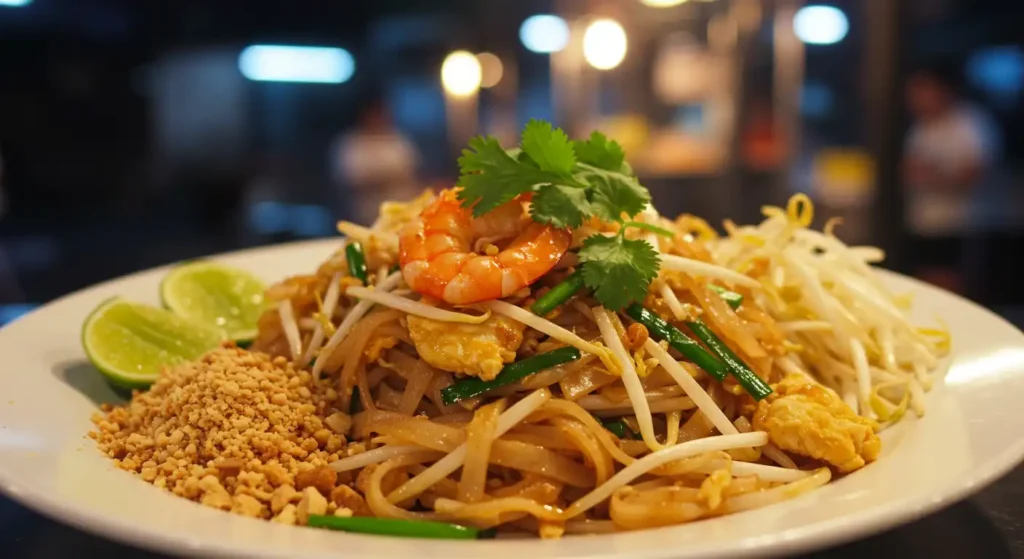
- Sprinkle crushed peanuts on top and serve with lime wedges.
- Optional: garnish with fresh cilantro or Thai basil for extra aroma.

Tips for Perfect Pad Thai
- Avoid over-soaking noodles: They continue to cook in the pan.
- High heat is key: Stir-frying at high heat ensures a slightly smoky flavor.
- Balance flavors: Pad Thai is all about the perfect harmony of sweet, sour, salty, and umami. Taste and adjust the sauce as needed.
- Fresh ingredients matter: Bean sprouts, lime, and herbs make a big difference.
Health Benefits of Pad Thai
While Pad Thai is delicious, it can also be a nutritious meal if prepared mindfully.
Nutrient-Rich Ingredients
- Rice noodles: Gluten-free and a good source of carbohydrates for energy.
- Proteins: Shrimp, chicken, or tofu provide essential amino acids and help maintain muscle health.
- Vegetables: Bean sprouts, garlic, and scallions offer vitamins, minerals, and antioxidants.
Low in Unhealthy Fats
- Stir-frying uses minimal oil, and you can opt for heart-healthy oils like canola or olive oil.
Portion Control
- Traditional Pad Thai includes vegetables and lean proteins, making it a balanced meal that provides energy without excessive calories.
Adaptable for Dietary Needs
- Pad Thai can be made vegetarian, vegan, or gluten-free by adjusting proteins, sauces, and noodles.
SEO keywords: Pad Thai health benefits, nutritious Thai food, healthy stir-fry noodles
Conclusion: Bring the Taste of Thailand to Your Kitchen
Pad Thai (ผัดไทย) is a timeless dish that combines history, culture, and incredible flavor in every bite. Its vibrant taste, balance of textures, and ease of preparation make it a perfect meal for any occasion. Whether you’re a beginner or an experienced cook, making Pad Thai at home is a rewarding experience that brings a touch of Thai street food magic into your kitchen.
So why wait? Gather your ingredients, follow these steps, and create your own authentic Pad Thai today. Your taste buds—and your friends and family—will thank you!