Pozole: A Traditional Mexican Soup Full of Flavor, History, and Heart
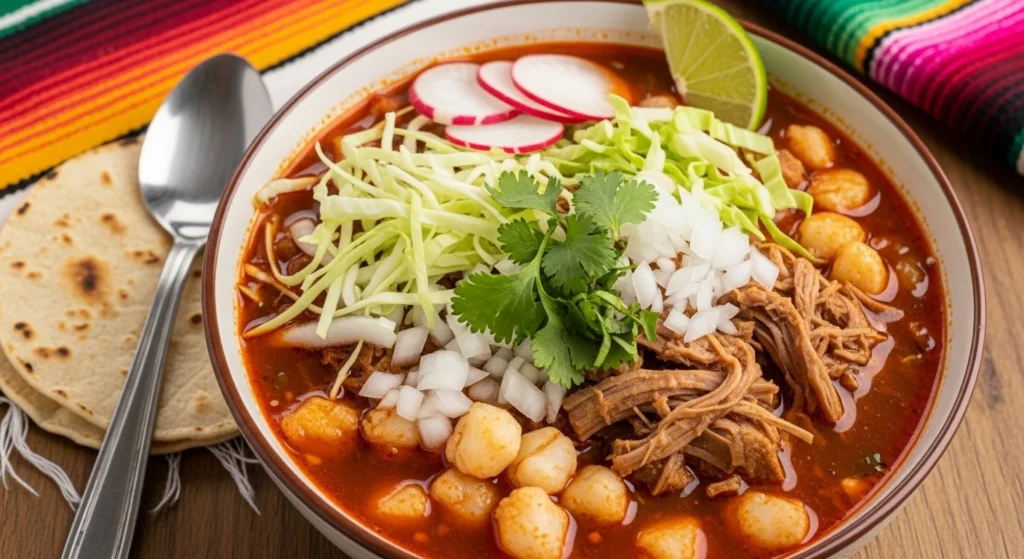
Table of Contents
Introduction
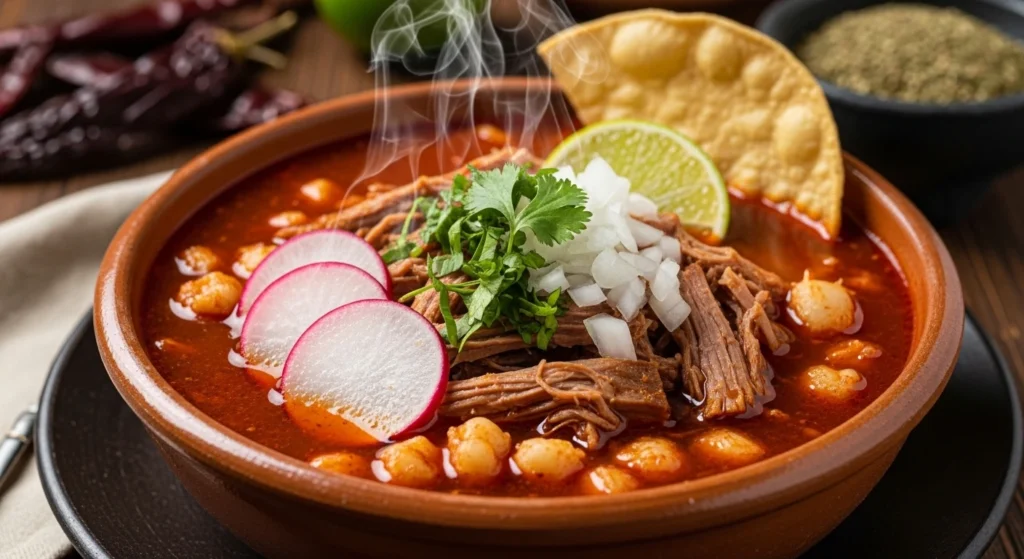
There are few dishes that capture the soul of Mexican cuisine quite like Pozole. Picture a steaming bowl filled with tender meat, hearty hominy, and a broth infused with spices that awaken your senses. Add a splash of lime, a sprinkle of oregano, and the crunch of fresh radishes on top, and you have not just a meal, but a celebration in a bowl.
Whether you’re gathering with family for a holiday, celebrating Mexican Independence Day, or simply craving something warm and nourishing, traditional Pozole soup is one of those timeless recipes that connects generations. But beyond its rich flavors lies a story rooted in culture, history, and tradition. Let’s take a journey into the origins, preparation, and lasting significance of this iconic dish.
History & Origins of Pozole
The story of Pozole stretches back centuries, long before modern Mexico was born. This dish has deep ties to indigenous traditions, particularly the Aztecs, who prepared a version of Pozole for ritual ceremonies. At its core was maize (corn), considered a sacred crop and central to Mesoamerican life.
In pre-Hispanic times, maize was more than just food—it symbolized life itself. Pozole was often prepared for important occasions and shared during gatherings to honor gods and ancestors. Over time, as Spanish influences merged with indigenous traditions, Pozole evolved into the dish we know today. Pork became the primary protein (replacing wild game), while herbs and spices expanded the flavor palette.
Today, Pozole remains a dish of celebration. Families across Mexico enjoy it during Christmas, New Year’s, birthdays, weddings, and, most famously, Mexican Independence Day (September 16th). With its layered history and enduring appeal, Pozole is more than soup—it’s cultural heritage in edible form.
Ingredients in Traditional Pozole
The beauty of Pozole lies in its simplicity and the way each ingredient contributes to its depth of flavor.
The Core Ingredients:
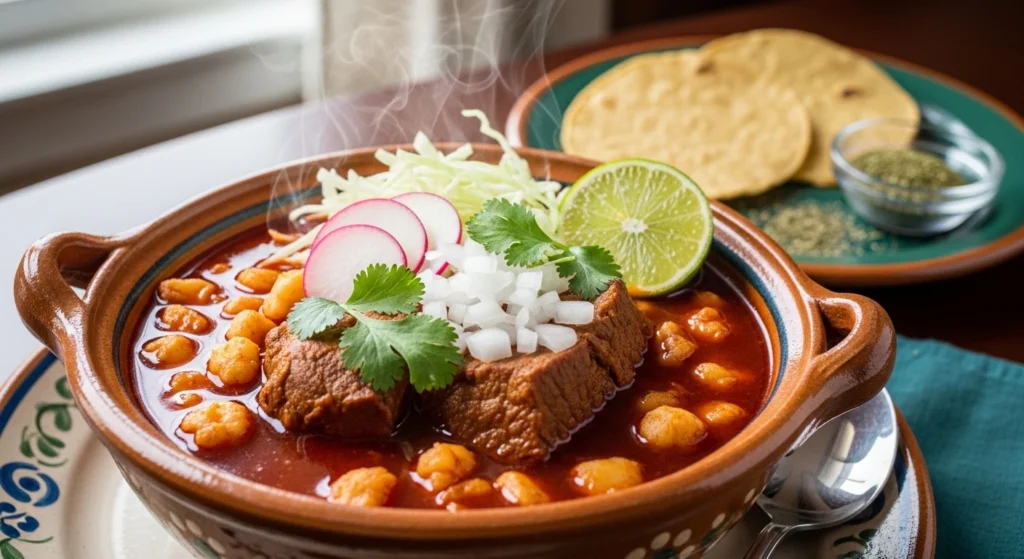
- Hominy (maíz pozolero): Dried corn kernels treated with lime (nixtamalization) to make them puff up. This gives Pozole its signature chewy texture.
- Meat: Traditionally pork shoulder or pork shank is used, though chicken is also common.
- Broth Base: A slow-simmered mixture of meat, garlic, onion, and spices that creates a rich, comforting foundation.
- Chiles: Depending on the style of Pozole (rojo, verde, or blanco), different dried or fresh chiles provide flavor and color.
- Seasonings: Oregano, bay leaf, cumin, and salt are staples.
Common Garnishes & Toppings:
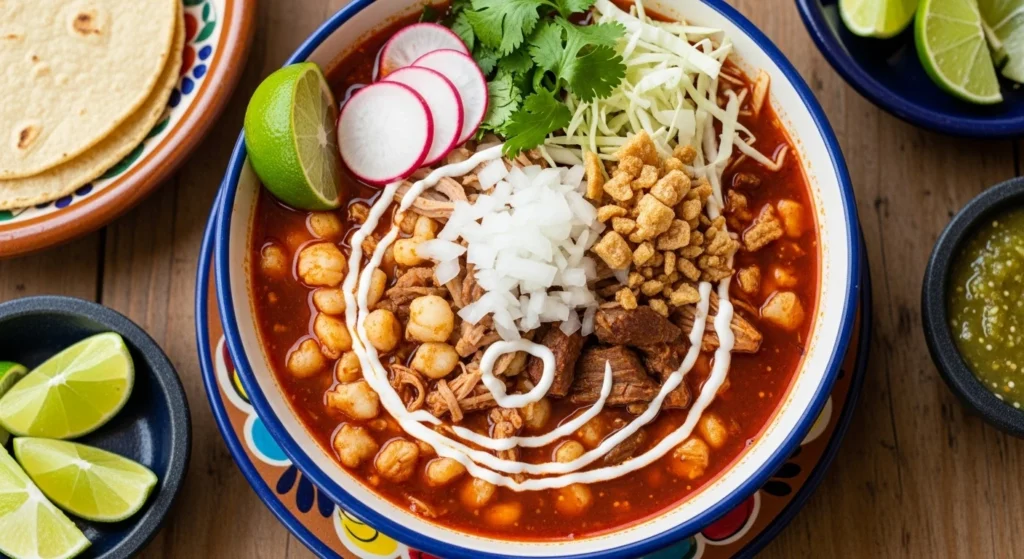
- Shredded lettuce or cabbage
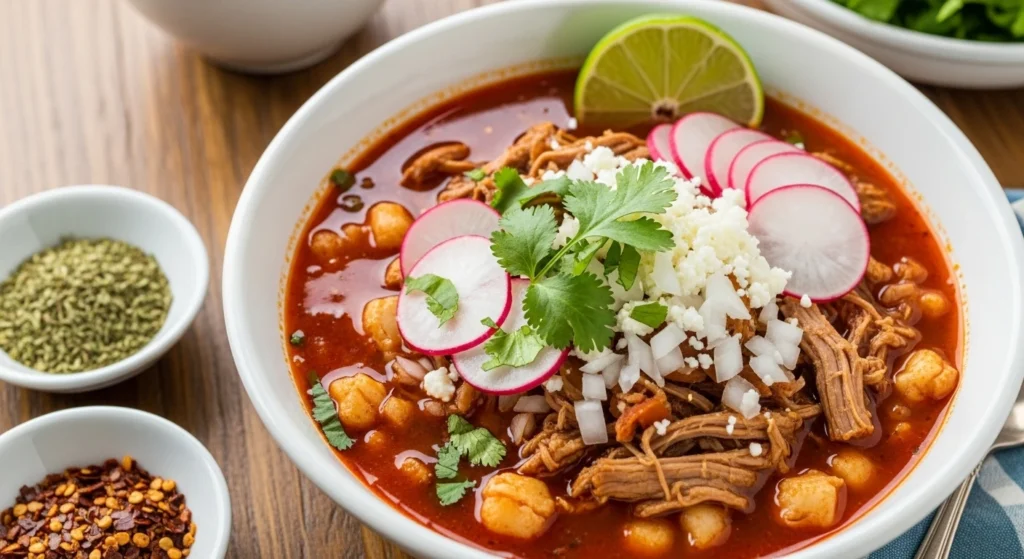
- Radishes (sliced thin for crunch)
- Lime wedges
- Chopped onion
- Avocado slices
- Dried oregano
- Chili flakes or hot sauce for extra heat
- Tostadas or tortilla chips on the side
Regional & Modern Variations:
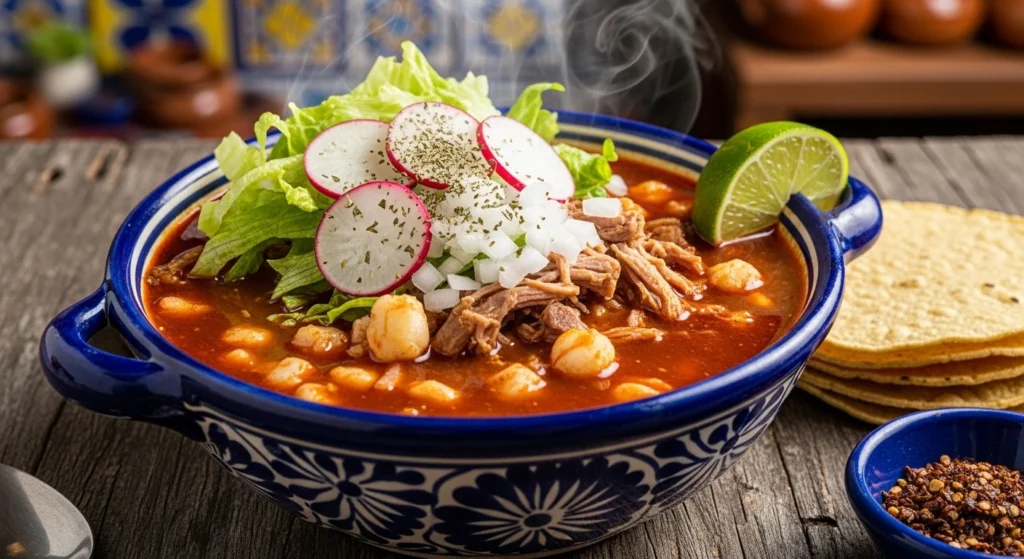
- Pozole Rojo: Made with dried red chiles like guajillo or ancho, giving the soup a deep red color.
- Pozole Verde: Uses green ingredients such as tomatillos, jalapeños, and cilantro, creating a bright and tangy broth.
- Pozole Blanco: The simplest form, without added chiles, letting the hominy and meat shine.
- Vegetarian Pozole: Modern versions swap meat for mushrooms, jackfruit, or beans while maintaining the classic hominy base.
Preparation & Cooking Method
Making Pozole may seem like a labor of love, but the process is part of what makes it so special. Here’s a step-by-step guide to preparing traditional Pozole at home:
- Cook the Hominy
- If using dried hominy, it needs to be soaked overnight and simmered until tender. Canned hominy is a quicker option.
- Prepare the Broth
- In a large pot, combine pork (or chicken), onion, garlic, and bay leaves. Cover with water and simmer slowly until the meat is tender and the broth is infused with flavor. Skim off any foam that rises to the top.
- Make the Chile Sauce (for rojo or verde)
- For Pozole Rojo, soak dried chiles (like guajillo and ancho) in hot water, then blend with garlic, onion, and spices to form a smooth sauce.
- For Pozole Verde, blend tomatillos, cilantro, green chiles, and onion.
- Combine Broth, Hominy, and Sauce
- Add the cooked hominy and chile sauce (if using) to the pot of broth. Simmer everything together so the flavors marry beautifully.
- Taste & Adjust
- Season with salt, oregano, and a touch of cumin. Let it simmer until the flavors are rich and balanced.
- Serve with Garnishes
- Ladle into deep bowls and serve with fresh toppings—lettuce, radish, onion, and lime are non-negotiable!
Health Benefits & Nutritional Value
While Pozole is hearty and comforting, it’s also surprisingly balanced. Here’s why it’s more than just a delicious meal:
- Protein Power: Pork or chicken provides essential protein for muscle repair and energy.
- Fiber-Rich: Hominy delivers dietary fiber, aiding digestion and keeping you fuller longer.
- Vitamin Boost: Toppings like lettuce, radishes, and lime add vitamin C, folate, and antioxidants.
- Customizable: You can adjust fat content by using leaner cuts of meat or making a chicken-based or vegetarian version.
- Gluten-Free: Naturally gluten-free, Pozole is a safe and satisfying choice for those with dietary restrictions.
Serving Ideas & Pairings
Part of the fun of Pozole is how it’s served. Traditionally, it’s not just a soup—it’s a full dining experience.
- Tostadas: Crispy tortillas spread with sour cream, cheese, or beans are the perfect crunchy partner.
- Salsas & Hot Sauces: A dash of extra heat personalizes each bowl.
- Beverages: Pair with aguas frescas (like hibiscus or tamarind water), a cold beer, or even tequila for festive occasions.
- Side Dishes: Mexican rice, guacamole, or a simple salad balance the richness of the soup.
Cultural Significance of Pozole
In Mexico, Pozole isn’t just food—it’s a dish of togetherness. It’s the centerpiece of family gatherings, national celebrations, and festive holidays.
- Mexican Independence Day (September 16th): Pozole is a must-have dish during celebrations of freedom and pride.
- Christmas & New Year’s Eve: Many families serve Pozole during the holidays, symbolizing abundance and unity.
- Birthdays & Weddings: Large pots of Pozole are a practical and festive way to feed big groups.
The act of preparing Pozole itself—soaking hominy, simmering broth, chopping garnishes—creates a sense of community. Cooking it often involves multiple family members, turning the kitchen into a hub of connection and storytelling.
Tips & Variations
If you’re making Pozole for the first time, here are some helpful tips:
- Short on Time? Use canned hominy and a pressure cooker for faster results.
- Storage: Pozole tastes even better the next day as the flavors deepen. Store in the fridge for up to 4 days or freeze portions for longer.
- Make It Healthier: Trim excess fat from pork or use chicken breast. Add more vegetables like zucchini or spinach.
- Regional Twists: Try different chile blends—Pasilla chiles for smokiness, or serranos for extra heat.
- Vegetarian Friendly: Replace meat with hearty mushrooms, chickpeas, or jackfruit for a plant-based take.
Conclusion
Pozole is more than a recipe—it’s a story of heritage, family, and celebration. From its sacred origins in pre-Hispanic culture to its role in modern Mexican gatherings, Pozole has endured as a dish that brings people together.
Whether you’re enjoying Pozole Rojo with its bold, smoky chile base, the refreshing brightness of Pozole Verde, or the comforting simplicity of Pozole Blanco, each spoonful carries history and tradition.
So, the next time you’re craving comfort food that also feeds your soul, gather your ingredients, invite your loved ones, and prepare a pot of Pozole. Because in every bowl, you’ll find warmth, culture, and a taste of Mexico’s heart.