
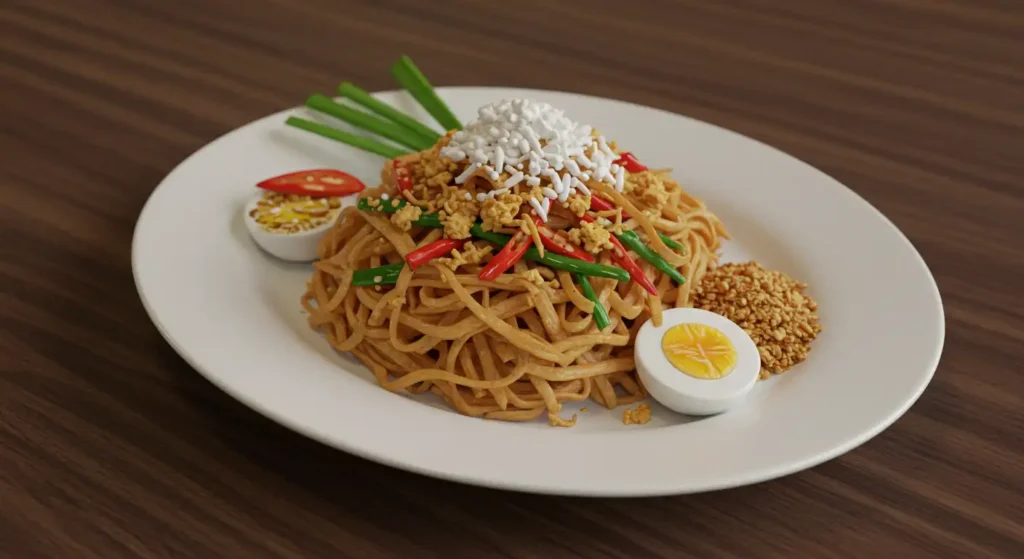
Som Tam (ส้มตำ): Thailand’s Refreshing Green Papaya Salad
Table of Contents
Introduction
If you’ve ever walked through a bustling Thai street market, chances are you’ve heard the rhythmic pounding of a wooden mortar and pestle. That sound is the heartbeat of Som Tam (ส้มตำ)—Thailand’s famous green papaya salad. Known for its irresistible combination of spicy, sour, salty, and sweet flavors, Som Tam is more than just a dish—it’s an experience.
Fresh, vibrant, and endlessly customizable, Som Tam has captured the hearts of locals and travelers alike. It’s light yet satisfying, healthy yet bursting with flavor, and always prepared fresh to order. In this article, we’ll take you through the history of Som Tam, explore its key ingredients, share a simple step-by-step recipe, and highlight its many health benefits.
Whether you’re new to Thai cuisine or a longtime fan, this guide will give you everything you need to fall in love with this iconic salad.
History of Som Tam
Origins in Isaan Cuisine
Som Tam traces its roots back to Isaan, the northeastern region of Thailand, where food is deeply influenced by neighboring Laos and Cambodia. In fact, many believe that Som Tam was inspired by the Laotian papaya salad “Tam Mak Hoong”. Over time, it adapted to local Thai tastes, balancing bold chili heat with a touch of sweetness from palm sugar.
A Dish That Represents Thai Culture
Som Tam perfectly represents the Thai philosophy of balance—spicy chilies, tangy lime, salty fish sauce, and sweet palm sugar harmonize beautifully. Traditionally made using a mortar and pestle, it reflects the importance of freshness, immediacy, and communal eating in Thai culture.
A Global Rise in Popularity
With Thai cuisine gaining global recognition, Som Tam has become a popular choice in Thai restaurants worldwide. Its appeal lies in its healthy ingredients, bold flavors, and refreshing crunch. Today, it’s a staple not only in Thailand but also among food lovers across the globe.
Key Ingredients of Som Tam
One of the best things about Som Tam is its simplicity and flexibility. Here are the classic ingredients that make this salad unique:
Core Ingredients
- Green Papaya (unripe papaya) – Shredded into long, thin strands, green papaya has a crisp texture that soaks up the dressing beautifully.
- Bird’s Eye Chilies – Small but mighty, these chilies add the signature fiery heat.
- Garlic – Crushed for a pungent kick.
- Fish Sauce – Brings depth and savory umami flavor.
- Palm Sugar – Balances spice and acidity with a subtle sweetness.
- Lime Juice – Fresh and tangy, lime ties the flavors together.
- Cherry Tomatoes – Juicy pops of freshness.
- Long Beans (yard-long beans) – Crunchy, slightly bitter, and earthy.
- Roasted Peanuts – Adds nutty flavor and crunch.
Optional Additions
- Dried Shrimp – For a salty, umami-rich layer.
- Fermented Fish Sauce (Pla Ra) – A stronger, traditional flavor often found in Isaan-style Som Tam.
- Crab (Som Tam Poo) – Salted or preserved crabs for a bolder taste.
- Fruit Variations – Sometimes green mango, cucumber, or carrot is used instead of papaya.
Step-by-Step Preparation
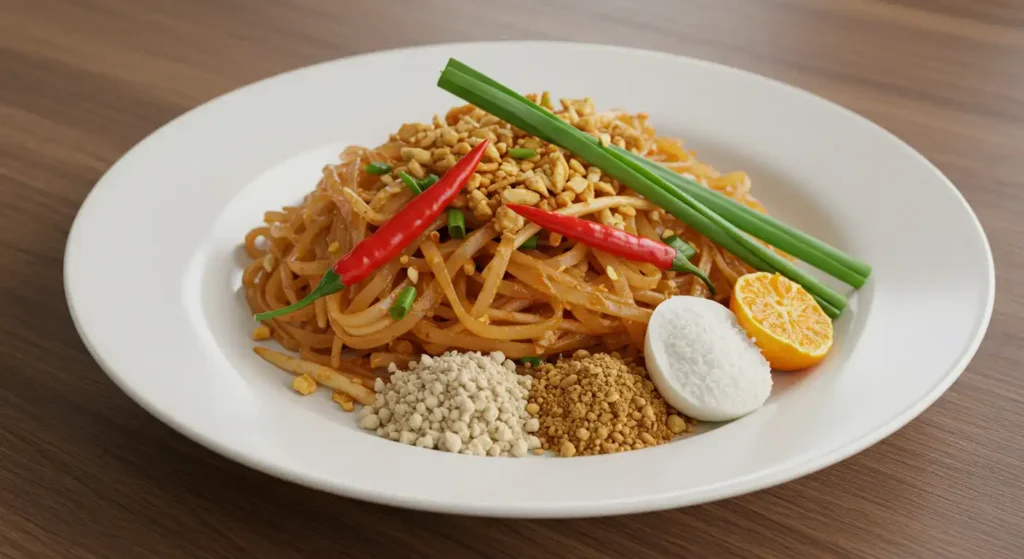
Making Som Tam at home is surprisingly easy once you have the right ingredients and a mortar and pestle. Here’s a beginner-friendly guide:
Step 1: Prepare the Green Papaya
- Peel the green papaya and shred it into long, thin strips using a julienne peeler or a traditional papaya shredder.
- Soak the papaya strands in cold water for 5–10 minutes to make them extra crisp.
Step 2: Pound the Aromatics
- In a mortar, lightly pound garlic and chilies together until broken down but not too fine.
- Adjust the number of chilies depending on your spice tolerance.
Step 3: Add Seasonings
- Add palm sugar, fish sauce, and lime juice into the mortar.
- Gently pound and mix to dissolve the sugar.
Step 4: Toss in Vegetables
- Add long beans (cut into short pieces) and tomatoes (halved).
- Lightly bruise them with the pestle to release juices while keeping them intact.
Step 5: Combine with Papaya
- Add the shredded papaya into the mortar.
- Use a spoon in one hand and the pestle in the other to toss and lightly pound the mixture, ensuring the dressing coats every strand.
Step 6: Garnish and Serve
- Sprinkle with roasted peanuts and mix gently.
- Serve immediately with sticky rice, grilled chicken, or simply enjoy it on its own.
Health Benefits of Som Tam
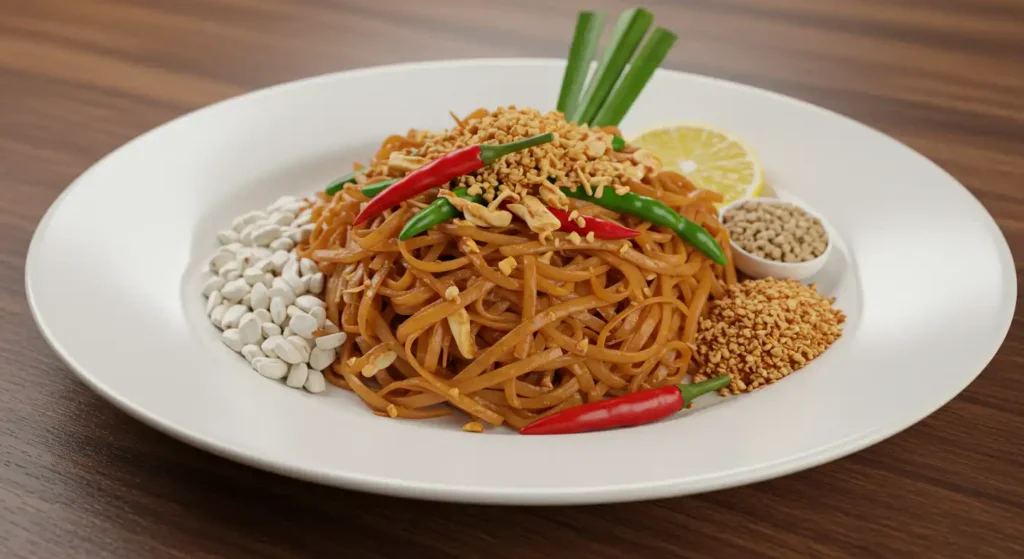
Som Tam isn’t just delicious—it’s also packed with nutrients and health benefits. Here’s why you can enjoy it guilt-free:
1. Low in Calories
Green papaya is naturally low in calories and fat, making Som Tam a great option for those seeking a light, waistline-friendly meal.
2. Rich in Fiber
The raw papaya and vegetables provide plenty of dietary fiber, which supports digestion and gut health.
3. High in Antioxidants
Ingredients like tomatoes, chilies, and lime juice are rich in vitamin C and antioxidants, which help boost immunity and fight inflammation.
4. Supports Heart Health
Peanuts and long beans provide plant-based protein and beneficial nutrients that may promote cardiovascular health.
5. Natural Energy Boost
The combination of spices, lime, and fresh vegetables gives a refreshing, energizing lift without heaviness.
Tips for Making the Perfect Som Tam
- Use a mortar and pestle – It’s the traditional method and ensures the flavors blend properly.
- Balance is key – Adjust the four main flavors (spicy, sour, salty, sweet) to suit your taste.
- Serve fresh – Som Tam is best enjoyed right after making, while the papaya stays crunchy.
- Pair it with sticky rice – A true Thai experience comes when Som Tam is eaten with sticky rice and grilled meats.
Conclusion
Som Tam (ส้มตำ) is more than just a salad—it’s a vibrant representation of Thai culinary artistry. With its crisp textures, zesty dressing, and perfect balance of flavors, it’s no wonder this dish is loved across Thailand and beyond.
The best part? It’s simple to make at home. All you need is a green papaya, a few pantry staples, and a willingness to experiment with spice and flavor.
So why not give it a try in your own kitchen? Once you hear that rhythmic pounding of chilies and garlic in your mortar, you’ll feel connected to a centuries-old tradition. And just like baking your first loaf of sourdough bread, making Som Tam at home is a rewarding, delicious journey you won’t forget.