
Jamón Ibérico: Spain’s World-Famous Cured Ham
Introduction
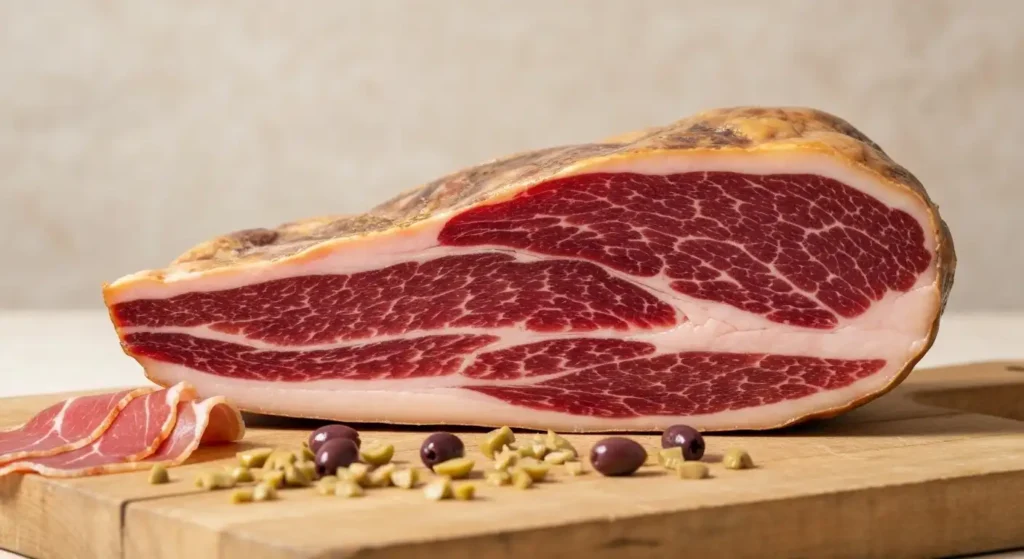
When it comes to iconic Spanish foods, Jamón Ibérico sits proudly at the top of the list. This world-famous cured ham, thinly sliced and bursting with rich, nutty flavor, is more than just a delicacy—it’s a cultural symbol of Spain. Often enjoyed on its own, paired with cheese, or served alongside a glass of red wine, Jamón Ibérico embodies centuries of tradition, craftsmanship, and culinary passion.

In this article, we’ll explore the fascinating history of Jamón Ibérico, the meticulous process behind its creation, the essential ingredients, a step-by-step guide to how it’s prepared, and the surprising health benefits of this gourmet ham. By the end, you’ll not only understand why Jamón Ibérico is considered one of the world’s finest foods but also feel inspired to enjoy it in your own kitchen—perhaps even alongside homemade sourdough bread.
History of Jamón Ibérico
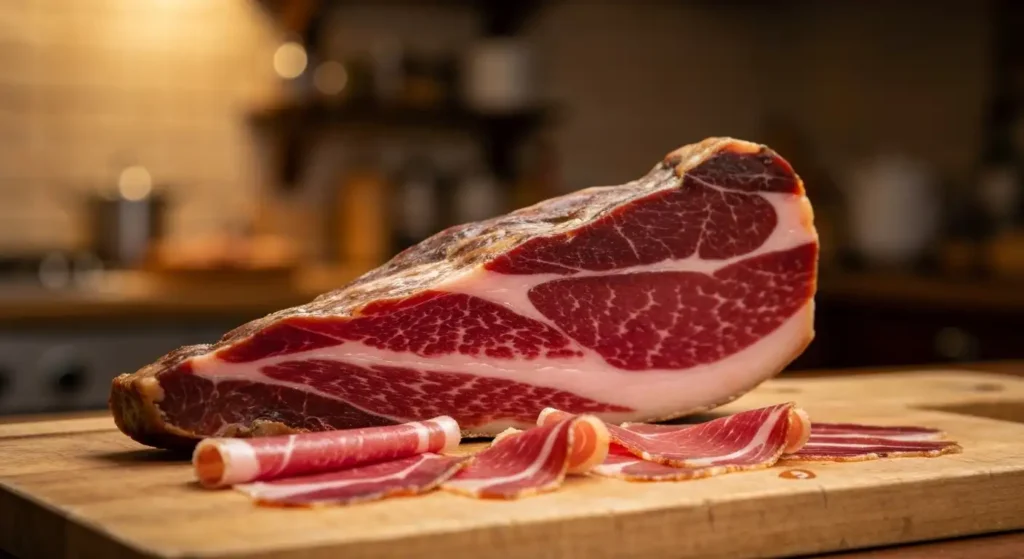
The tradition of curing ham in Spain dates back thousands of years, with early evidence of pork preservation practices during the Roman era. However, the story of Jamón Ibérico as we know it begins with the unique Iberian pig, native to the Iberian Peninsula.
These pigs, known for their black hooves (pata negra), are central to the ham’s distinct flavor. For centuries, farmers in southwestern Spain have raised Iberian pigs in open pastures, where they graze on acorns, grasses, and herbs. This natural diet, combined with slow curing methods, results in ham with a complex taste unlike any other.
By the Middle Ages, cured ham had become a staple of Spanish gastronomy and a symbol of national pride. Today, Jamón Ibérico is not just food—it’s a cultural treasure recognized globally as one of Spain’s greatest culinary achievements.
Key Ingredients of Jamón Ibérico
Unlike many recipes, Jamón Ibérico doesn’t rely on a long list of ingredients. Its magic comes from simplicity, patience, and quality.
Essential Elements
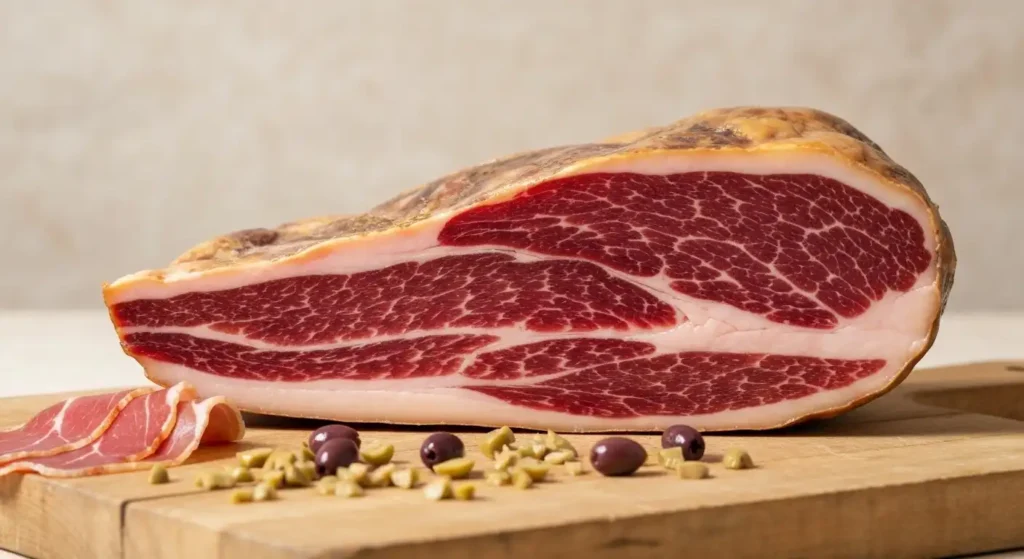
- Iberian Pig – The breed itself is what makes this ham unique. These pigs store fat within their muscle, giving the ham its marbled texture.
- Salt – Used in the curing process to preserve the meat and enhance flavor.
- Time – The most important ingredient of all. Depending on the type, Jamón Ibérico can be cured for 24 to 48 months.
The Role of Acorns
The finest variety, Jamón Ibérico de Bellota, comes from pigs fed primarily on acorns (bellotas) during the montanera season. The acorns contribute to the ham’s nutty flavor and high-quality fat content, which literally melts in your mouth.
Step-by-Step Preparation of Jamón Ibérico
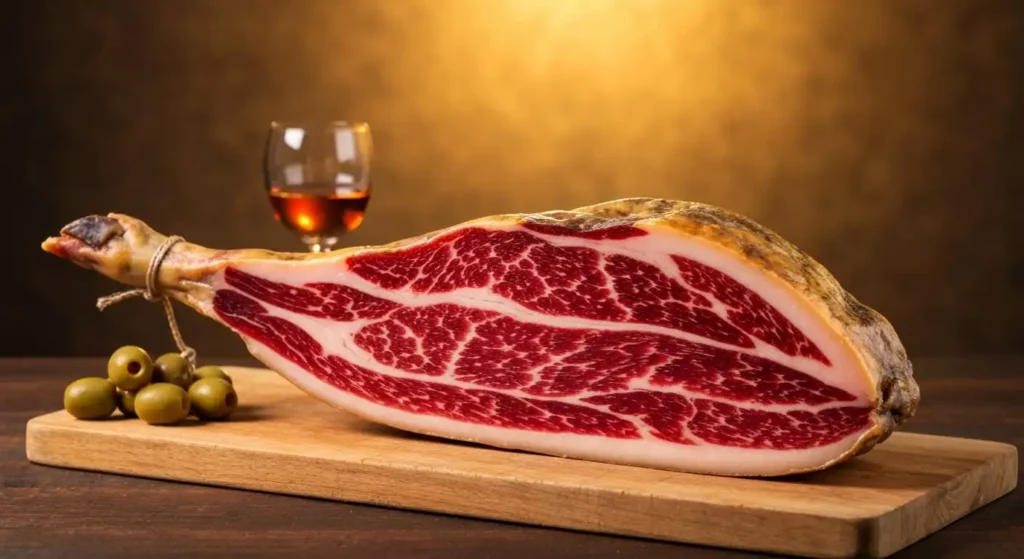
Producing Jamón Ibérico is a time-honored craft that requires expertise, patience, and respect for tradition. While it’s not something you can easily recreate at home, understanding the process makes every slice even more special.
Step 1: Raising the Iberian Pig
- Pigs are raised in dehesa (oak-dotted pastures), where they roam freely.
- During the montanera season, they feed on acorns, grasses, and natural herbs, developing unique flavor profiles.
Step 2: Slaughter and Initial Salting
- After the pig reaches maturity, the hind legs are carefully selected.
- The legs are covered in sea salt for about two weeks, depending on size. This draws out moisture and preserves the meat.
Step 3: Washing and Resting
- The salt is washed off, and the ham rests in cold storage for several weeks. This allows the salt to penetrate evenly.
Step 4: Drying and Curing
- Hams are hung in curing cellars where temperature and humidity are carefully controlled.
- Over months and years, natural molds develop on the surface, protecting and enriching the ham’s flavor.
Step 5: Aging
- The hams continue aging for 2–4 years (sometimes longer). During this period, fat infiltrates the meat, and complex aromas develop.
Step 6: Expert Slicing
- Finally, the ham is ready to enjoy. It is traditionally sliced very thin with a long, sharp knife by a trained cortador de jamón (ham carver). Thin slices release the perfect balance of flavor and aroma.
Health Benefits of Jamón Ibérico
While Jamón Ibérico is often viewed as an indulgence, it also offers several nutritional benefits when consumed in moderation.
1. Rich in Healthy Fats
The acorn-fed Iberian pig produces fat rich in oleic acid, the same heart-healthy fat found in olive oil. This makes it part of the Mediterranean diet’s healthy fat profile.
2. High in Protein
Jamón Ibérico is an excellent source of high-quality protein, essential for muscle repair and overall body function.
3. Packed with Vitamins and Minerals
This cured ham contains B vitamins, zinc, iron, and phosphorus, all of which support energy, metabolism, and immune function.
4. Lower Cholesterol Impact
Thanks to its monounsaturated fats, Jamón Ibérico can actually help improve “good” HDL cholesterol levels while reducing “bad” LDL cholesterol.
5. Natural and Preservative-Free
Unlike many processed meats, Jamón Ibérico relies on salt and time—not artificial preservatives—making it a more natural cured product.
How to Enjoy Jamón Ibérico at Home
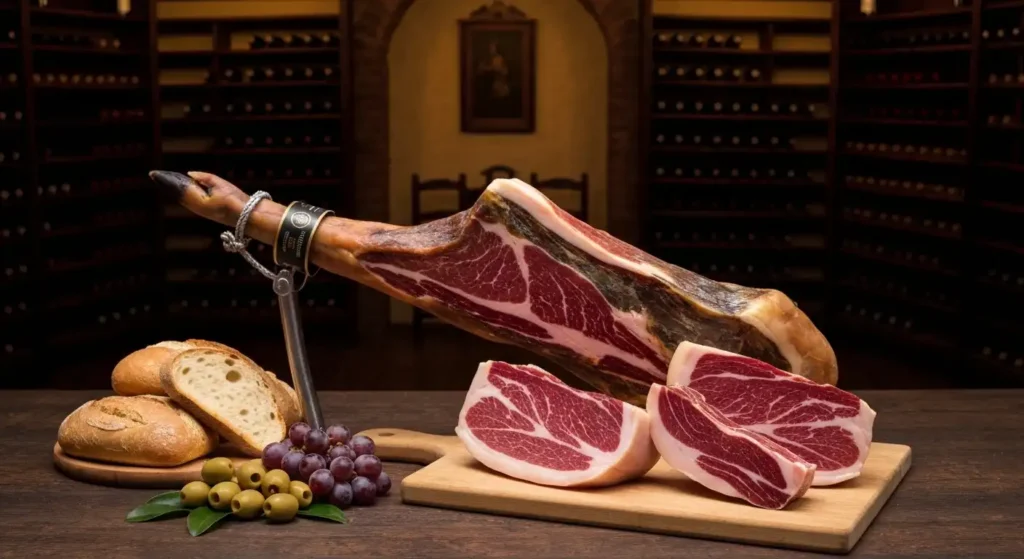
- Serve it thinly sliced on its own to appreciate its full flavor.
- Pair with Spanish cheeses like Manchego.
- Enjoy alongside crusty sourdough bread or artisan crackers.
- Complement with a glass of Spanish red wine or dry sherry.
- Add it sparingly to tapas, salads, or even scrambled eggs for a gourmet touch.
Tips for Buying Jamón Ibérico
- Look for certified labels: “Jamón Ibérico de Bellota” is the highest grade.
- Pay attention to the black hoof (pata negra), a mark of authenticity.
- Purchase from reputable suppliers who specialize in Spanish products.
- Store properly: once sliced, keep wrapped in wax paper and consume within a few days for the best flavor.
Conclusion
Jamón Ibérico is more than just cured ham—it’s the result of centuries of tradition, craftsmanship, and respect for nature. From the roaming Iberian pigs to the years of careful curing, every slice tells a story of Spanish heritage.
If you’ve never tasted Jamón Ibérico, it’s worth seeking out for the experience alone. And if you enjoy the satisfaction of savoring artisanal foods, why not pair it with something homemade? A slice of Jamón Ibérico on a piece of fresh sourdough bread is a perfect marriage of rustic simplicity and gourmet excellence.
So, treat yourself to Spain’s most famous delicacy, and let it inspire your next culinary adventure—perhaps in your own kitchen with sourdough baking!