
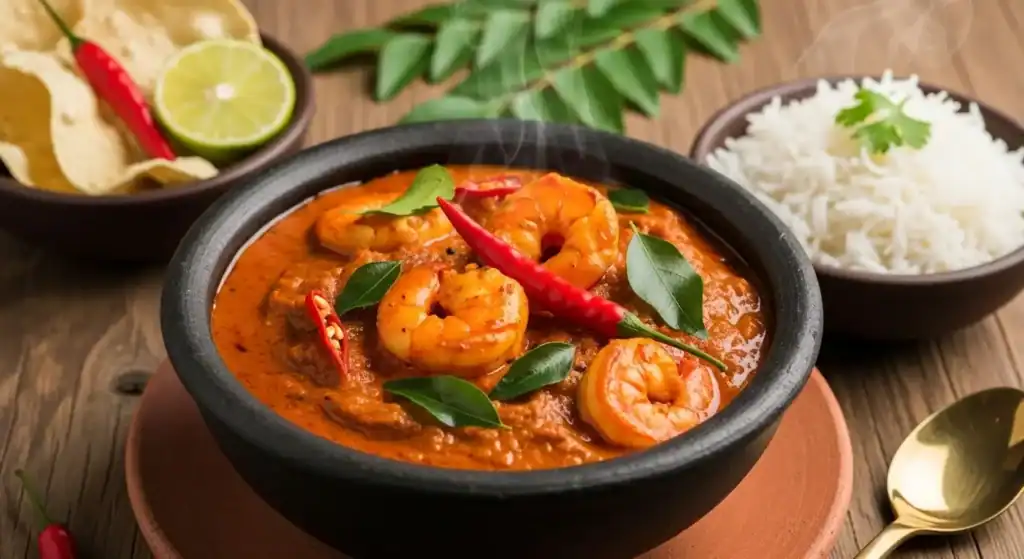
Goan Prawn Curry – Coconut-Based Spicy Prawn Curry
Table of Contents
Introduction
If there’s one dish that perfectly captures the soul of Goa, it’s Goan Prawn Curry. Rich, creamy, and bursting with bold coastal flavors, this coconut-based curry is a comforting blend of spices, seafood, and sunshine. Imagine plump prawns simmering gently in a luscious coconut milk sauce, infused with tangy tamarind and the unmistakable aroma of curry leaves.
Served with a mound of steaming white rice, Goan Prawn Curry is not just food—it’s an experience. Whether you’re enjoying it in a beachside shack overlooking the Arabian Sea or cooking it at home for family dinner, this dish brings a taste of the tropics to your plate.
In this article, you’ll discover the history of this beloved Goan dish, a step-by-step recipe, and even its health benefits. Let’s dive into this coastal classic that’s as heartwarming as it is flavorful.
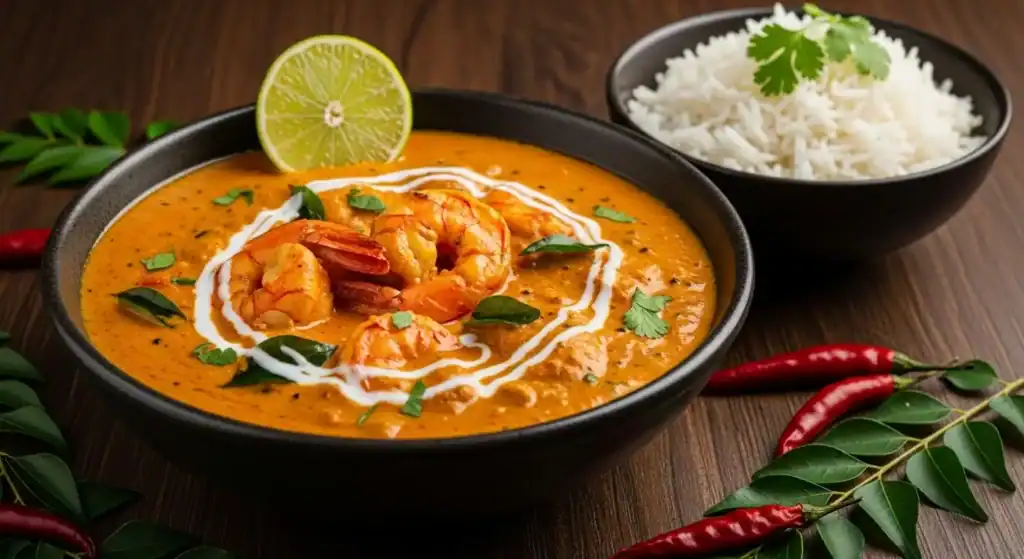
History of Goan Prawn Curry
Goa’s cuisine is a delicious reflection of its history—a fascinating mix of Indian, Portuguese, and coastal influences. When the Portuguese arrived in Goa in the 16th century, they brought along ingredients and cooking methods that would forever transform the region’s culinary identity.
The Goan kitchen became a melting pot of flavors. Local ingredients like coconut, tamarind, and seafood merged with Portuguese techniques such as marination and vinegar-based curries. The result? Dishes like Goan Prawn Curry (Ambot Tik)—a perfect example of this fusion.
The term Ambot Tik in Konkani means sour and spicy, two dominant notes in this dish. Traditionally, Goan families prepare it using freshly caught prawns, homemade masala pastes, and grated coconut, ground into a smooth curry base. The combination of coconut milk and tamarind gives it a creamy yet tangy depth that defines Goan cuisine.
Today, Goan Prawn Curry remains a symbol of Goa’s coastal heritage—served everywhere from humble homes to fine dining restaurants. It’s a dish that brings together generations, bridging Goa’s rich past and its flavorful present.
Ingredients
Before you start cooking, let’s look at what you’ll need. The beauty of Goan Prawn Curry lies in its simplicity—every ingredient contributes to its balance of spice, creaminess, and tang.
For the Curry:
- 500g fresh prawns (cleaned and deveined)
- 2 tablespoons coconut oil (or any cooking oil)
- 1 medium onion, finely chopped
- 2 tomatoes, chopped
- 1 tablespoon ginger-garlic paste
- 1 teaspoon turmeric powder
- 1 teaspoon red chili powder
- 1 teaspoon coriander powder
- 1 small ball of tamarind (soaked in warm water) or 1 tablespoon tamarind paste
- 1 cup thick coconut milk
- ½ cup thin coconut milk
- Salt to taste
- Fresh coriander leaves for garnish
For the Masala Paste:
- 1 cup grated fresh coconut
- 3–4 dried red chilies
- 1 teaspoon cumin seeds
- 1 teaspoon black peppercorns
- 5–6 cloves garlic
- 1 small piece of ginger
- 1 teaspoon turmeric powder
- ½ teaspoon mustard seeds (optional)
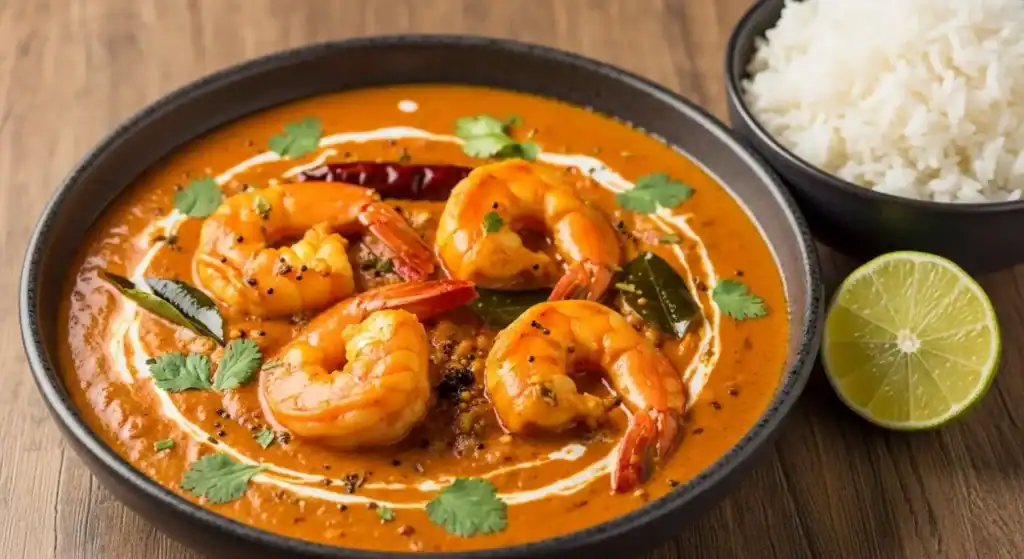
Step-by-Step Preparation
Cooking Goan Prawn Curry is a delightful process. It’s not just about following a recipe—it’s about enjoying the rhythm of flavors coming together.
Step 1: Clean and Marinate the Prawns
Start by cleaning and deveining the prawns. Rinse them thoroughly and pat dry.
In a bowl, marinate the prawns with a pinch of turmeric, salt, and a little lemon juice. Set them aside for about 15 minutes while you prepare the curry base.
Step 2: Make the Masala Paste
In a blender, combine grated coconut, dried red chilies, cumin seeds, peppercorns, garlic, and ginger. Add a few tablespoons of water and blend until you get a smooth paste.
This fresh masala paste is the heart of your curry—it gives that signature Goan flavor that store-bought sauces can’t match.
Step 3: Sauté the Aromatics
Heat coconut oil in a deep pan or kadai over medium heat. Add the chopped onions and sauté until golden brown. Then, add the ginger-garlic paste and cook until the raw smell disappears.
Next, stir in the chopped tomatoes, turmeric powder, chili powder, and coriander powder. Cook for 3–4 minutes until the tomatoes soften and release oil.
Step 4: Add the Masala and Simmer
Now, add the freshly ground masala paste to the pan. Stir well and cook for 5–6 minutes, letting the spices blend beautifully. Add thin coconut milk and tamarind extract, stirring to form a smooth curry base.
Let it simmer gently for 10 minutes—the aroma will tell you it’s coming together perfectly.
Step 5: Add the Prawns
Once the curry base is ready, add the marinated prawns. Stir gently and cook for 5–6 minutes, or until the prawns turn pink and tender. Avoid overcooking, as prawns can become rubbery.
Step 6: Finish with Thick Coconut Milk
Turn the heat to low and pour in the thick coconut milk. Stir well and simmer for another 2–3 minutes. Taste and adjust the seasoning—add salt or a bit of tamarind water if you prefer more tanginess.
Step 7: Garnish and Serve
Turn off the heat, garnish with fresh coriander leaves, and serve hot with steamed rice, Goan poi (bread), or parathas.
Health Benefits of Goan Prawn Curry
While Goan Prawn Curry is indulgent and flavorful, it’s also packed with nutrients that make it a wholesome meal.
1. High in Protein
Prawns are an excellent source of lean protein, essential for muscle repair and overall body health.
2. Rich in Omega-3 Fatty Acids
Being seafood, prawns are naturally rich in omega-3s, which help maintain heart health and reduce inflammation.
3. Coconut Milk’s Good Fats
Coconut milk adds creaminess and healthy fats that promote good cholesterol and improve metabolism.
4. Immunity Boosting Spices
The spices used—like turmeric, garlic, and pepper—are known for their anti-inflammatory and immune-boosting properties.
5. Gluten-Free and Nutrient-Rich
Goan Prawn Curry is naturally gluten-free and contains essential minerals like zinc, iodine, and selenium from the seafood.
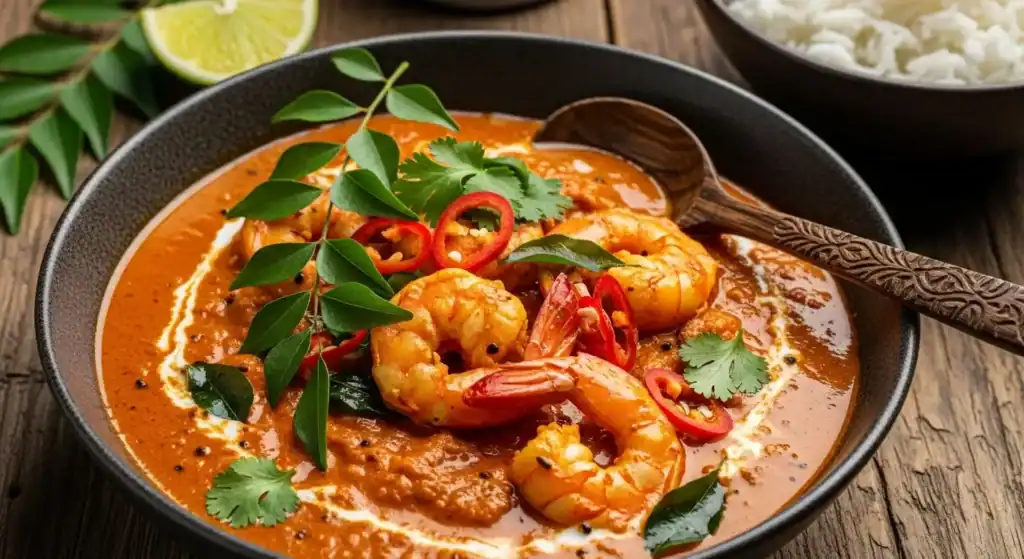
In moderation, this curry is both satisfying and nourishing, making it a fantastic balance between taste and health.
Conclusion
Goan Prawn Curry isn’t just another seafood dish—it’s a celebration of Goa’s culinary heritage and coastal abundance. Each bite tells a story of sun-drenched beaches, spice-laden markets, and the joyful blend of cultures that define this region.
Whether you’re cooking it for a family meal or exploring new cuisines, this curry will bring warmth and tropical flavor to your kitchen. So, gather your ingredients, let the aroma of coconut and spices fill your home, and dive into the experience of Goan cooking.
And once you’ve mastered this recipe, why not take your culinary adventure further? Try your hand at sourdough baking—a soothing, rewarding process that pairs beautifully with your home-cooked curries.