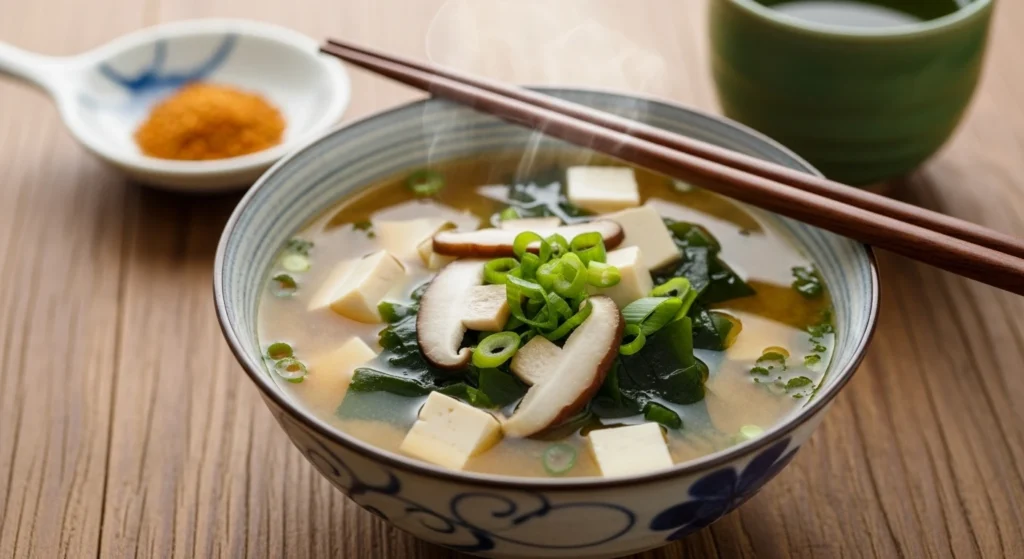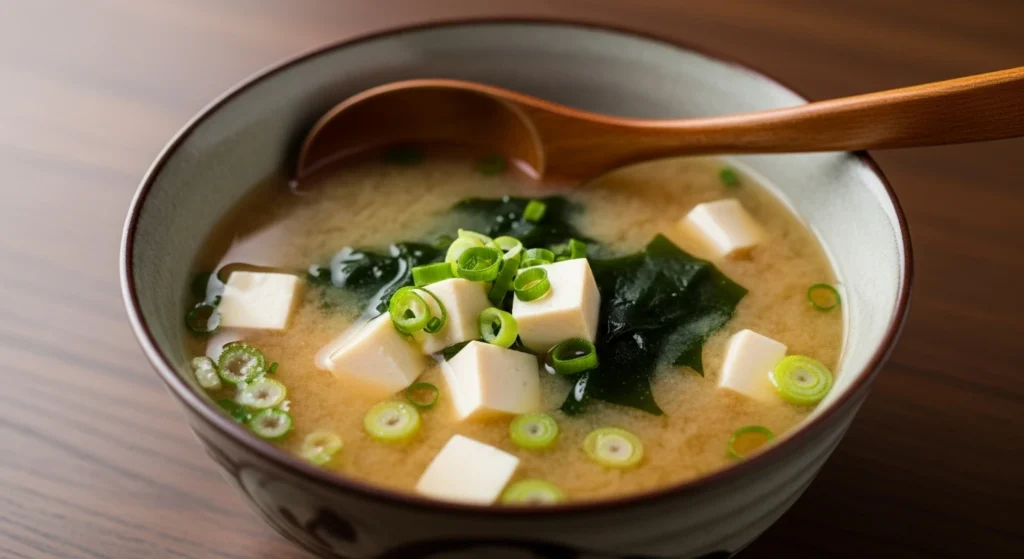
Miso Soup: A Comforting Japanese Classic with Health Benefits
Table of Contents
Introduction
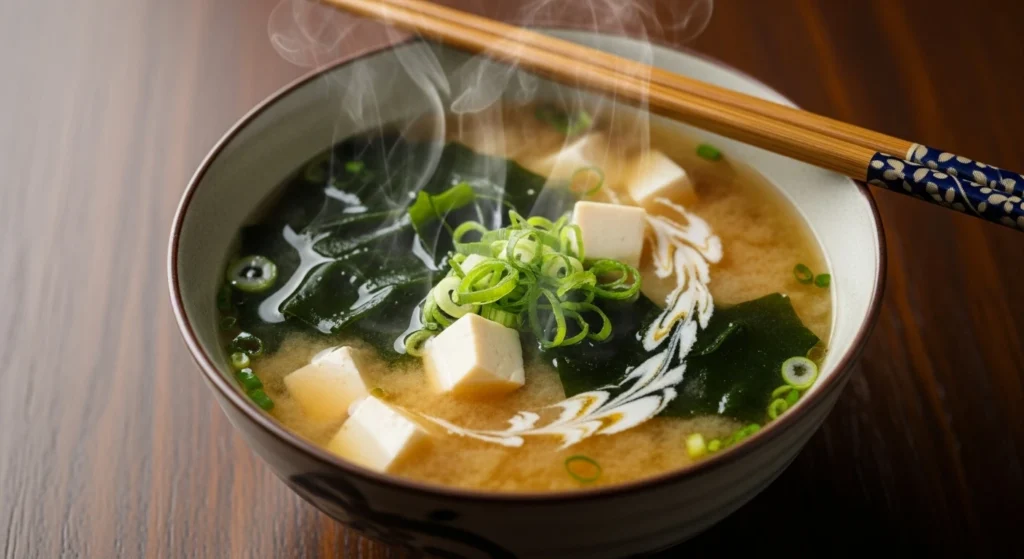
There are certain dishes that feel like a warm hug in a bowl, and Miso Soup is one of them. Known for its delicate balance of flavors, this traditional Japanese soup has been enjoyed for centuries as part of everyday meals. It’s light yet satisfying, simple yet deeply nourishing. Whether you’re looking to explore authentic Japanese cuisine or just want a healthy addition to your diet, miso soup is a perfect choice.
In this guide, we’ll explore the history of miso soup, its cultural significance, the essential ingredients you need, a step-by-step preparation method, and the many health benefits it offers. By the end, you’ll feel confident enough to prepare your own miso soup at home and perhaps even pair it with sourdough bread for a unique East-meets-West experience.

A Brief History of Miso Soup
The roots of miso soup trace back to Japan’s Heian period (794–1185), when fermented soybean paste, known as miso, became a staple in the Japanese diet. However, the origins of miso itself go even further back, with influences from Chinese fermented soy products introduced to Japan through trade and cultural exchange.
By the Kamakura period (1185–1333), miso soup had become common among samurai households, valued for its simplicity and nutritional benefits. The soup was quick to prepare and provided sustained energy for warriors before heading into battle. Over time, miso soup evolved into a comforting everyday dish for people across all social classes in Japan.
Today, miso soup is not just a meal—it’s a symbol of Japanese home cooking. It’s often served at breakfast alongside rice, pickles, and grilled fish, but it’s also enjoyed at lunch and dinner. For many Japanese families, miso soup represents warmth, care, and tradition passed down through generations.
Essential Ingredients for Miso Soup
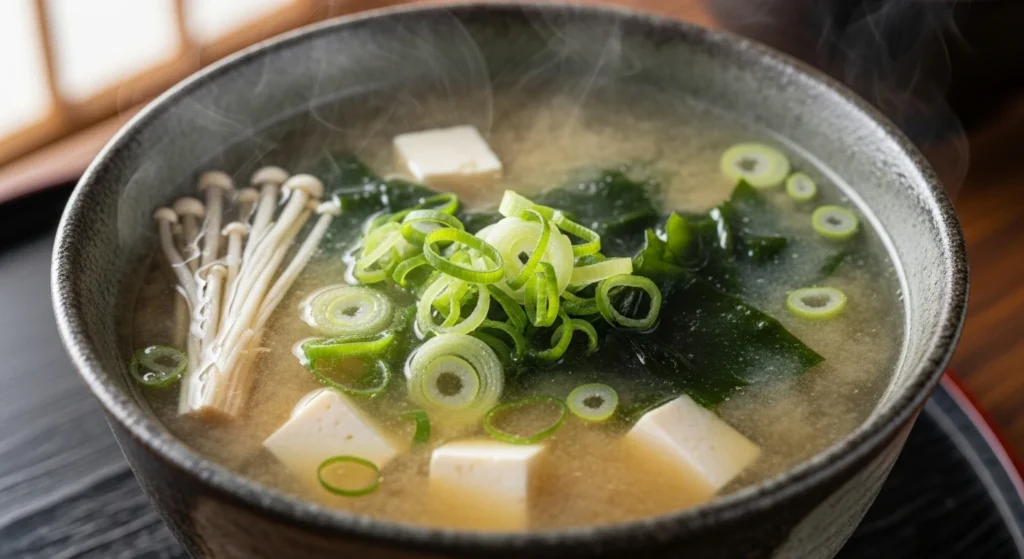
One of the most appealing aspects of miso soup is its simplicity. With just a handful of core ingredients, you can create an authentic bowl at home. Here’s what you’ll need:
1. Miso Paste
- The star of the dish, miso paste is a fermented blend of soybeans, salt, and koji (a type of fungus).
- Varieties include:
- White Miso (Shiro Miso): Mild, slightly sweet, and less salty.
- Red Miso (Aka Miso): Stronger, saltier, and richer in umami.
- Mixed Miso (Awase Miso): A combination of white and red, offering balanced flavor.
2. Dashi (Soup Stock)
- A light broth made from kombu (kelp) and katsuobushi (bonito flakes).
- It serves as the foundation, giving miso soup its distinct umami flavor.
- For vegetarian or vegan versions, kombu alone or shiitake mushrooms can be used.
3. Tofu
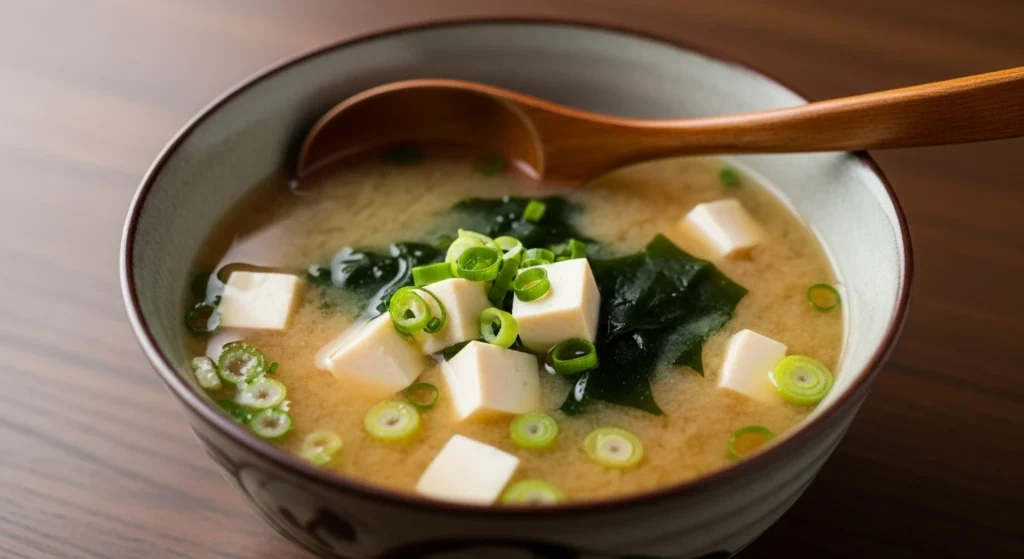
- Soft, cubed tofu adds protein and a smooth texture to the soup.
- It balances the salty richness of the miso paste.
4. Wakame Seaweed
- A rehydrated dried seaweed that adds flavor, texture, and nutritional benefits.
5. Green Onions (Scallions)
- Finely chopped scallions provide freshness and a mild bite to the soup.
Optional add-ins include mushrooms, daikon radish, carrots, or clams—depending on your taste and regional variations.
Step-by-Step Preparation of Miso Soup
Step 1: Prepare the Dashi
- In a medium saucepan, add a 4-inch piece of dried kombu to 4 cups of water.
- Slowly bring it to a gentle simmer over medium heat. Just before the water boils, remove the kombu.
- Add a handful of bonito flakes to the water, let it simmer for 1–2 minutes, then strain.
(For a vegetarian version, skip the bonito flakes and add dried shiitake mushrooms instead.)
Step 2: Add the Tofu and Wakame
- Bring the dashi back to a gentle simmer.
- Add cubed tofu and soaked wakame to the pot. Cook for 2–3 minutes.
Step 3: Dissolve the Miso Paste
- In a small bowl, take a ladle of hot broth and whisk in 2–3 tablespoons of miso paste until smooth.
- Add this mixture back into the soup, stirring gently.
⚠️ Important: Do not let the soup boil after adding miso, as high heat destroys its probiotics and delicate flavors.
Step 4: Finish with Green Onions
- Just before serving, sprinkle chopped green onions into the soup for freshness and aroma.
And there you have it—a comforting, authentic bowl of miso soup ready to enjoy!
Health Benefits of Miso Soup
Miso soup is more than just a tasty dish; it’s a nutritional powerhouse that offers numerous health benefits. Here’s why you should consider adding it to your diet:
1. Rich in Probiotics
Miso is a fermented food, meaning it contains live probiotics that promote gut health, improve digestion, and strengthen the immune system.
2. Packed with Nutrients
- Protein from tofu and miso paste.
- Iodine from seaweed, essential for thyroid function.
- Antioxidants from green onions and miso that help combat inflammation.
3. Supports Heart Health
Studies suggest that moderate consumption of fermented soy products may help reduce cholesterol levels and support cardiovascular health.
4. Boosts Immunity
The combination of vitamins, minerals, and probiotics strengthens the body’s natural defense system.
5. Low in Calories, High in Flavor
Miso soup is light, usually under 100 calories per serving, making it a guilt-free addition to any meal.
Conclusion: Try Miso Soup at Home
Miso soup is more than just a Japanese side dish—it’s a bowl of comfort, culture, and nourishment. With its deep umami flavor, simple preparation, and impressive health benefits, it’s no wonder that miso soup has stood the test of time.
If you’ve never made it before, now is the perfect time to try. Experiment with different types of miso paste, add your favorite vegetables, and enjoy this soul-soothing dish alongside your meals. And if you love exploring new flavors in the kitchen, why not take it a step further? Pair your homemade miso soup with freshly baked sourdough bread—a creative blend of Japanese tradition and Western comfort that will make your dining experience truly unforgettable.
So, roll up your sleeves, prepare your ingredients, and bring the magic of miso soup into your kitchen today!