
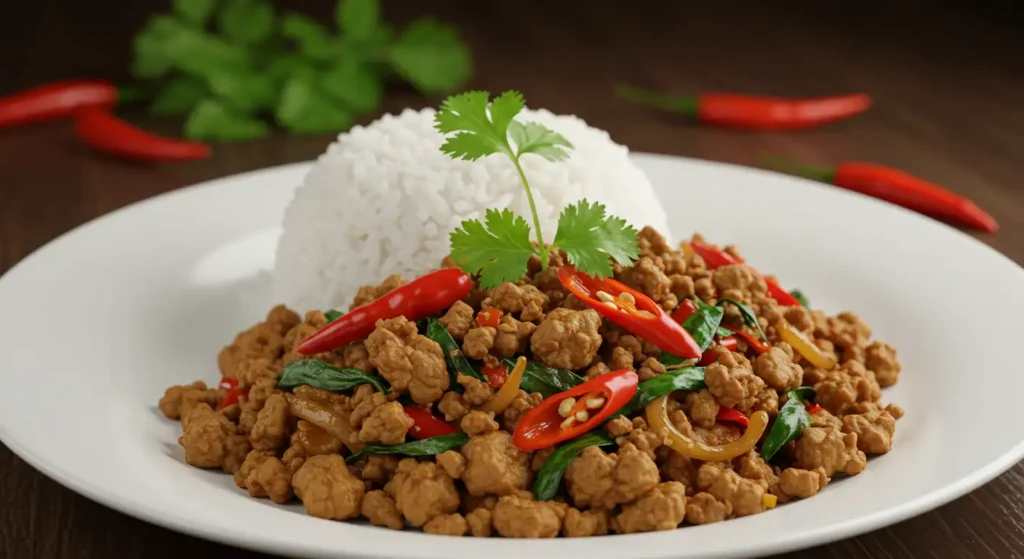
Pad Kra Pao (ผัดกระเพรา): Thailand’s Fiery Basil Stir-Fry
Table of Contents
Introduction
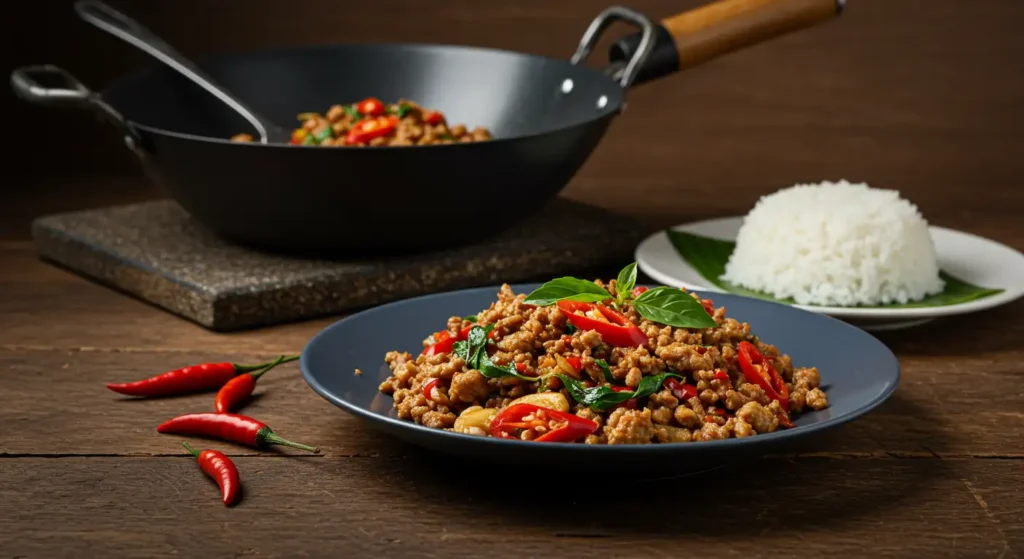
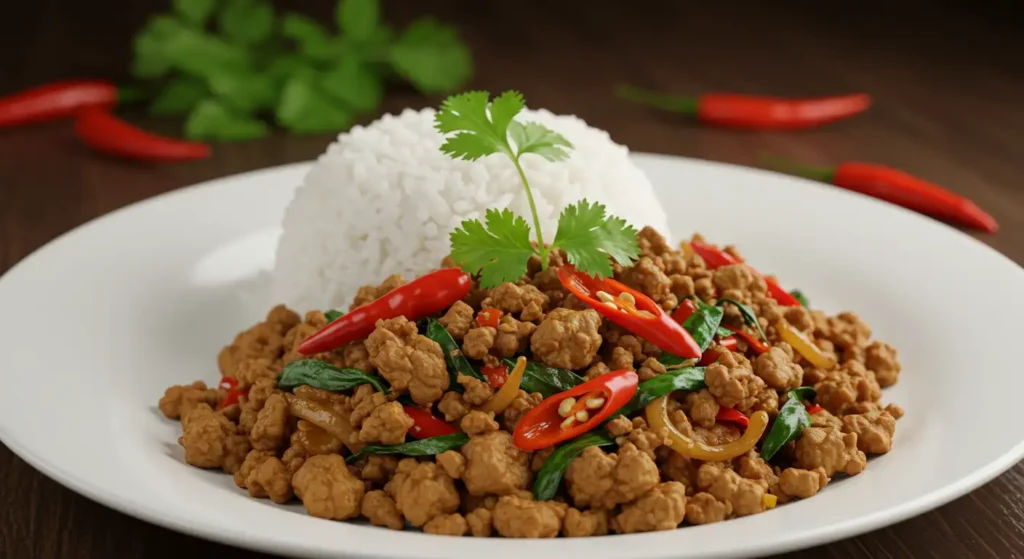
If there’s one dish that truly captures the heart of everyday Thai cooking, it’s Pad Kra Pao (ผัดกระเพรา), also known as Thai Basil Stir-Fry. Loved by locals and tourists alike, this quick and flavorful stir-fry is Thailand’s ultimate comfort food. It’s bold, aromatic, and often enjoyed with a fried egg (kai dao) on top.
Unlike more elaborate Thai dishes, Pad Kra Pao is fast, affordable, and deeply satisfying. It’s the kind of meal people order at street stalls when they can’t decide what to eat—so much so that in Thailand, Pad Kra Pao is jokingly referred to as “the dish to order when you don’t know what to order.”
In this guide, we’ll explore the history of Pad Kra Pao, break down its ingredients, share a step-by-step recipe, and highlight its health benefits. By the end, you’ll be ready to recreate this Thai classic in your own kitchen.
History of Pad Kra Pao
Everyday Thai Street Food
Pad Kra Pao has humble origins in Thai street food culture. It’s not a centuries-old royal dish but a modern street-side invention that became popular in the mid-20th century when wok-based stir-frying techniques spread widely in Thailand.
The Role of Holy Basil
At the heart of Pad Kra Pao is holy basil (bai kra pao), a variety of basil with a spicy, peppery flavor distinct from sweet basil or Thai basil. Holy basil is also valued in traditional Thai medicine for its healing properties. Its use in cooking gives this dish its signature aroma and sets it apart from other stir-fries.
A Dish for Everyone
Because it’s quick, cheap, and endlessly customizable, Pad Kra Pao became the go-to meal for students, workers, and families alike. Whether made with chicken, pork, beef, or even tofu, it satisfies hunger in minutes. Today, it’s a staple on Thai menus worldwide, from street stalls in Bangkok to restaurants in New York and London.
Ingredients of Pad Kra Pao
Pad Kra Pao is all about simplicity and balance. Here’s what you’ll need to prepare an authentic version:
Core Ingredients
- Protein of Choice – Chicken, pork, beef, shrimp, or tofu. Ground meat is commonly used for quick cooking.
- Holy Basil (Bai Kra Pao) – The key ingredient that gives the dish its signature flavor.
- Garlic – Adds depth and aroma.
- Bird’s Eye Chilies – Small, fiery chilies that bring the heat.
- Oyster Sauce – Provides richness and umami.
- Soy Sauce – Adds salty depth.
- Fish Sauce – Classic Thai seasoning with salty, savory notes.
- Sugar (usually palm sugar) – Balances the flavors.
- Vegetable Oil – For stir-frying.
Optional Toppings & Additions
- Fried Egg (Kai Dao) – Crispy-edged, runny-yolk egg, a traditional topping.
- Vegetables – Green beans, bell peppers, or onions can be added, though the classic version is minimalist.
- Jasmine Rice – Essential for soaking up the sauce and balancing the spice.
Step-by-Step Preparation
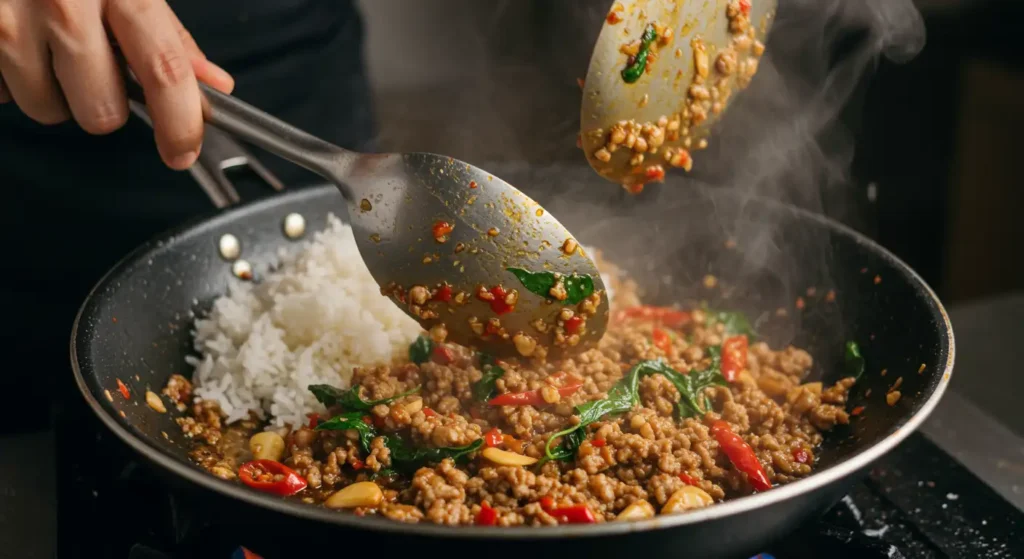
Making Pad Kra Pao is quick and requires only one pan. Here’s a beginner-friendly recipe:
Step 1: Prepare Ingredients
- Mince 3–4 cloves of garlic and 5–10 bird’s eye chilies (adjust for spice tolerance).
- Rinse and pick the leaves from 1 cup of holy basil.
- Prepare 200–250g of ground chicken (or preferred protein).
Step 2: Stir-Fry Garlic and Chilies
- Heat 2 tablespoons of oil in a wok or pan over medium-high heat.
- Add garlic and chilies, stir-frying until fragrant (about 20 seconds).
Step 3: Add Protein
- Add the ground chicken (or other protein).
- Stir-fry until it’s mostly cooked, breaking it into small pieces.
Step 4: Season the Dish
- Add 1 tablespoon oyster sauce, 1 tablespoon soy sauce, 1 teaspoon fish sauce, and ½ teaspoon sugar.
- Stir well so the protein absorbs the sauce.
Step 5: Add Holy Basil
- Turn off the heat and toss in the holy basil leaves.
- Stir until just wilted from the residual heat.
Step 6: Serve with Rice and Egg
- Spoon the stir-fry over a bed of steamed jasmine rice.
- Top with a fried egg (kai dao) for the authentic Thai experience.
Health Benefits of Pad Kra Pao
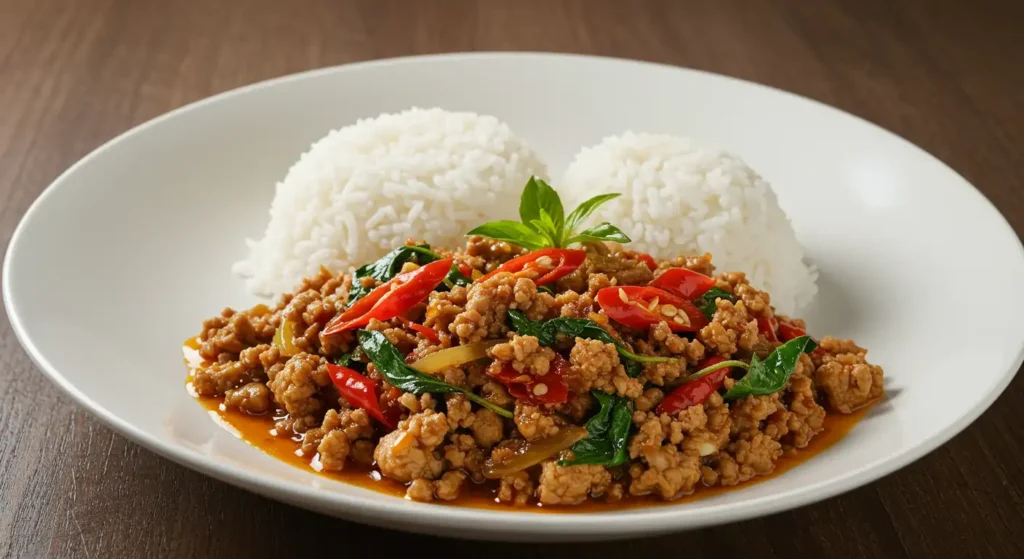
While Pad Kra Pao is indulgent and spicy, it also has some surprising health benefits:
1. Protein-Rich
Using chicken, pork, beef, or tofu makes it a protein-packed meal, supporting muscle health and energy.
2. Benefits of Holy Basil
Holy basil is rich in antioxidants and is traditionally believed to reduce stress, boost immunity, and support digestion.
3. Low in Carbs (if desired)
While traditionally served with jasmine rice, Pad Kra Pao can be paired with brown rice, quinoa, or cauliflower rice for a lighter option.
4. Supports Heart Health
Garlic and chilies contain compounds that may promote circulation and cardiovascular health.
5. Balanced Nutrition
The combination of lean protein, fresh basil, and chili peppers makes this dish both flavorful and nutritionally balanced when eaten in moderation.
Tips for Perfect Pad Kra Pao
- Use holy basil, not sweet basil – The flavor difference is huge. If you can’t find holy basil, Thai basil is a decent substitute.
- Adjust spice to your preference – Use fewer chilies for a mild version or more for authentic Thai heat.
- Cook fast on high heat – This keeps the basil fresh and the protein tender.
- Add a fried egg – It’s not optional in Thailand—it’s tradition!
Conclusion
Pad Kra Pao (ผัดกระเพรา) is more than just a stir-fry—it’s the ultimate Thai comfort food. Quick, flavorful, and deeply satisfying, it reflects everything Thai cuisine stands for: bold flavors, balance, and freshness.
With just a handful of ingredients and a wok, you can bring this beloved street food into your own kitchen. Whether you make it with chicken, pork, beef, or tofu, Pad Kra Pao is sure to become a staple in your home.
And just like the patience and joy that comes with baking sourdough bread, cooking Pad Kra Pao is a hands-on experience that connects you with tradition and delivers a meal worth sharing. So why not give it a try tonight?