

Ambur Biryani: The Pride of Tamil Nadu’s Culinary Heritage
Table of Contents
Introduction
Biryani is not just food—it’s an emotion that unites food lovers across India. From Hyderabad to Kolkata, every region has given its own twist to this royal dish. Nestled in Tamil Nadu, the small town of Ambur has carved a name for itself on the biryani map of India with its Ambur Biryani—a dish known for its simplicity, unique flavor, and strong Mughal influences.
Unlike the heavily spiced or layered biryanis of North India, Ambur Biryani is subtle, light, and incredibly flavorful. Made with seeraga samba rice (a small-grain, aromatic rice native to Tamil Nadu), freshly ground spices, and meat cooked to perfection, this biryani is a perfect balance of tradition and taste.
In this post, we’ll explore the history, ingredients, preparation method, and health benefits of Ambur Biryani, and why it’s a must-try for anyone who loves authentic South Indian cuisine.
History of Ambur Biryani
Ambur Biryani’s story dates back to the 17th century during the reign of the Nawabs of Arcot. These rulers, influenced by Mughlai cuisine, brought with them a rich food culture that blended with Tamil Nadu’s local ingredients and traditions.
The Nawabs’ cooks perfected a biryani that was less oily, less spicy, and more aromatic than its northern cousins. Over time, this biryani became a specialty of the town of Ambur, located on the Chennai–Bengaluru highway. Today, Ambur is synonymous with biryani, and locals proudly serve it at weddings, festivals, and restaurants.
What makes Ambur Biryani unique is:
- Use of seeraga samba rice, which absorbs flavors beautifully.
- The marination method, where meat is cooked with curd and ground spices.
- A balanced spice profile—it’s flavorful without being overpowering.
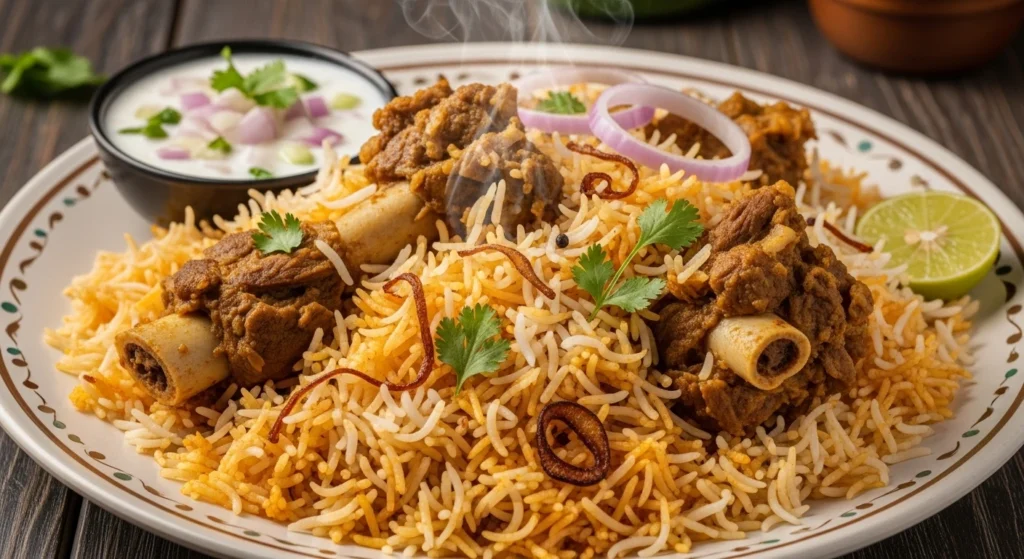
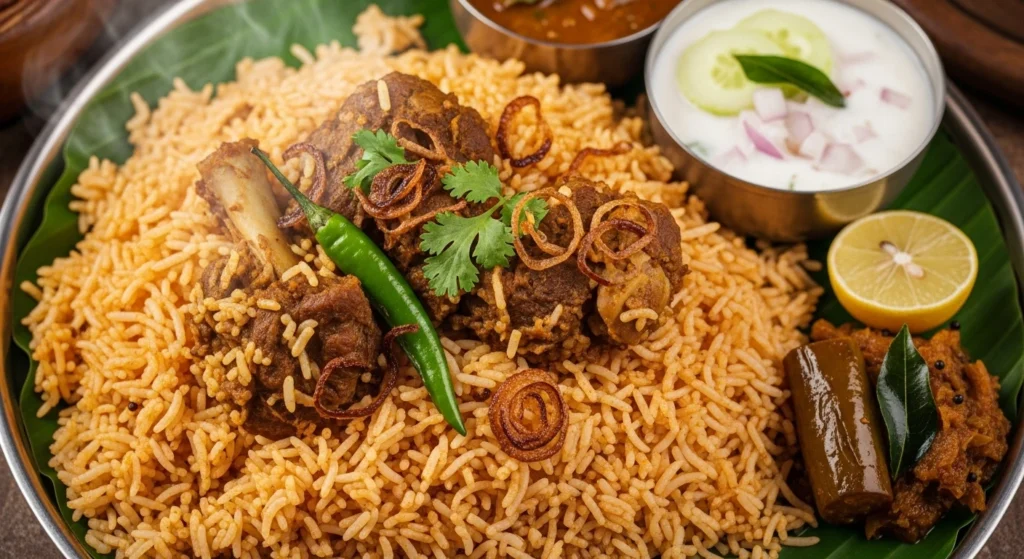
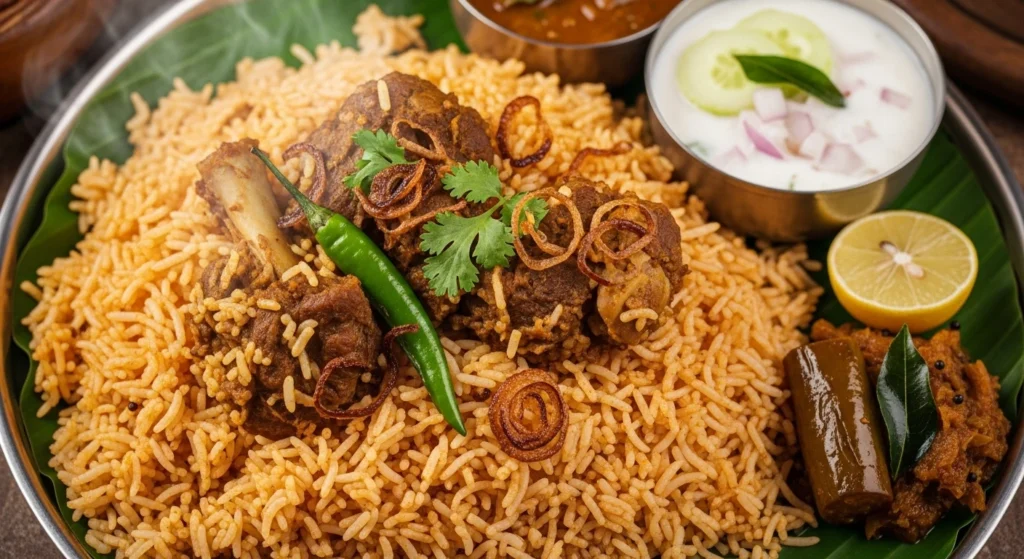
- Traditionally served with brinjal curry (ennai kathirikai) and onion raita.
Ingredients for Ambur Biryani
Here’s a traditional recipe with authentic ingredients.
Main Ingredients
- Seeraga Samba rice – 500 g (short-grain rice preferred for Ambur Biryani)
- Mutton or Chicken – 700 g (bone-in meat for best flavor)
- Onions – 3 large, sliced thin
- Tomatoes – 2 medium, chopped
- Yogurt/curd – ½ cup
- Ginger-garlic paste – 2 tbsp
- Green chilies – 4–5, slit
- Mint leaves – ½ cup, chopped
- Coriander leaves – ½ cup, chopped
- Lemon juice – 2 tbsp
- Ghee or oil – 4–5 tbsp
Whole Spices
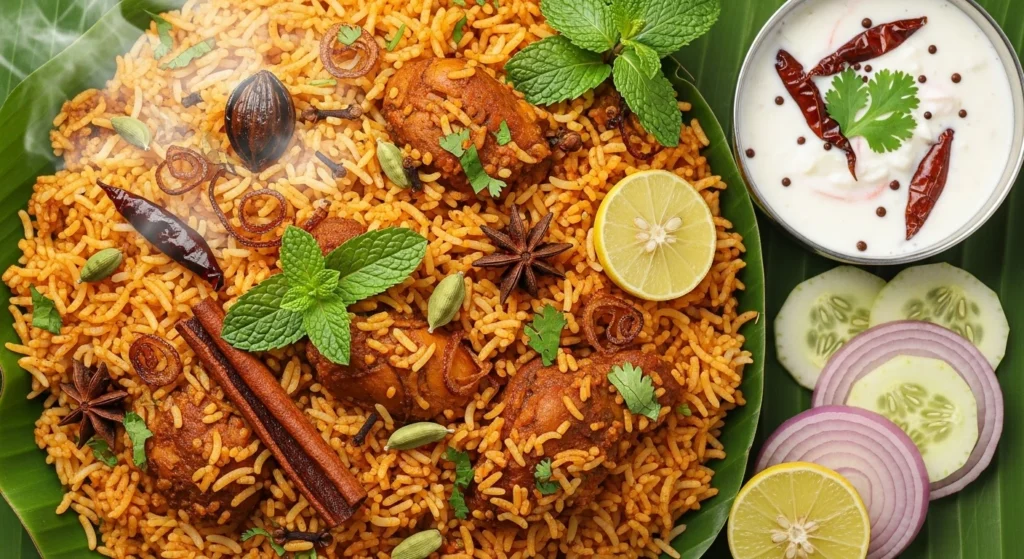
- Bay leaf – 1
- Cloves – 5–6
- Cardamom – 4
- Cinnamon stick – 1 small piece
- Star anise – 1
- Fennel seeds – 1 tsp
Ground Spices
- Red chili powder – 1 tsp
- Turmeric powder – ½ tsp
- Coriander powder – 1 tbsp
- Garam masala – 1 tsp (optional, but enhances flavor)
Garnish & Accompaniments
- Fried onions (optional, for added richness)
- Onion raita
- Brinjal curry (ennai kathirikai) – traditional side dish
Step-by-Step Preparation of Ambur Biryani
Step 1: Marinate the Meat
- Wash the chicken or mutton and pat dry.
- Mix with yogurt, ginger-garlic paste, turmeric, chili powder, and salt.
- Let it marinate for at least 1 hour (longer for mutton).
Step 2: Cook the Rice
- Wash and soak seeraga samba rice for 20–30 minutes.
- Boil water in a large pot with salt and whole spices (bay leaf, cinnamon, cardamom, cloves, star anise, fennel seeds).
- Add rice and cook until 70% done. Drain and keep aside.
Step 3: Prepare the Meat Masala
- Heat oil or ghee in a heavy-bottomed pot.
- Add sliced onions and sauté until golden.
- Add green chilies, chopped tomatoes, and the marinated meat.
- Cook until the meat is tender and the masala thickens.
- Add mint, coriander leaves, and lemon juice for freshness.
Step 4: Combine Rice and Meat
- Add the partially cooked rice over the meat masala in layers.
- Drizzle a little ghee on top.
- Cover with a tight lid to trap the steam.
Step 5: Dum Cooking
- Cook on low flame for 20–25 minutes (place a heavy tawa under the pot to prevent burning).
- Alternatively, bake in a preheated oven at 180°C for 20 minutes.
Step 6: Serve Hot
Gently fluff the rice before serving. Pair with onion raita and brinjal curry for an authentic Ambur Biryani experience.
Health Benefits of Ambur Biryani
While biryani is often seen as indulgent, Ambur Biryani is lighter than many other regional versions, making it relatively healthier.
1. Easier Digestion
Thanks to the use of seeraga samba rice, which is small-grained and easier to digest compared to basmati.
2. Balanced Use of Spices
The spice mix in Ambur Biryani enhances flavor without overwhelming the stomach, unlike very heavy biryanis.
3. Nutrient-Rich
- Meat provides high-quality protein and essential minerals like iron and zinc.
- Mint and coriander boost digestion and detoxification.
- Yogurt aids gut health and adds natural probiotics.
4. Controlled Oil Usage
Ambur Biryani uses less oil and ghee than other versions, making it less greasy but still flavorful.
5. Satiety & Energy
A wholesome one-pot meal, Ambur Biryani provides carbs, protein, and healthy fats that keep you full and energized.
Conclusion: Bringing Ambur’s Flavors to Your Kitchen
Ambur Biryani is more than just food—it’s a reflection of Tamil Nadu’s rich culinary past and cultural exchange with the Nawabs of Arcot. Light, aromatic, and comforting, it’s the kind of biryani that you can enjoy without feeling weighed down.
So, why not try making Ambur Biryani at home? Gather your spices, marinate your meat, and let the aroma of seeraga samba rice fill your kitchen. Once you take that first bite, you’ll understand why this humble town in Tamil Nadu has won the hearts of biryani lovers everywhere.