
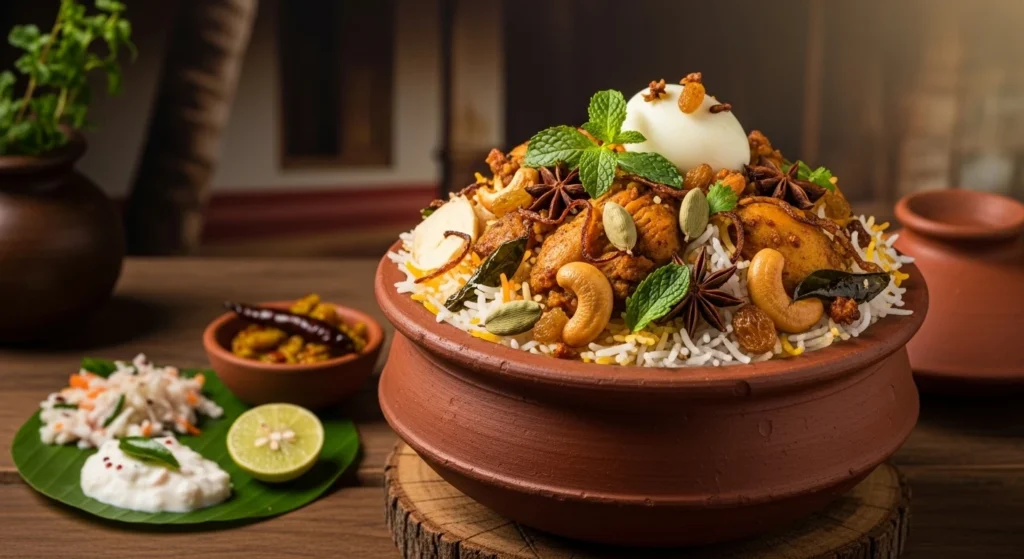
Malabar Biryani: Kerala’s Coastal Gem of Flavors
Table of Contents
Introduction
When it comes to biryani, every region in India has its own take on this beloved dish. From the fiery Hyderabadi Biryani to the fragrant Awadhi Biryani of Lucknow, each variation carries its own charm. But down in the lush coastal lands of Kerala lies a version that is lighter, aromatic, and deeply rooted in history—Malabar Biryani.
Known for its use of short-grain rice (jeerakasala or kaima rice), fragrant spices, and the influence of Kerala’s coastal culture, Malabar Biryani is a delicacy that reflects the spirit of the Malabar region. Unlike the heavy, layered biryanis of the North, Malabar Biryani is subtly spiced, cooked with ghee, and often paired with seafood or chicken, making it unique and refreshing.
This blog post will take you through the history, ingredients, step-by-step preparation, and health benefits of Kerala’s Malabar Biryani—perfect for anyone curious to try cooking this regional treasure at home.
History of Malabar Biryani
The history of Malabar Biryani is tied to the trade routes of Kerala. For centuries, the Malabar Coast was a hub for Arab traders who brought not only goods but also culinary traditions. Over time, local communities—especially the Mappila Muslims—adopted and adapted these influences, blending Middle Eastern cooking styles with Kerala’s own ingredients like coconut, curry leaves, and short-grain rice.
Malabar Biryani differs from other biryanis in a few key ways:
- It uses kaima or jeerakasala rice instead of long-grain basmati.
- The biryani is cooked in dum style but with lighter spices, making it gentler on the palate.
- Seafood biryani (fish or prawns) is as popular as chicken or mutton biryani, reflecting Kerala’s coastal culture.
Over time, this biryani became a centerpiece of weddings, Eid celebrations, and festive gatherings, symbolizing hospitality and community.
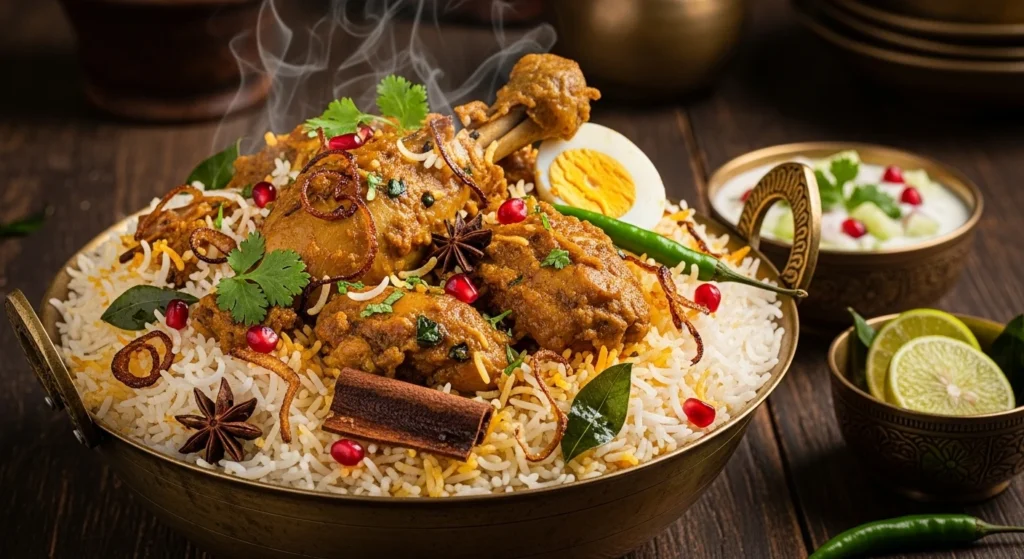
Ingredients for Malabar Biryani
The ingredients may vary slightly depending on the family recipe, but the essence remains the same—aromatic rice, flavorful meat or seafood, and a perfect balance of spices.
Main Ingredients
- Kaima/Jeerakasala rice – 500 g (short-grain, fragrant rice from Kerala)
- Chicken or mutton – 700 g (can also use fish or prawns)
- Onions – 4 large, thinly sliced
- Yogurt – ½ cup
- Ghee – 5–6 tbsp (clarified butter for richness)
- Tomatoes – 2 medium, chopped
- Green chilies – 3–4, slit
- Ginger-garlic paste – 2 tbsp
- Curry leaves – 1 sprig (optional, but adds authentic Kerala touch)
- Milk with saffron strands – ½ cup
Whole Spices
- Bay leaves – 2
- Cardamom – 4
- Cloves – 5–6
- Cinnamon – 1 stick
- Star anise – 1
- Mace – a small piece
Ground Spices
- Red chili powder – 1 tsp
- Turmeric powder – ½ tsp
- Coriander powder – 1 tbsp
- Garam masala – 1 tsp
Garnish
- Fried onions (birista)
- Fresh coriander and mint leaves
- Fried cashews and raisins (traditional Malabar touch)
- Boiled eggs (optional, for serving)
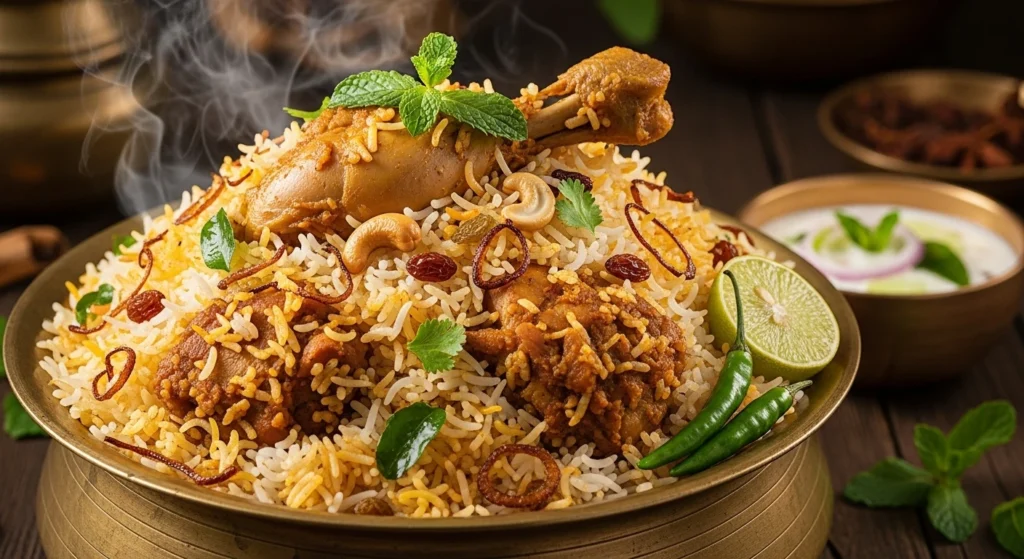
Step-by-Step Preparation of Malabar Biryani
Step 1: Marinate the Meat
- Mix yogurt, ginger-garlic paste, turmeric, chili powder, and salt in a bowl.
- Add the chicken or mutton and coat well.
- Let it marinate for at least 1 hour.
Step 2: Prepare the Rice
- Wash and soak the kaima rice for 20–30 minutes.
- Heat ghee in a pan, add whole spices, and lightly sauté the rice until aromatic.
- Add water (roughly 1:2 ratio of rice to water), salt, and cook until 70% done.
- Drain and set aside.
Step 3: Fry the Onions (Birista)
- Heat ghee in a pan and fry sliced onions until golden brown and crispy.
- Remove and keep aside for layering and garnish.
Step 4: Cook the Meat
- In a large heavy-bottomed pot, heat ghee.
- Add sliced onions, curry leaves, and green chilies.
- Sauté until onions turn soft.
- Add marinated meat and cook until browned.
- Add chopped tomatoes, ground spices, and salt.
- Cook until the meat is tender and the masala thickens.
Step 5: Layering the Biryani
- In a deep handi, spread a layer of rice at the bottom.
- Add a layer of cooked meat and masala.
- Sprinkle fried onions, mint, coriander, saffron milk, and a few fried cashews and raisins.
- Repeat the process, finishing with rice on top.
- Drizzle ghee for richness.
Step 6: Dum Cooking
- Seal the pot with a tight lid or dough to lock in the steam.
- Cook on very low flame for 20–25 minutes (you can place a heavy tawa under the pot to prevent burning).
- Alternatively, bake in an oven at 180°C for 20 minutes.
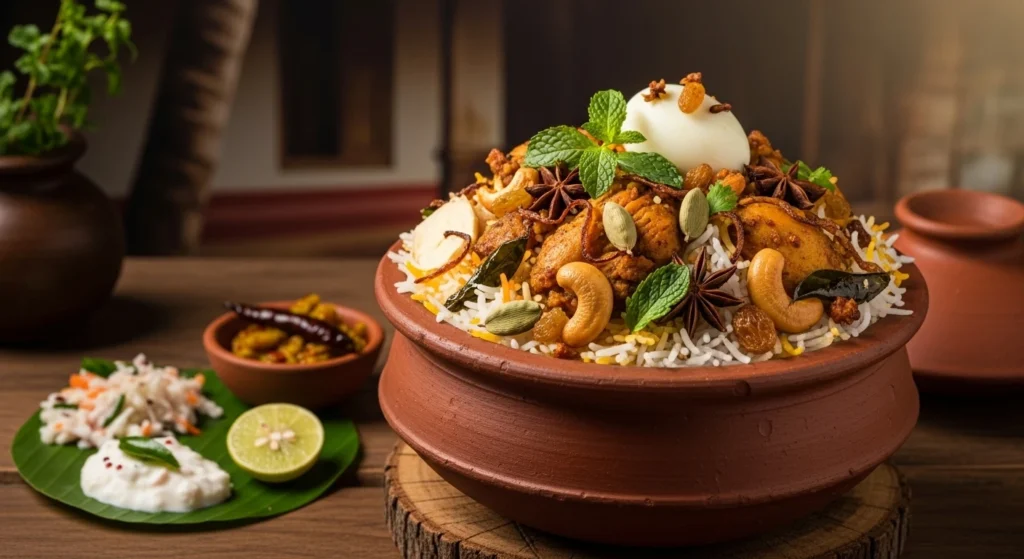
Step 7: Serve
Open the handi to a burst of aroma—fragrant rice, tender meat, and golden toppings. Serve with raita, pickle, and papad for a traditional Malabar meal.
Health Benefits of Malabar Biryani
While biryani is often seen as a festive indulgence, Malabar Biryani is lighter than many other versions, making it easier on the stomach. Here are some of its benefits:
1. Balanced Nutrition
The combination of rice, protein (chicken, mutton, or seafood), and ghee makes it a wholesome, energy-rich meal.
2. Rich in Spices with Medicinal Value
- Turmeric fights inflammation.
- Ginger and garlic support digestion and immunity.
- Cloves and cardamom improve metabolism.
3. Cashews, Raisins, and Ghee Add Good Fats
These provide energy and essential nutrients, especially important in Kerala’s tropical climate.
4. Short-Grain Rice for Better Digestion
Kaima rice is easier to digest compared to long-grain varieties, making the dish gentler on the stomach.
5. Satiety and Comfort
Malabar Biryani is not overly spicy or oily, which makes it a comfort food that fills you up without overwhelming your system.
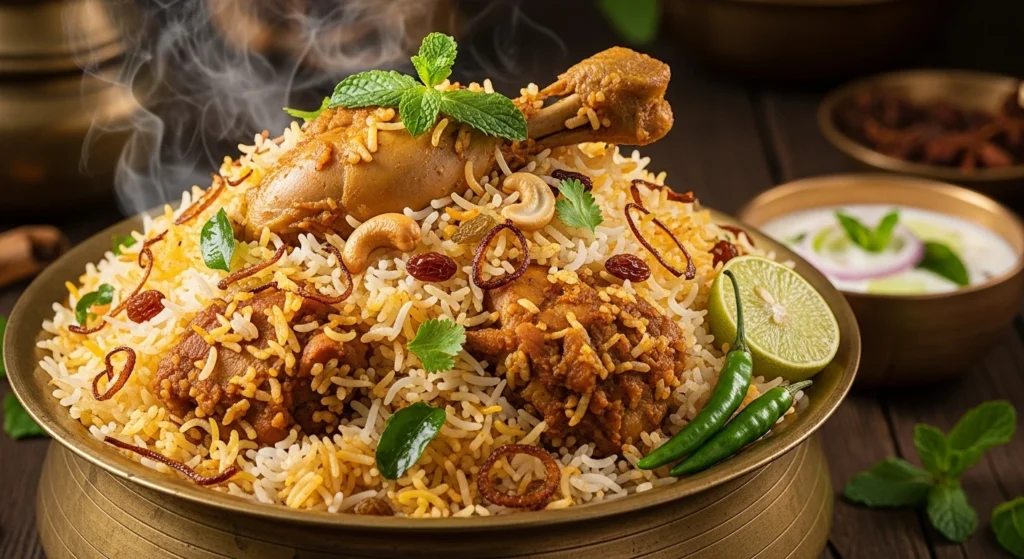
Conclusion: Bring the Taste of Malabar to Your Kitchen
Malabar Biryani is more than a dish—it’s a story of Kerala’s history, culture, and hospitality. Every bite speaks of the coastal influences, Arab connections, and the warm flavors of ghee, spices, and jeerakasala rice.
Yes, it requires patience to prepare, but the reward is worth every step. Whether you’re celebrating a special occasion or simply craving a comforting meal, Malabar Biryani is a dish that will win hearts at your table.
So, why not give it a try? Gather your spices, marinate your meat, and let the dum cooking fill your home with the aroma of Kerala’s culinary heritage. Your kitchen will not only smell heavenly—it will carry the essence of centuries-old tradition served with love.