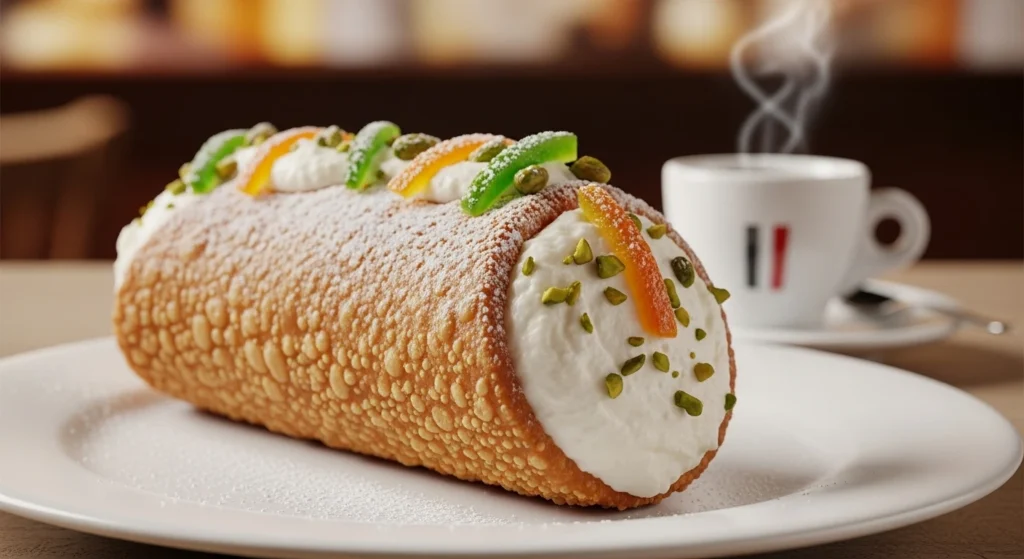
Cannoli: Sicily’s Irresistible Pastry Delight
Table of Contents

Introduction
Crispy, golden pastry shells filled with sweet, creamy ricotta—cannoli are one of Italy’s most iconic desserts. Beloved for their balance of textures and flavors, cannoli are the perfect bite: crunchy, smooth, and indulgent all at once. Originating in Sicily, these pastries have traveled far beyond Italy, becoming a worldwide symbol of Italian baking.
Cannoli aren’t just a dessert; they’re a story of tradition, celebration, and craftsmanship. In this guide, we’ll explore the history of cannoli, uncover the essential ingredients, walk through a step-by-step preparation method, and highlight the health benefits of this cherished pastry.
The History of Cannoli
Ancient Roots in Sicily
Cannoli date back to Sicily’s Arab rule between the 9th and 11th centuries. Arabs introduced sugarcane, almonds, and other sweet-making techniques to the island, which inspired locals to create fried pastries filled with sweetened cream. The name cannolo comes from the Italian word canna, meaning “reed,” since early cannoli shells were wrapped around cane stalks for frying.
Carnival Celebrations
Historically, cannoli were made during Carnival, a festive season leading up to Lent. They symbolized indulgence before the fasting period, embodying abundance and joy. Over time, they became a year-round treat, appearing at weddings, holidays, and family gatherings.
Regional Significance
Though variations exist, Sicily remains the heart of cannoli culture. In Palermo, you’ll find larger cannoli with rich fillings, while in eastern Sicily, they may be smaller and delicately flavored. Each bakery takes pride in its own unique twist, from candied fruits to chocolate chips.

Ingredients for Cannoli
Cannoli may look fancy, but the ingredients are humble and accessible. Here’s what you’ll need to create this Sicilian classic.
For the Shells
- Flour: All-purpose flour forms the base.
- Sugar: For slight sweetness.
- Cinnamon: A traditional spice for depth of flavor.
- Salt: Enhances the taste.
- Butter or lard: Adds richness and flakiness.
- Marsala wine (or white wine): Provides flavor and helps achieve the crisp texture.
- Egg yolk: Helps bind the dough.
- Oil (for frying): Traditionally lard, but vegetable oil works too.
For the Filling
- Ricotta cheese: The heart of cannoli—smooth, creamy, and slightly tangy. Sheep’s milk ricotta is traditional, but cow’s milk ricotta is often used.
- Powdered sugar: For sweetness.
- Vanilla extract: Adds fragrance and depth.
- Optional flavorings/toppings:
- Mini chocolate chips
- Candied orange peel
- Chopped pistachios
- A dusting of powdered sugar
Step-by-Step Preparation of Cannoli
Making cannoli requires patience and care, but the process is straightforward. Here’s a step-by-step guide.
Step 1: Make the Dough for Shells
- In a large bowl, mix flour, sugar, cinnamon, and salt.
- Add butter or lard and rub it into the flour until crumbly.
- Stir in Marsala wine and egg yolk, mixing until a dough forms.
- Knead lightly, then wrap in plastic wrap and let rest for 30–60 minutes.
Step 2: Roll and Shape the Shells
- Roll out the dough very thin (about ⅛ inch thick).
- Cut into circles (about 4 inches in diameter).
- Wrap each circle around a metal cannoli tube (or substitute with a cleaned wooden dowel). Seal the edges with a dab of egg white.
Step 3: Fry the Shells
- Heat oil to 175°C (350°F).
- Fry the wrapped dough until golden and bubbly, about 2–3 minutes.
- Remove carefully and drain on paper towels.
- Once cooled, gently slide the shells off the tubes.
Step 4: Prepare the Filling
- Drain ricotta overnight in a cheesecloth to remove excess moisture.
- In a bowl, beat ricotta until smooth.
- Mix in powdered sugar and vanilla extract.
- Fold in mini chocolate chips, candied fruit, or pistachios if desired.
Step 5: Assemble the Cannoli
- Fill a piping bag with the ricotta mixture.
- Pipe the filling into both ends of each shell, filling completely.
- Dip the ends in pistachios or chocolate chips for extra flair.
- Dust with powdered sugar before serving.
Tip: Only fill the shells just before serving to keep them crisp.

Health Benefits of Cannoli
Cannoli may be a dessert, but they also offer some nutritional value when enjoyed in moderation.
1. Protein and Calcium
Ricotta cheese provides protein for muscle health and calcium for strong bones.
2. Energy Boost
The combination of carbohydrates (from the shell) and fats (from the filling) makes cannoli a quick source of energy.
3. Nutrient Variety
- Dark chocolate chips add antioxidants.
- Pistachios provide healthy fats, fiber, and plant-based protein.
- Citrus peel offers vitamin C and natural flavor.
4. Portion-Friendly Dessert
Cannoli are typically small, making them a built-in portion-controlled treat compared to cakes or large pastries.
5. Joy and Tradition
Food isn’t just about nutrients—it’s also about happiness. Cannoli, with their cultural roots and celebratory spirit, offer emotional nourishment and connection.
Tips for Perfect Cannoli
- Drain ricotta properly: This prevents a watery filling.
- Roll dough thin: Ensures crispy shells.
- Fry at the right temperature: Too hot burns the shells; too low makes them greasy.
- Fill last-minute: Keeps shells crunchy.
- Experiment with flavors: Try espresso, citrus zest, or even savory versions for a twist.

Conclusion
Cannoli are more than a dessert—they’re a piece of Sicilian history, a symbol of festivity, and a reminder of how simple ingredients can create something extraordinary. With crispy shells, creamy ricotta filling, and endless possibilities for customization, cannoli continue to capture hearts around the world.
Making cannoli at home may take time, but it’s a rewarding process that connects you to tradition and craftsmanship. Much like sourdough baking, cannoli remind us that patience and care lead to the most delightful results.
So why not give cannoli a try in your own kitchen? With each bite, you’ll be tasting a piece of Italy’s sweetest heritage.
Buon appetito! 🥂✨