
Table of Contents
Dhokla – Steamed Fermented Gram Flour Snack from Gujarat
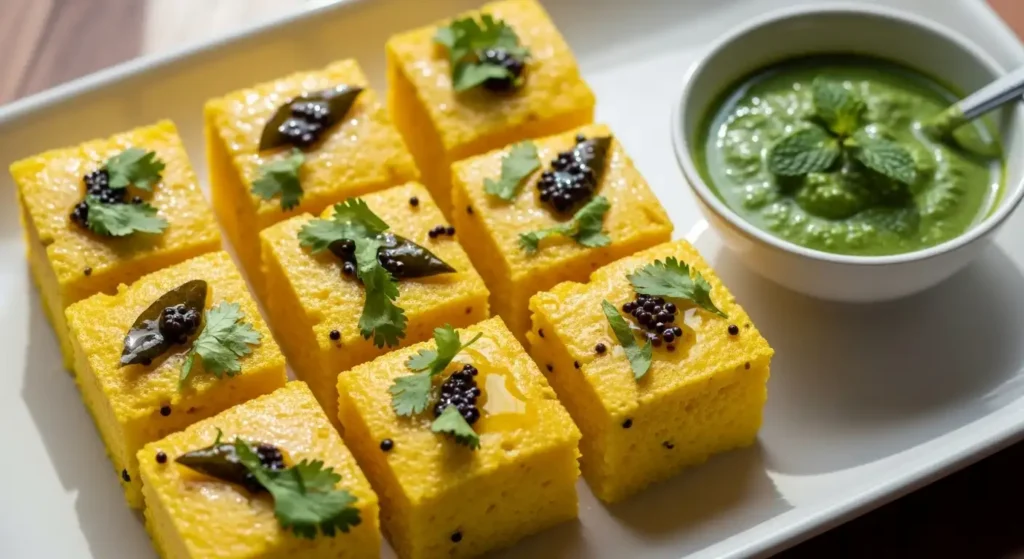
If there’s one dish that represents Gujarat’s culinary ingenuity, it has to be Dhokla. This light, fluffy, and slightly tangy steamed snack is made primarily from gram flour (besan) and is enjoyed as a breakfast item, snack, or even a party appetizer. Known for its airy texture and subtle spiced flavor, Dhokla is loved not only in India but increasingly worldwide.
In this article, we’ll explore the history of Dhokla, outline the ingredients, provide a step-by-step preparation guide, and highlight its health benefits. By the end, you’ll be ready to make this iconic Gujarati delicacy at home.
History of Dhokla
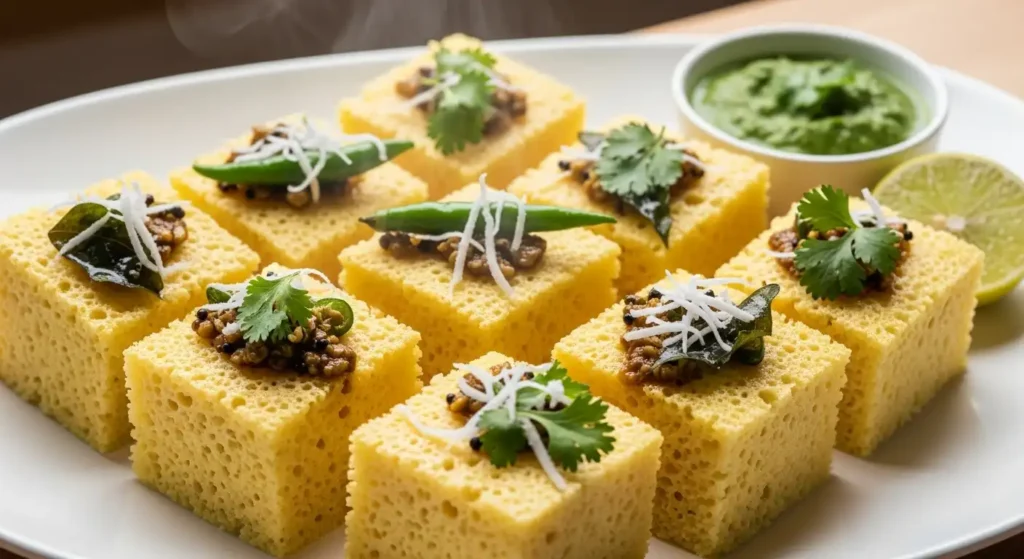
Dhokla is believed to have originated in the Gujarat region of India, where fermented foods are common due to their long shelf life and digestive benefits. Traditionally, it was made using fermented rice and chickpea flour, then steamed to create a soft, spongy texture.
- Cultural Significance: In Gujarat, Dhokla is a staple at breakfast, snacks, and even festive occasions. It’s often accompanied by green chutney and sweet tamarind sauce, highlighting its versatility.
- Evolution: Over time, multiple variations emerged, including Khaman Dhokla (softer and sweeter), Rava Dhokla (semolina-based), and even moong dal Dhokla.
- Global Popularity: Today, Dhokla is appreciated globally for its light texture, tangy taste, and protein-rich composition, making it a favorite in vegetarian and health-conscious diets.
Ingredients for Dhokla
The recipe consists of two main elements: the batter and the tempering.
For the Batter
- 1 cup gram flour (besan)
- ¼ cup semolina (optional, for extra fluffiness)
- 1 teaspoon ginger-green chili paste
- 1 teaspoon sugar
- ½ teaspoon turmeric powder
- 1 teaspoon lemon juice
- Salt, to taste
- 1 teaspoon fruit salt (Eno) or baking soda
- ¾ cup water (adjust as needed)
For Tempering (Tadka)
- 2 tablespoons oil
- 1 teaspoon mustard seeds
- 1 teaspoon sesame seeds
- 2 green chilies, sliced
- 8–10 curry leaves
- A pinch of asafoetida (hing)
- Fresh coriander leaves, chopped, for garnish
- Grated coconut (optional) for garnish
Step-by-Step Preparation of Dhokla
Making Dhokla at home is easier than it looks if you follow a systematic approach.
Step 1: Prepare the Batter
- In a mixing bowl, combine gram flour, semolina (if using), turmeric, salt, and sugar.
- Add ginger-green chili paste and lemon juice.
- Gradually add water to form a smooth, pourable batter without lumps.
- Let the batter rest for 10–15 minutes to allow the semolina to absorb water.
Step 2: Prepare the Steaming Setup
- Fill a steamer or large pot with 2–3 inches of water.
- Grease a round or square steaming tray with oil.
- Bring the water to a gentle boil.
Step 3: Add Fruit Salt and Steam
- Just before steaming, add fruit salt (Eno) or baking soda to the batter and gently mix.
- Pour the batter into the greased tray. It should start frothing slightly, indicating lightness.
- Place the tray in the steamer, cover with a lid, and steam for 15–20 minutes on medium heat.
- Check doneness by inserting a toothpick; it should come out clean.
Step 4: Prepare the Tempering (Tadka)
- Heat oil in a small pan.
- Add mustard seeds and let them splutter.
- Add sesame seeds, curry leaves, green chilies, and a pinch of hing.
- Pour the tempering over the steamed Dhokla immediately.
Step 5: Serve
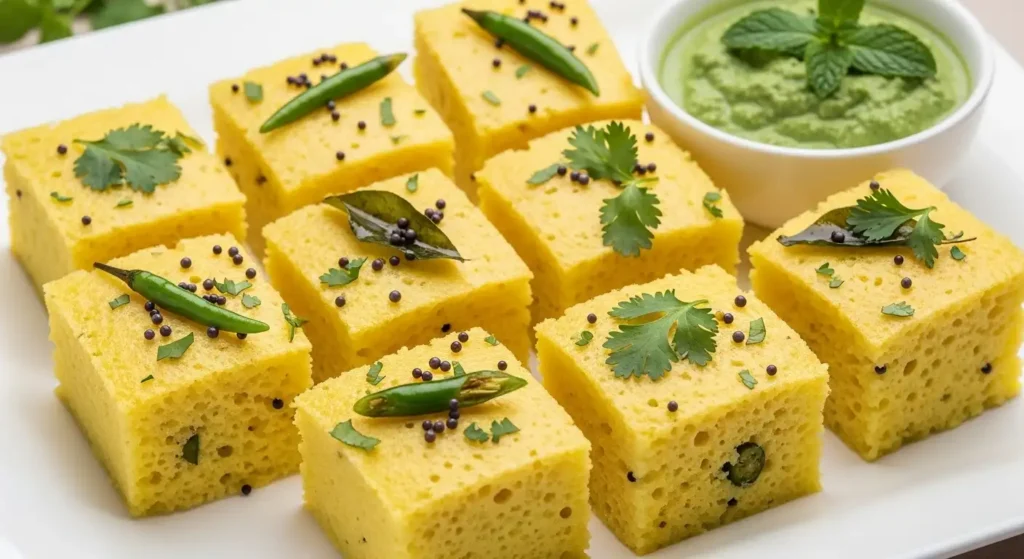
- Let the Dhokla cool slightly, then cut into squares or diamonds.
- Garnish with chopped coriander leaves and grated coconut.
- Serve with green chutney or tamarind sauce for a complete snack experience.
Health Benefits of Dhokla
Dhokla is not only delicious but also nutrient-rich, making it a popular choice for health-conscious eaters.
1. High in Protein
Gram flour is rich in plant-based protein, which supports muscle repair and satiety.
2. Low in Fat
Steaming instead of frying reduces oil content, making Dhokla low in fat and easier to digest.
3. Good for Digestion
Fermented batter contains probiotics, which aid in gut health and improve digestion.
4. Rich in Vitamins and Minerals
Gram flour provides iron, magnesium, and B vitamins, contributing to overall nutritional balance.
5. Gluten-Free Option
Traditional Dhokla is naturally gluten-free, making it suitable for celiac or gluten-sensitive diets.
Tips for Perfect Dhokla
- Use Fresh Fruit Salt: Adding Eno or baking soda just before steaming ensures a fluffy texture.
- Don’t Overmix: Gently fold in the fruit salt to avoid collapsing the batter.
- Proper Steaming: Steam on medium heat to prevent the Dhokla from becoming dense.
- Grease the Tray Well: This prevents sticking and makes cutting easier.
- Serve Fresh: Dhokla tastes best warm with chutney; refrigeration can make it slightly dry.
Variations of Dhokla
- Khaman Dhokla: Softer, slightly sweet, and more spongy version popular in Gujarat.
- Rava Dhokla: Made with semolina instead of gram flour for a lighter texture.
- Moong Dal Dhokla: High-protein variation using soaked and ground moong lentils.
- Cheese Dhokla: A modern twist adding grated cheese to the batter for indulgence.
- Oats Dhokla: Healthy version using oats and besan for extra fiber.
Why Dhokla Is a Cultural Icon
Dhokla is more than just a snack; it represents Gujarat’s love for light, healthy, and flavorful food. It is served at breakfast tables, weddings, festivals, and as a street food favorite. Its versatility, ease of preparation, and health benefits have helped it gain popularity across India and globally, making it a must-try dish for anyone exploring vegetarian cuisine.
Conclusion
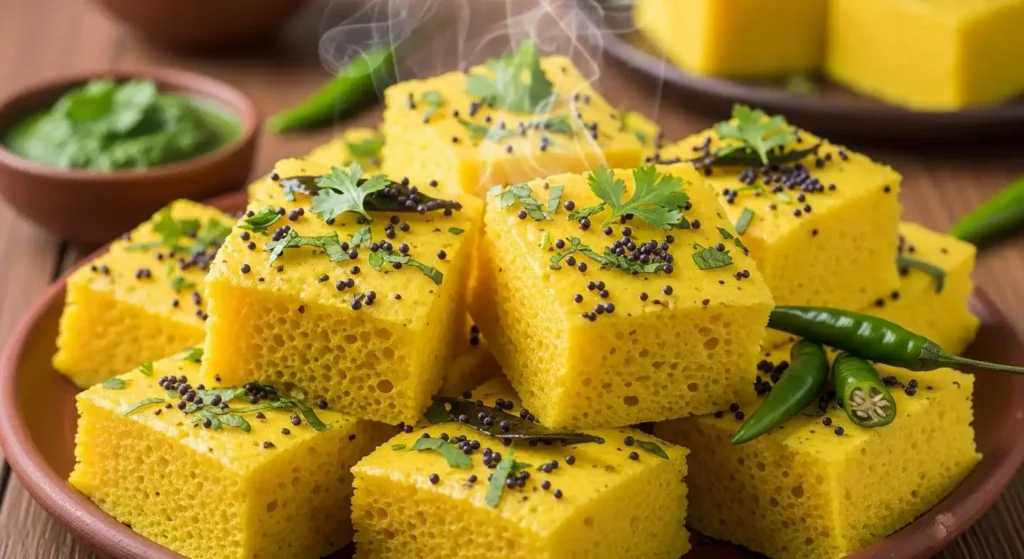
Dhokla is a perfect example of how simple ingredients and clever cooking techniques can create a snack that is fluffy, tangy, and satisfying. With its high protein content, low fat, and probiotic benefits, Dhokla is not only delicious but also nourishing.
For a creative twist, try making Dhokla using sourdough starter to enhance the fermentation process and add a subtle tang. Pairing traditional Dhokla with your homemade sourdough bread could inspire you to experiment with sourdough baking, blending traditional Indian flavors with artisanal bread-making techniques.