
Table of Contents
Pav Bhaji – Spiced Mashed Vegetable Curry Served with Buttered Bread
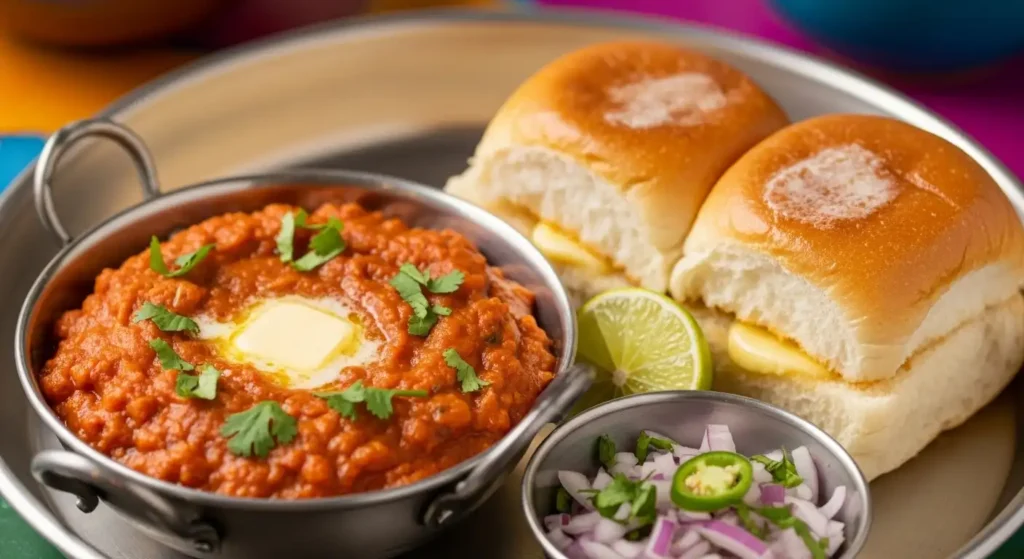
Few dishes capture the vibrant street food culture of Mumbai quite like Pav Bhaji. A comforting combination of buttery bread (pav) and a spicy, mashed vegetable curry (bhaji), Pav Bhaji is loved by people of all ages across India and beyond. It’s hearty, flavorful, and versatile, making it perfect for a quick lunch, dinner, or indulgent snack.
In this guide, we’ll explore the history of Pav Bhaji, outline the ingredients, provide a step-by-step preparation method, and highlight its health benefits. By the end, you’ll be ready to recreate this iconic street food at home.
History of Pav Bhaji
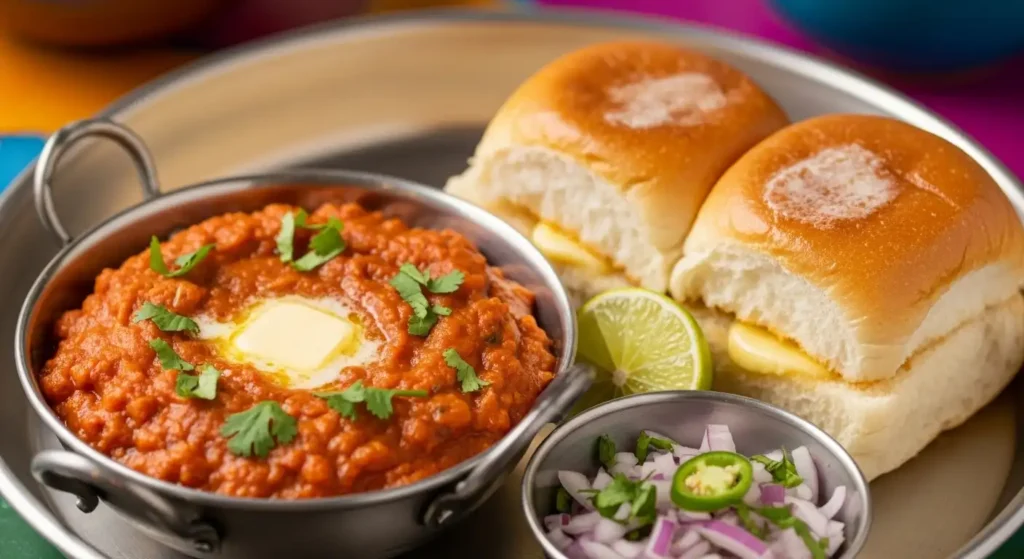
Pav Bhaji has its roots in Mumbai’s textile mill culture during the 1850s–1950s. Workers needed affordable, quick, and filling meals, so street vendors began preparing mashed vegetables cooked with spices, served with soft buttered bread.
- Name Origin: ‘Pav’ refers to the bread, derived from the Portuguese word pão, while ‘Bhaji’ refers to the spiced vegetable curry.
- Cultural Icon: Over time, Pav Bhaji became synonymous with Mumbai street food, enjoyed at roadside stalls known as “chaatwalas” or “bhajiwalas”.
- Global Popularity: Today, Pav Bhaji is served in restaurants worldwide and adapted into gourmet versions, yet the street food essence remains its charm.
Ingredients for Pav Bhaji
The dish is composed of two main elements: the bhaji (mashed vegetable curry) and the pav (bread).
For the Bhaji
- 2 cups cauliflower florets
- 1 cup green peas
- 2 medium potatoes, peeled and chopped
- 1 cup carrots, chopped
- 1 large capsicum (bell pepper), chopped
- 1 large onion, finely chopped
- 2 medium tomatoes, chopped
- 2 tablespoons ginger-garlic paste
- 2–3 green chilies, chopped
- 3 tablespoons butter or oil
- 1 teaspoon cumin seeds
- 1 teaspoon turmeric powder
- 1 teaspoon red chili powder
- 2 tablespoons Pav Bhaji masala (available at Indian stores)
- Salt, to taste
- Fresh coriander leaves, chopped
For the Pav
- 6–8 soft pav buns (available at Indian stores or homemade)
- 2–3 tablespoons butter (for toasting)
Optional Garnishes
- Lemon wedges
- Finely chopped onions
- Extra butter for richness
Step-by-Step Preparation of Pav Bhaji
Making Pav Bhaji at home is simpler than it looks, especially with a systematic approach.
Step 1: Cook the Vegetables
- In a large pot, boil cauliflower, potatoes, carrots, and peas until soft.
- Drain and mash them lightly, leaving some texture for a rustic feel.
- Set aside.
Step 2: Prepare the Masala Base
- Heat butter or oil in a pan.
- Add cumin seeds and let them splutter.
- Sauté onions and green chilies until golden brown.
- Add ginger-garlic paste and cook for 1–2 minutes.
- Stir in chopped tomatoes, turmeric, chili powder, and salt. Cook until the tomatoes soften and the oil separates.
Step 3: Cook the Bhaji
- Add the chopped capsicum and cook for 2–3 minutes.
- Add the boiled and mashed vegetables to the masala base.
- Sprinkle Pav Bhaji masala and mix thoroughly.
- Add water as needed to achieve a thick, creamy consistency.
- Simmer for 5–10 minutes, mashing further with a potato masher to blend flavors.
- Garnish with chopped coriander leaves and a dollop of butter.
Step 4: Prepare the Pav
- Slice the pav buns horizontally without cutting all the way through.
- Heat a pan and add butter. Toast the buns until golden brown and slightly crisp.
Step 5: Serve
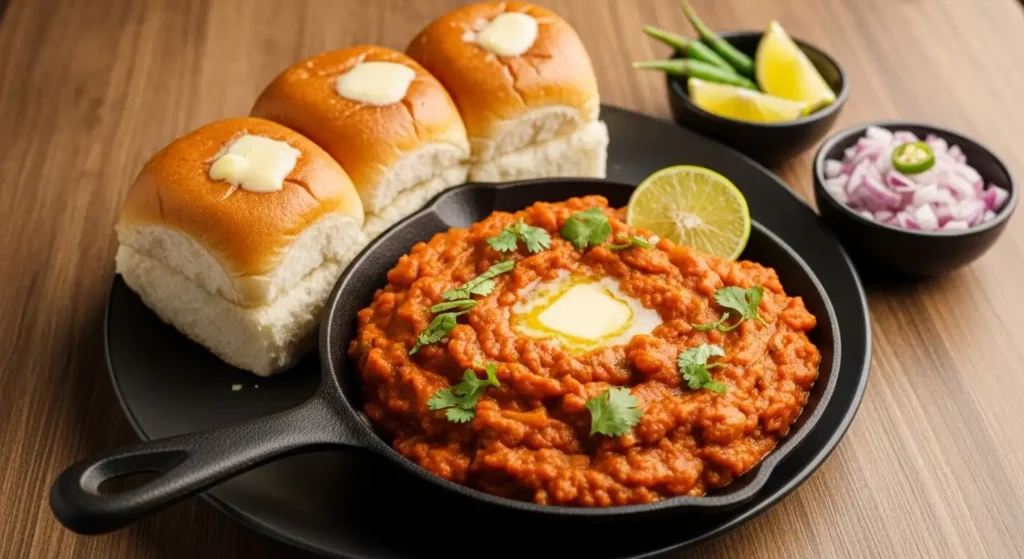
Serve the hot bhaji with buttered pav, accompanied by:
- Lemon wedges for a tangy touch
- Finely chopped onions for crunch
- Extra butter for indulgence
Health Benefits of Pav Bhaji
While Pav Bhaji is indulgent, it also offers nutritional value due to the variety of vegetables and spices used.
1. Rich in Vitamins and Minerals
The combination of potatoes, cauliflower, carrots, and capsicum provides vitamins A, C, K, and minerals like potassium and magnesium.
2. High in Fiber
Vegetables and peas increase dietary fiber, aiding digestion and promoting satiety.
3. Spices with Health Benefits
Cumin, turmeric, ginger, and garlic have anti-inflammatory and antioxidant properties.
4. Energy Boost
Potatoes and pav provide carbohydrates, making Pav Bhaji a quick source of energy for busy days.
5. Customizable for Health
- Use whole wheat pav to increase fiber
- Limit butter or substitute with olive oil for reduced saturated fat
- Add more vegetables like beans or zucchini for extra nutrition
Tips for Perfect Pav Bhaji
- Mash Vegetables While Cooking: This ensures the curry is smooth and well-blended.
- Adjust Spice Levels: Use more or fewer green chilies based on your tolerance.
- Butter Generously: Butter adds richness and authentic Mumbai flavor.
- Simmer for Flavor: Longer simmering helps the spices and vegetables meld perfectly.
- Serve Hot: Pav Bhaji tastes best piping hot with freshly toasted buns.
Variations of Pav Bhaji
- Cheese Pav Bhaji: Top the bhaji with grated cheese for a melty delight.
- Paneer Pav Bhaji: Add paneer cubes to increase protein content.
- Kolhapuri Pav Bhaji: Use Kolhapuri masala for an extra spicy twist.
- Jain Pav Bhaji: Replace potatoes and onions with raw banana or plantains to follow Jain dietary rules.
Why Pav Bhaji Is a Cultural Icon
Pav Bhaji is more than a dish; it’s a reflection of Mumbai’s street food culture, accessible to all and loved by everyone. Affordable, satisfying, and flavorful, it crosses age and social barriers, making it a beloved snack at festivals, roadside stalls, and family dinners alike.
Its appeal lies not just in taste but also in its versatility—whether you eat it plain, with butter, or with gourmet toppings, Pav Bhaji continues to delight food lovers worldwide.
Conclusion
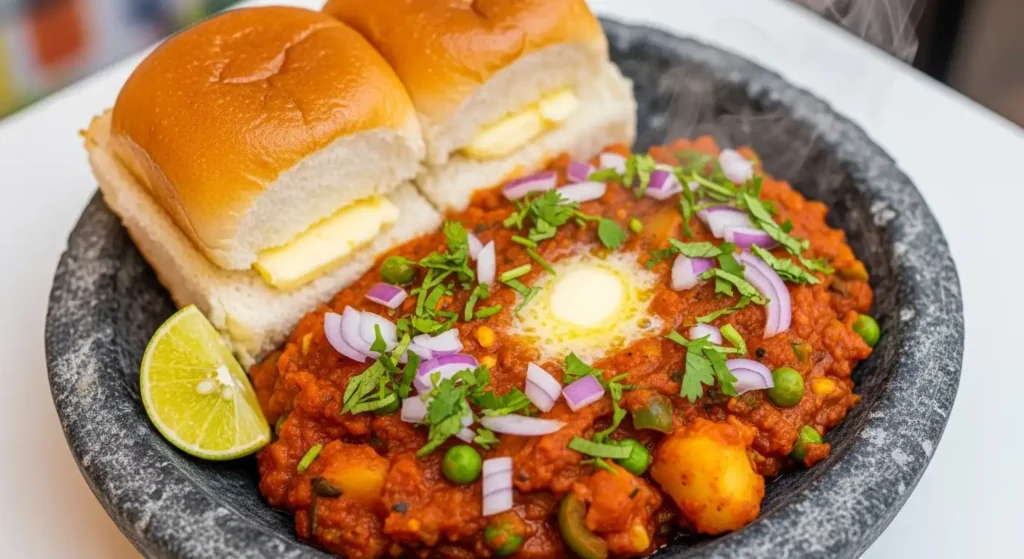
Pav Bhaji is a perfect blend of comfort, flavor, and nutrition. Its rich, spiced vegetable curry paired with buttery pav makes it a satisfying meal or snack any time of day. The dish showcases the vibrancy of Mumbai street food and the ingenuity of Indian cooking.
For a creative twist, try serving Pav Bhaji with homemade sourdough buns. The tangy, crusty bread complements the spicy, buttery bhaji perfectly and might even inspire you to start your own sourdough baking adventure, blending traditional street food with artisanal bread.