
Manti (Turkish Dumplings): A Bite-Sized Taste of Tradition
Table of Contents
Introduction
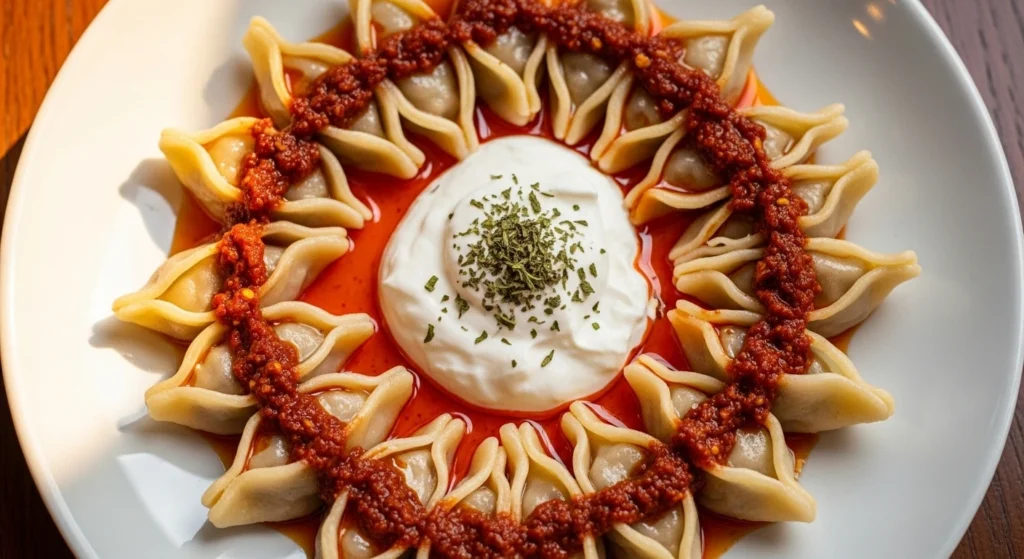
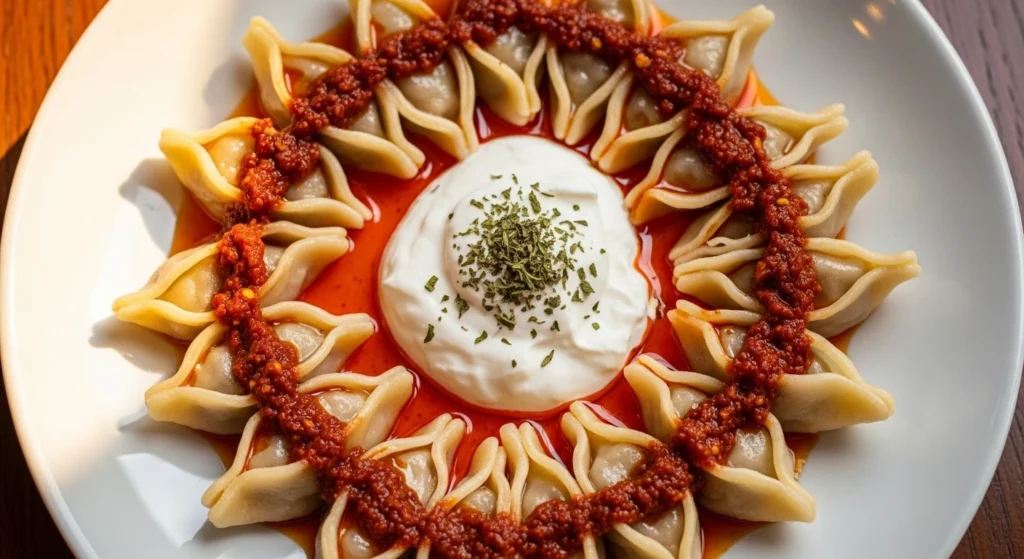
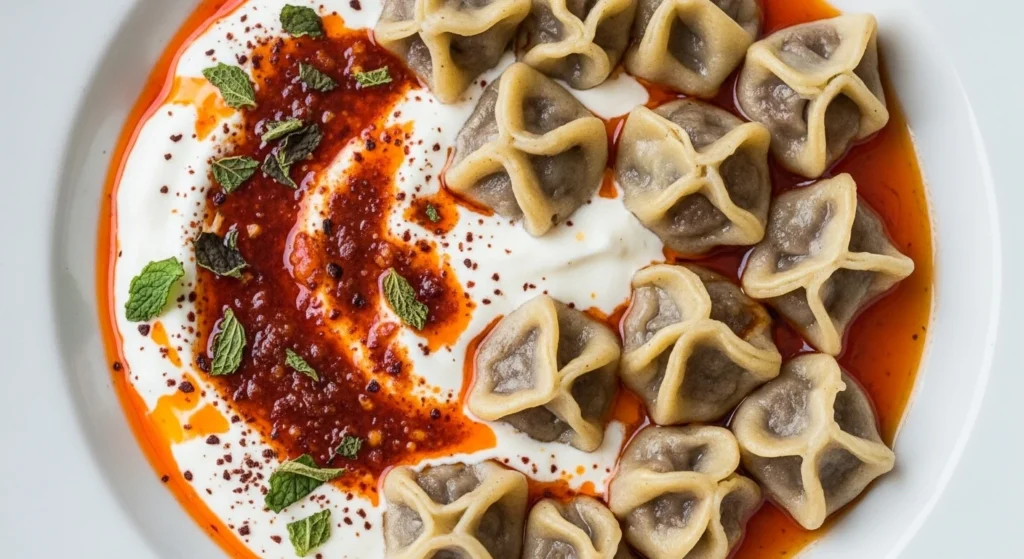
If you’ve ever wanted to taste comfort wrapped in dough, look no further than Manti, Turkey’s beloved dumplings. Often described as the Turkish version of ravioli, these tiny dumplings are filled with spiced meat, boiled or steamed, and then topped with a luscious garlic-yogurt sauce and drizzled with sizzling butter infused with paprika or Aleppo pepper.
Manti isn’t just food—it’s an experience. Preparing these delicate dumplings is often a family affair, with multiple generations gathering around the table to roll, fill, and fold. While it may take time, the reward is a dish that’s rich in flavor, culture, and tradition.
In this article, we’ll explore the history of manti, break down the essential ingredients, guide you through a step-by-step preparation process, and highlight its health benefits. By the end, you’ll understand why these little dumplings hold such a special place in Turkish cuisine.
History of Manti
Central Asian Origins
The story of manti begins not in Turkey, but in Central Asia, where Turkic nomadic tribes prepared boiled dumplings filled with meat as a portable and hearty meal. The dish likely spread along the Silk Road, influenced by Chinese dumplings and evolving with each culture it encountered.
Arrival in Anatolia
By the time the Seljuk Turks settled in Anatolia (modern-day Turkey), manti had become part of their culinary repertoire. In Ottoman kitchens, it gained sophistication and regional variations. The city of Kayseri in central Turkey is especially famous for its manti—tiny, delicate dumplings said to number 40 per spoonful when made by skilled hands.
Variations Across Regions
- Turkey: Kayseri manti with garlic yogurt and chili butter.
- Armenia: Larger baked manti served with broth.
- Central Asia: Bigger dumplings, often steamed.
- Middle East: Manti with spiced lamb and tomato-based sauces.
Despite these differences, the essence remains the same: dough, filling, and community.
Ingredients for Manti
Making manti requires a few simple ingredients, but the magic lies in the balance of flavors and the topping that brings it all together.
For the Dough
- 3 cups all-purpose flour
- 1 tsp salt
- 1 large egg
- ½ cup water (add more if needed)
For the Filling
- 250g ground lamb or beef
- 1 medium onion, finely grated
- ½ tsp salt
- ½ tsp black pepper
- ½ tsp paprika or red chili flakes (optional)
For the Toppings
- 2 cups plain yogurt
- 2 cloves garlic, minced
- 3 tbsp butter
- 1 tsp paprika or Aleppo pepper
- Dried mint (optional, for garnish)
- Chopped parsley (optional, for garnish)
Step-by-Step Preparation of Manti
Making manti at home can be time-intensive, but it’s a deeply rewarding process. Here’s a step-by-step guide to walk you through.
Step 1: Prepare the Dough
- In a large bowl, combine flour and salt.
- Add the egg and gradually mix in water, kneading until a smooth, elastic dough forms.
- Cover with a damp cloth and let rest for 30 minutes.
Step 2: Make the Filling
- Combine ground meat, grated onion, salt, pepper, and paprika in a bowl.
- Mix thoroughly until well combined.
Step 3: Roll Out the Dough
- Divide dough into two portions for easier handling.
- On a floured surface, roll each portion into a thin sheet, about 1–2 mm thick.
- Cut the dough into small squares (about 2–3 cm).
Step 4: Fill and Shape the Dumplings
- Place a pea-sized amount of filling in the center of each square.
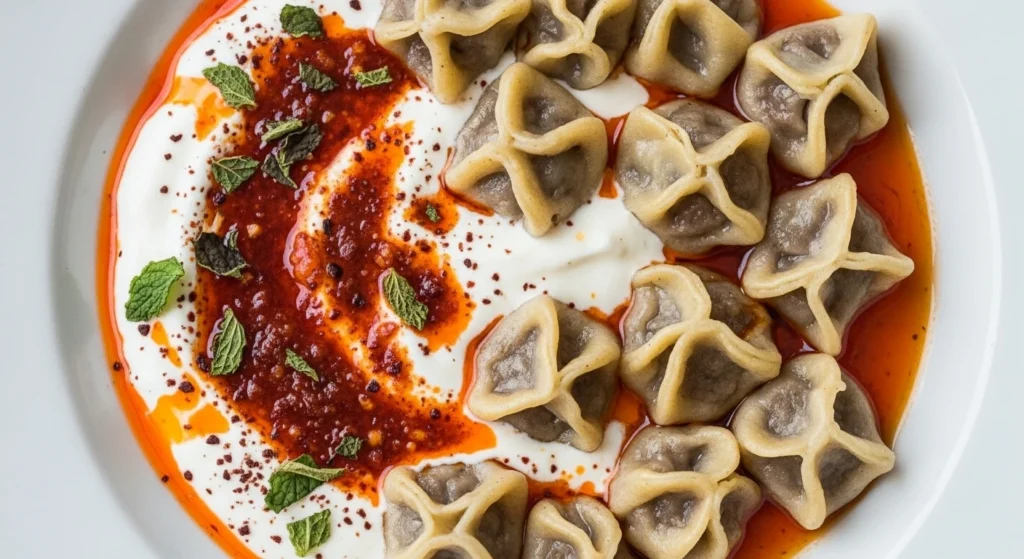
- Fold into a triangle, then pinch edges tightly to seal.
- Some regions shape manti like little purses or bundles—choose the style you prefer.
Step 5: Cook the Manti
- Bring a large pot of salted water to a boil.
- Drop in the dumplings and cook for 8–10 minutes, until the dough is tender and the filling is cooked through.
- Drain well.
Step 6: Prepare the Toppings
- In a bowl, mix yogurt with minced garlic and a pinch of salt.
- In a small pan, melt butter and stir in paprika or Aleppo pepper until sizzling and aromatic.
Step 7: Assemble and Serve
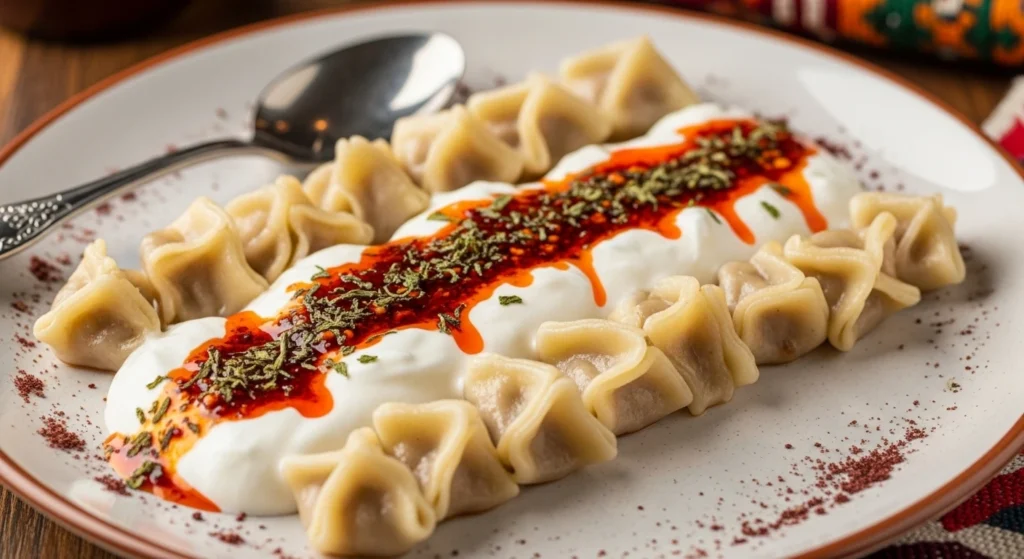
- Place cooked manti on a plate.
- Top with garlic yogurt.
- Drizzle with hot chili butter.
- Garnish with dried mint or parsley if desired.
Health Benefits of Manti
While manti is often seen as an indulgence, it also offers a range of nutritional benefits, especially when balanced with fresh yogurt and herbs.
1. Rich in Protein
The meat filling provides a good source of protein, which is essential for muscle growth, energy, and overall health.
2. Probiotics from Yogurt
The garlic-yogurt topping isn’t just tasty—it also delivers probiotics, which support gut health and digestion.
3. Balanced Nutrition
Manti combines carbs (from the dough), protein (from the filling), and healthy fats (from the butter and yogurt), creating a well-rounded meal.
4. Portion Control
Because manti is served in small dumplings, it naturally encourages moderation. A bowlful is satisfying without being overwhelming.
5. Customizable for Health
You can make vegetarian versions with spinach, mushrooms, or lentils, and even opt for whole-wheat flour for added fiber.
Conclusion
Manti is more than just dumplings—it’s a piece of history, a cultural symbol, and a dish that brings people together. From its origins along the Silk Road to its cherished place in Turkish kitchens today, manti has stood the test of time.
Now that you know its history, ingredients, and preparation, why not try making it at home? Start with a simple version, enjoy the process of folding each dumpling, and savor the flavors once it’s complete.
Just like sourdough baking, preparing manti is a rewarding, hands-on culinary adventure. It teaches patience, creativity, and connection to tradition. So gather your ingredients, invite family or friends to join in, and enjoy the joy of homemade Turkish dumplings.