
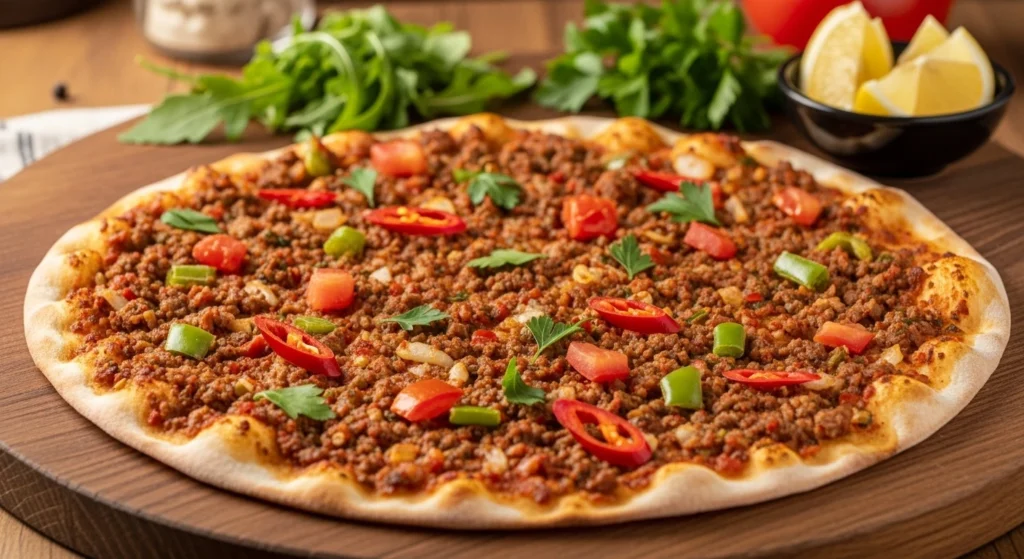
Lahmacun (Turkish Pizza): A Crispy, Flavorful Delight
Table of Contents
Introduction
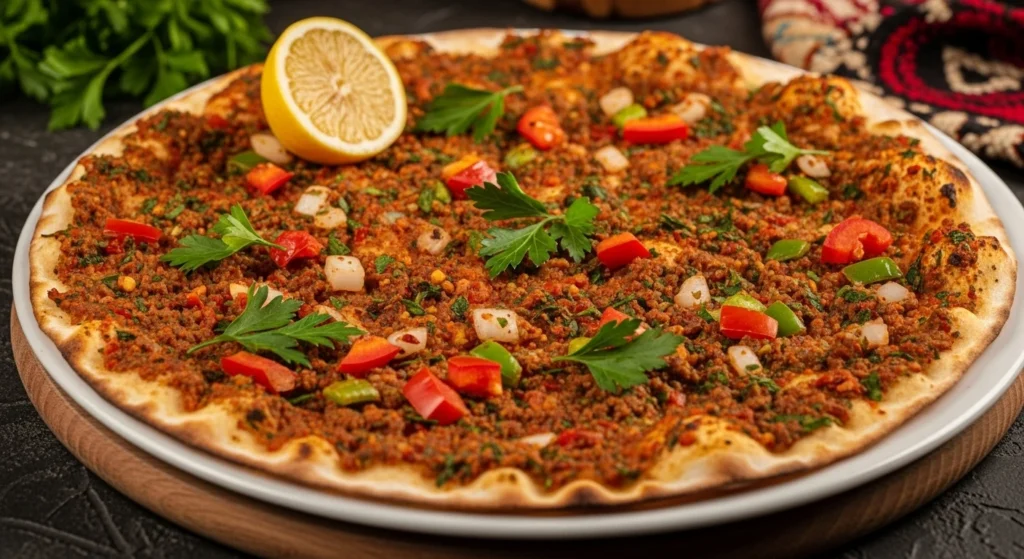
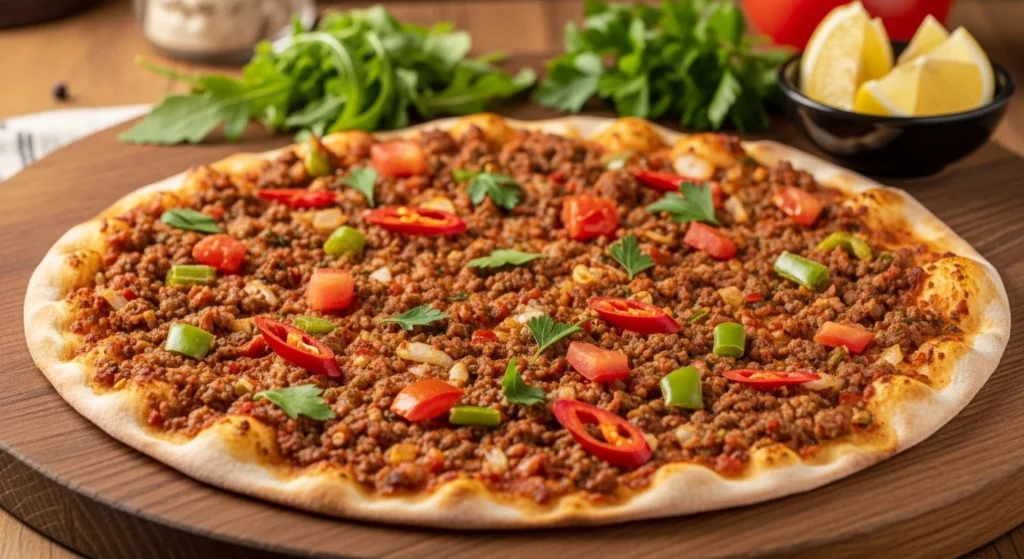
When you think of pizza, your mind probably goes straight to Italy. But travel eastward to Turkey, and you’ll discover a delicious cousin: Lahmacun, often called Turkish pizza. This beloved dish features a thin, crispy flatbread topped with a savory mixture of minced meat, fresh vegetables, herbs, and spices. Unlike its Italian counterpart, lahmacun doesn’t come with gooey cheese or thick crust—it’s light, aromatic, and designed to be rolled up with fresh toppings like parsley, onions, and lemon juice.
Whether enjoyed as a quick street food snack or as part of a family meal, lahmacun holds a special place in Turkish cuisine. Its simplicity, bold flavors, and versatility make it a dish that has traveled far beyond Turkey, finding fans in the Middle East, Europe, and beyond.
In this article, we’ll explore the history of lahmacun, uncover its essential ingredients, walk step by step through the preparation process, and highlight its health benefits. By the end, you’ll have all the knowledge you need to appreciate (and maybe even prepare) this unique Turkish treasure.
History of Lahmacun
The story of lahmacun is intertwined with Turkey’s rich culinary heritage, which blends influences from the Middle East, Central Asia, and the Mediterranean.
Origins in the Levant
The name lahmacun comes from the Arabic phrase “lahm bi ajin”, meaning “meat with dough.” This straightforward description reflects its humble beginnings as a flatbread topped with minced meat and spices, baked in wood-fired ovens.
Lahmacun is believed to have originated in the Levant region (modern-day Syria, Lebanon, and southeastern Turkey). Over centuries, it spread across Anatolia, where Turkish cooks refined the recipe and incorporated local spices.
A Dish for All
Unlike elaborate Ottoman palace dishes, lahmacun was traditionally considered everyday food for the common people. Its affordability, portability, and satisfying flavors made it a staple for families and laborers alike.
Today, lahmacun is celebrated not only in Turkey but also across the globe, especially in countries with strong Turkish and Middle Eastern communities. You’ll find it in restaurants, bakeries, and street stalls, enjoyed by everyone from busy workers grabbing lunch to families gathering for dinner.
Ingredients for Lahmacun
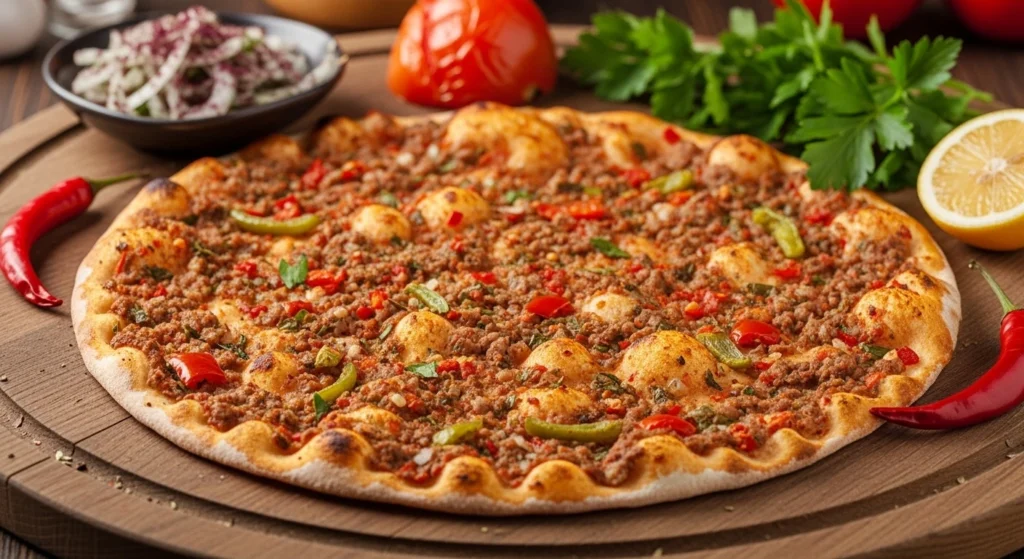
The beauty of lahmacun lies in its simplicity and balance. It requires just a handful of ingredients, but each plays a crucial role in creating its distinct flavor.
For the Dough
- 3 cups all-purpose flour
- 1 tsp salt
- 1 tsp sugar
- 1 tsp dry yeast
- 1 cup warm water
- 2 tbsp olive oil
For the Topping
- 250g minced lamb or beef (lamb is more traditional)
- 1 medium onion, finely chopped
- 1 large tomato, finely chopped
- 1 red bell pepper, finely chopped
- 2 tbsp tomato paste
- 2 cloves garlic, minced
- 1 small bunch parsley, finely chopped
- 1 tsp paprika
- 1 tsp cumin
- ½ tsp chili flakes (optional, for spice)
- Salt and black pepper to taste
- 2 tbsp olive oil
For Serving
- Fresh parsley leaves
- Sliced onions with sumac
- Lemon wedges
- Optional: sliced cucumbers, tomatoes, or pickled vegetables
Step-by-Step Preparation of Lahmacun
Making lahmacun at home is not difficult—it just requires a little patience and organization. Here’s a simple step-by-step guide.
Step 1: Prepare the Dough
- In a large bowl, mix flour, salt, sugar, and yeast.
- Gradually add warm water and olive oil, kneading until a soft, elastic dough forms.
- Cover with a damp cloth and let it rest for 1–2 hours, until it doubles in size.
Step 2: Make the Topping
- Place minced meat in a large mixing bowl.
- Add onions, tomato, bell pepper, garlic, tomato paste, parsley, and spices.
- Mix thoroughly until the ingredients form a smooth, spreadable paste.
- Adjust seasoning with salt, pepper, or chili flakes.
Step 3: Shape the Dough
- Once risen, divide dough into 6–8 equal balls.
- Roll each ball into a thin circle (about 20–25 cm in diameter). The thinner, the better—the dough should be almost paper-like.
Step 4: Assemble and Bake
- Preheat oven to 250°C (480°F) or as hot as it can go.
- Place rolled-out dough on a baking sheet or pizza stone.
- Spread a thin, even layer of the meat mixture over the dough, pressing lightly so it adheres.
- Bake for 6–8 minutes, until the dough is crisp and the topping is cooked.
Step 5: Serve
- Remove from oven and immediately garnish with parsley, onions, and a squeeze of lemon juice.
- Roll it up like a wrap and enjoy warm.
Health Benefits of Lahmacun
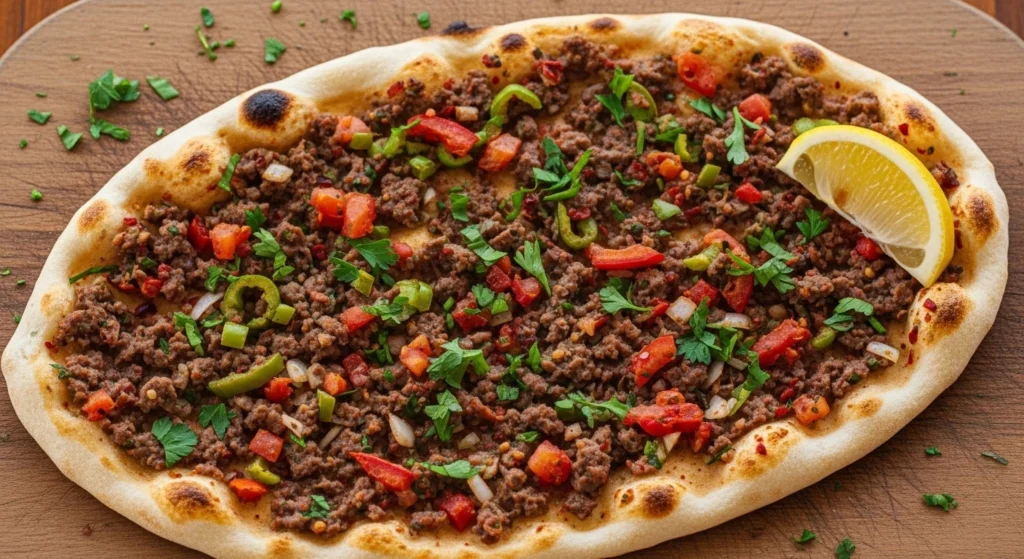
Lahmacun is not only delicious but also a relatively healthy meal option when compared to heavier fast foods like burgers or deep-fried snacks.
1. Light and Low-Calorie
Because it’s made with thin dough and doesn’t include heavy cheese or cream, lahmacun is generally lighter than traditional pizzas. A typical serving ranges from 250–400 calories, depending on size and toppings.
2. Rich in Protein
The minced meat provides high-quality protein, essential for muscle repair, energy, and overall health.
3. Packed with Vegetables
The topping mixture includes tomatoes, onions, bell peppers, parsley, and garlic—all rich in vitamins, antioxidants, and fiber.
4. Heart-Healthy Fats
Using olive oil in the topping and dough provides healthy monounsaturated fats, which support cardiovascular health.
5. Balanced Meal
When paired with fresh vegetables and herbs, lahmacun becomes a well-rounded dish—combining carbs, proteins, and healthy fats in one satisfying package.
6. Portion-Friendly
Its thin, rollable style makes portion control easier. You can enjoy one or two without feeling overly full or sluggish.
Conclusion
Lahmacun, often nicknamed Turkish pizza, is more than just a flatbread topped with meat—it’s a culinary tradition that brings people together. Rooted in history and culture, this dish represents the beauty of simple ingredients transformed into something extraordinary.
By now, you’ve explored its fascinating past, discovered its core ingredients, learned how to prepare it step by step, and even uncovered its health benefits. Whether you try it at a Turkish restaurant or bake it at home, lahmacun offers a crispy, flavorful experience that’s both comforting and unique.
Just like sourdough baking, making lahmacun at home is rewarding, fun, and a great way to connect with tradition. So why not roll up your sleeves, prepare the dough, and experience the joy of creating your own Turkish pizza?