
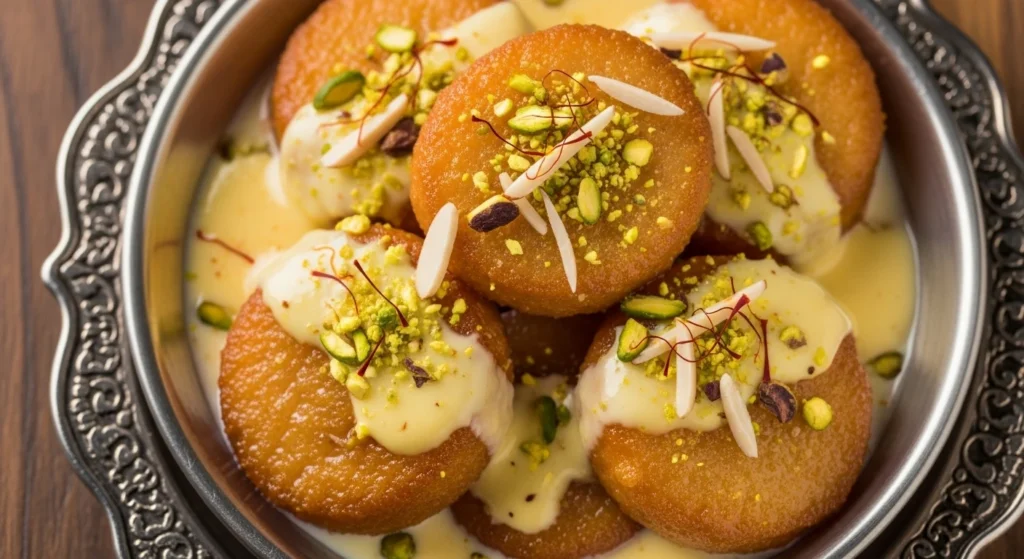
Shahi Tukda Recipe – A Royal Mughlai Dessert You’ll Fall in Love With
Table of Contents
Introduction
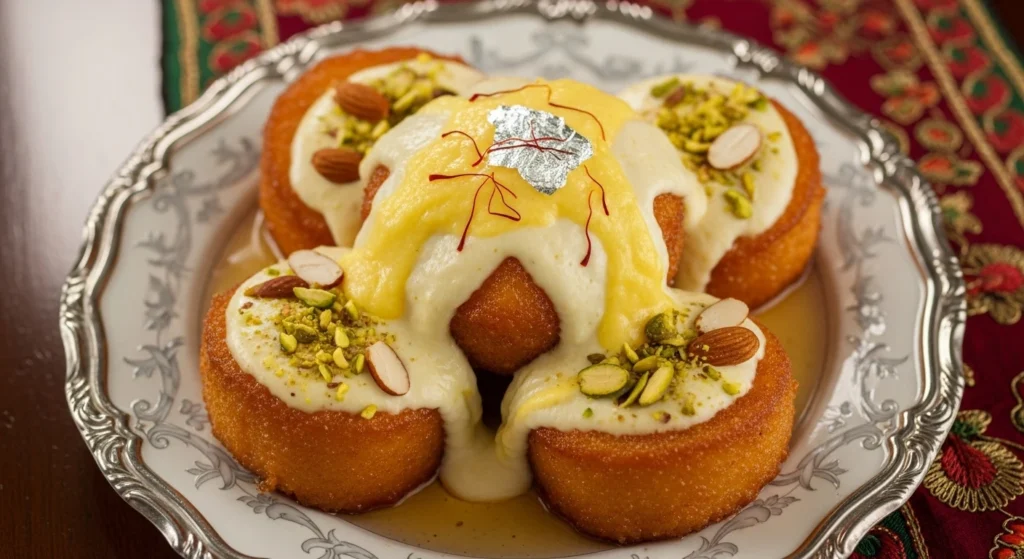
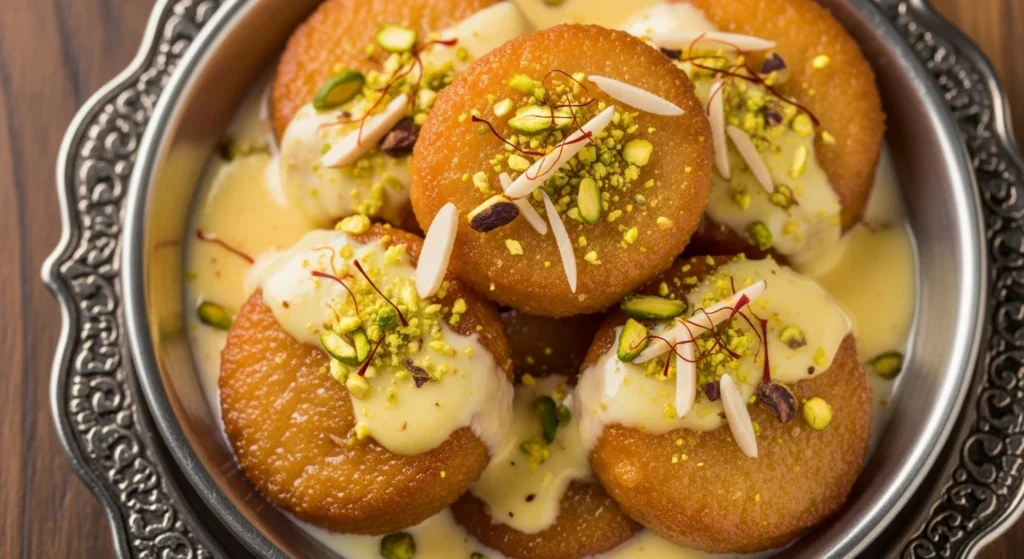
There are desserts you eat to satisfy a craving, and then there are desserts that feel like an experience. Shahi Tukda falls into the second category. Rich, indulgent, and beautifully fragrant, this Mughlai sweet is often described as a dessert fit for royalty. Imagine golden-fried bread slices soaked in silky sugar syrup, topped with creamy saffron-infused rabri (thickened milk), and garnished with nuts. Just reading that probably made your taste buds curious!

If you’ve been looking for an authentic Shahi Tukda recipe or simply want to learn about this elegant Indian sweet, you’re in the right place. Let’s dive into its history, ingredients, step-by-step preparation, and why this dessert continues to win hearts at weddings, Eid feasts, and family gatherings.
History & Origins of Shahi Tukda
The name itself tells a story—Shahi means “royal,” and Tukda means “piece.” This dessert dates back to the Mughal era in India, when lavish feasts were common in royal courts. Shahi Tukda was said to be inspired by Middle Eastern bread puddings, such as Umm Ali from Egypt, but the Mughals elevated it by adding saffron, cardamom, and nuts.
Over time, it became a centerpiece dessert during festive occasions, especially Ramadan and Eid, where it is often served to break the fast. In Hyderabad and Lucknow, two cities deeply influenced by Mughlai cuisine, Shahi Tukda holds a special place in culinary traditions. Today, it continues to symbolize celebration, royalty, and indulgence.
Ingredients for Shahi Tukda
Here’s a clear list of what you’ll need to make this royal treat. These quantities serve around 4–5 people.
For the Bread Base
- 6–8 slices of white bread (edges trimmed, preferably a day old)
- 4–5 tbsp ghee (clarified butter) for frying
For the Sugar Syrup
- 1 cup sugar
- ¾ cup water
- 4–5 green cardamom pods (slightly crushed)
- ½ tsp rose water (optional, for aroma)
- Few strands of saffron (optional but highly recommended)
For the Rabri (Thickened Milk Topping)
- 1 liter full-fat milk
- 4 tbsp sugar (adjust to taste)
- ½ tsp cardamom powder
- 2 tbsp condensed milk (optional, for richness)
- Few saffron strands soaked in 2 tbsp warm milk
For Garnish
- 8–10 almonds (slivered)
- 8–10 pistachios (slivered)
- Silver leaf (optional, for royal presentation)
👉 Modern Variations:
- You can use brown bread or multigrain bread for a healthier twist.
- Replace sugar syrup with honey or jaggery syrup for a rustic flavor.
- Use condensed milk rabri for a quicker version.
Step-by-Step Preparation of Shahi Tukda
Cooking Shahi Tukda might sound like a royal task, but once you break it down, it’s simple. Let me guide you step by step—almost like cooking together in the kitchen.
Step 1: Prepare the Rabri
- Pour the full-fat milk into a heavy-bottomed pan.
- Bring it to a boil, then reduce the flame to low and let it simmer. Keep stirring occasionally so it doesn’t stick.
- As the milk thickens (about 30–40 minutes), add sugar, cardamom powder, and saffron-infused milk.
- Once it reaches a creamy, slightly thick consistency, turn off the heat. Add condensed milk if you want an extra rich flavor.
- Let it cool to room temperature.
Step 2: Make the Sugar Syrup
- In another pan, add sugar and water.
- Heat until the sugar dissolves completely.
- Add crushed cardamom, saffron, and rose water.
- Boil until you get a one-string consistency (when the syrup lightly sticks between two fingers).
- Turn off the flame and set aside.
Step 3: Fry the Bread Slices
- Trim the edges of the bread and cut them diagonally into triangles or squares.
- Heat ghee in a pan and shallow fry the bread pieces until golden and crisp.
- Place them on paper towels to remove excess ghee.
Step 4: Assemble the Shahi Tukda
- Dip each fried bread slice briefly into the warm sugar syrup. Don’t soak too long, or it will get soggy.
- Arrange the syrup-coated bread slices on a serving dish.
- Pour the prepared rabri generously over the bread.
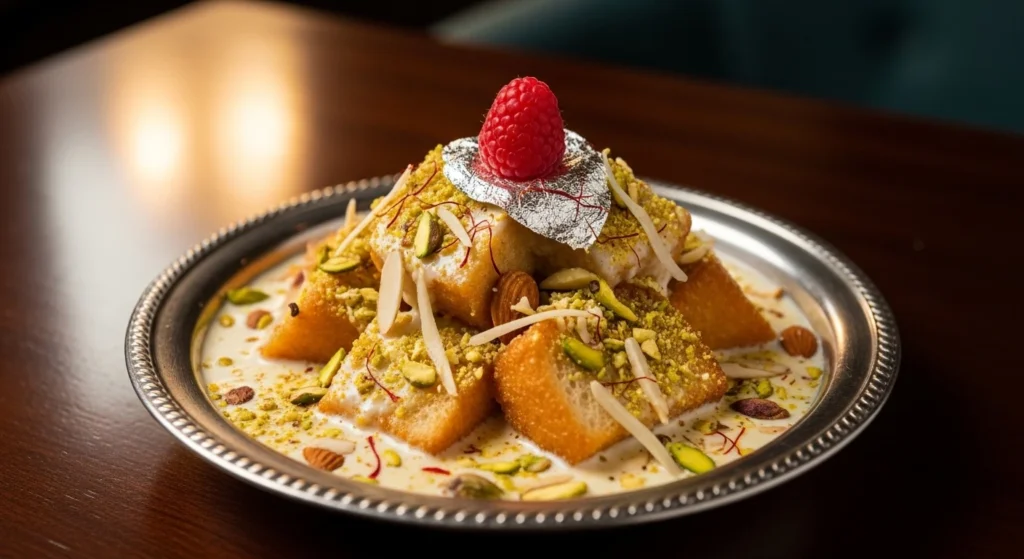
- Garnish with slivered almonds, pistachios, and (if you want to impress your guests) a touch of edible silver leaf.
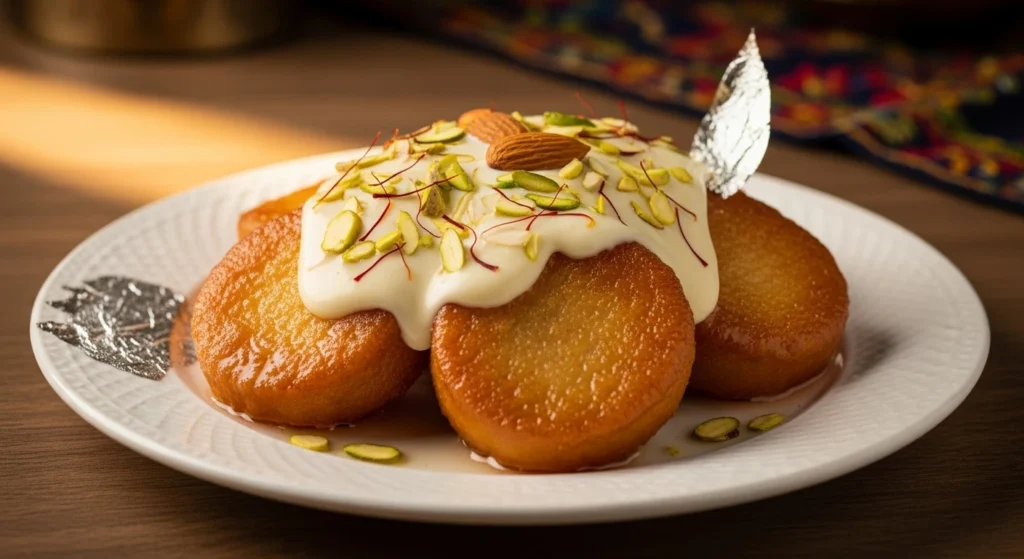
And just like that, your authentic Shahi Tukda recipe is ready!
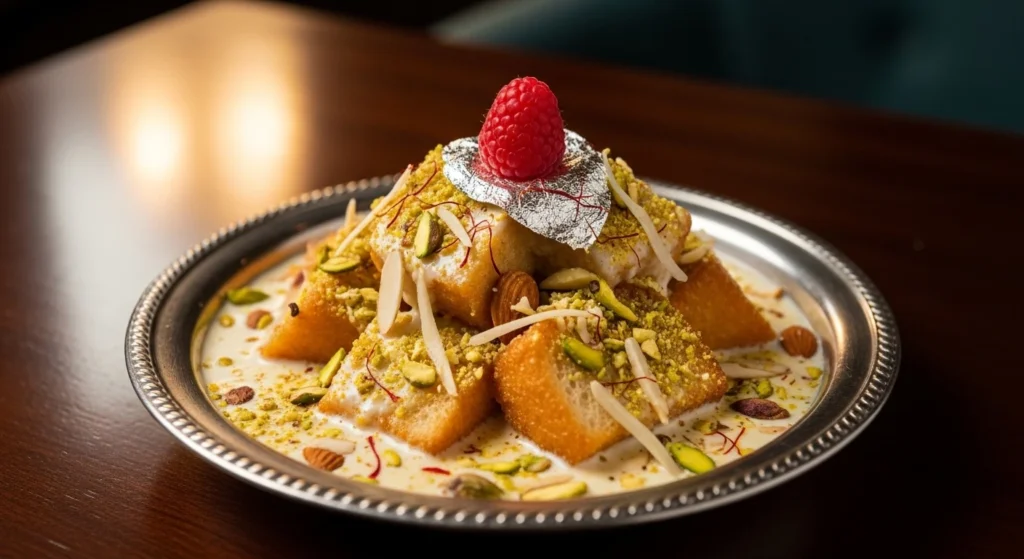
Benefits & Appeal of Shahi Tukda
1. Festive Significance
Shahi Tukda isn’t just a dessert—it’s a tradition. Whether it’s Ramadan, Eid, Diwali, or a wedding feast, this sweet dish makes celebrations feel special.
2. Nutritional Value
- Milk provides calcium and protein.
- Nuts add healthy fats, fiber, and minerals.
- Saffron and cardamom bring antioxidants and a soothing aroma.
Of course, it’s a rich and indulgent dessert, so moderation is key.
3. Why People Love It
- The texture contrast—crispy bread, soft syrup, and creamy rabri.
- The royal flavors of saffron, cardamom, and nuts.
- The aesthetic appeal—it looks just as luxurious as it tastes.
Whether you’re a dessert lover or someone new to Indian sweets, Shahi Tukda never fails to impress.
Conclusion
If you’re looking for a dessert that combines tradition, luxury, and unforgettable taste, Shahi Tukda should be at the top of your list. Its rich history, festive charm, and melt-in-the-mouth flavors make it more than just food—it’s an experience worth sharing.
So why not try this Shahi Tukda recipe at home? Gather your loved ones, serve this royal Mughlai dessert, and watch how quickly it becomes the star of the table. And if you’ve already tried making it, I’d love to hear—how did it turn out? Share your experience in the comments below!