
Sourdough Bread: A Complete Guide to History, Ingredients, Preparation, and Benefits
Table of Contents
Introduction
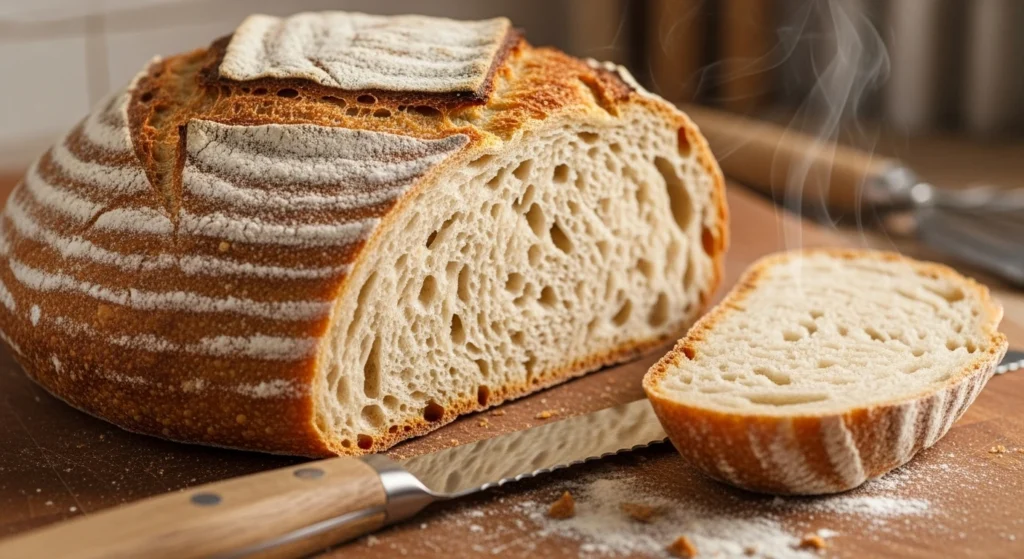
There’s something undeniably magical about sourdough bread. From its rustic crust to the slightly tangy flavor that lingers on your palate, sourdough isn’t just bread—it’s an experience. Unlike regular bread made with commercial yeast, sourdough rises naturally through a fermentation process that relies on wild yeast and lactic acid bacteria. This age-old technique not only gives sourdough its unique taste and texture but also makes it easier to digest and rich in nutrients.
In recent years, sourdough bread has made a huge comeback. Home bakers across the world have embraced the challenge of nurturing their own sourdough starter, enjoying the process as much as the end product. But sourdough isn’t new—it’s one of the oldest forms of leavened bread, with a history that spans thousands of years.
Whether you’re a beginner curious about sourdough baking or someone who simply wants to understand why this bread is so special, this guide will take you through its history, ingredients, step-by-step preparation, and health benefits.
History of Sourdough Bread
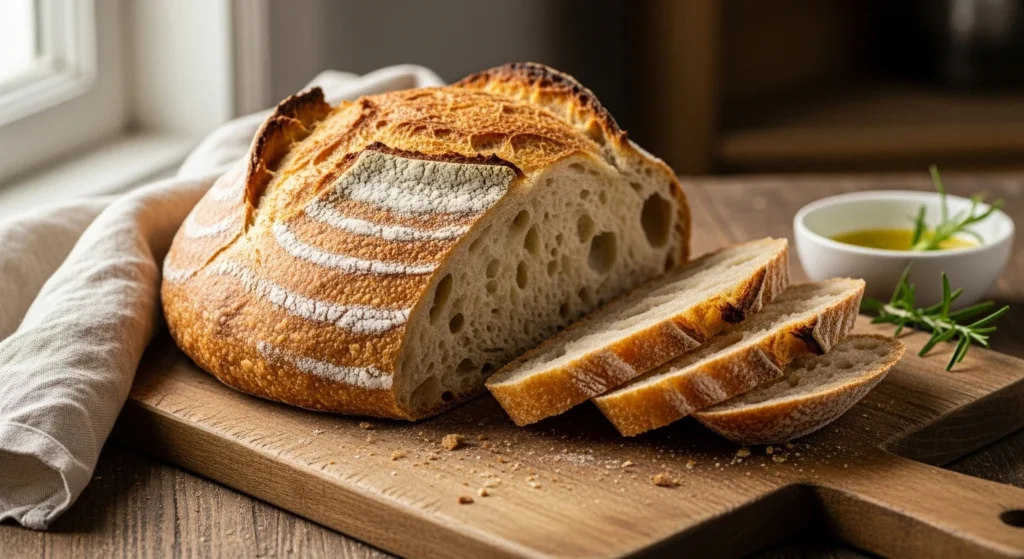
Sourdough bread is as ancient as civilization itself. The earliest evidence of sourdough baking dates back to around 3000 B.C. in Egypt, where bakers discovered that leaving dough out would naturally ferment, producing lighter, airier loaves. This process relied on wild yeast from the environment—a method still used today.
Over time, sourdough spread across continents and cultures. In Europe, it became the foundation of daily bread for centuries. During the California Gold Rush in the 1800s, sourdough gained particular fame. Miners, known as “sourdoughs,” carried their starters with them because the culture could survive harsh conditions and provide a reliable source of food.
Unlike modern breads that rely on commercial yeast (introduced in the late 19th century), sourdough’s natural fermentation creates depth of flavor, better preservation, and higher nutritional value. In today’s world—where artisanal baking is thriving—sourdough is celebrated not just for nostalgia but also for its health and culinary appeal.
Ingredients for Sourdough Bread
One of the beauties of sourdough is its simplicity. At its core, it requires only three essential ingredients:
1. Flour
- Bread flour (high in protein) works best for strong gluten development.
- Whole wheat flour can be added for extra flavor, fiber, and nutrients.
- You can experiment with rye, spelt, or other specialty flours for unique results.
2. Water
- Use filtered or spring water if possible, as chlorine in tap water can affect fermentation.
3. Salt
- A small but essential addition, salt strengthens gluten and enhances flavor.
4. Sourdough Starter (The Heart of It All)
The starter is a mixture of flour and water that captures wild yeast and lactic acid bacteria from the environment. Over time, this culture becomes active and bubbly, ready to help your dough rise. It’s essentially a living organism that you feed regularly.
Optional ingredients (depending on preference):
- Seeds (sunflower, flax, sesame) for texture and nutrition.
- Herbs or spices for flavor.
- Sweeteners like honey for a milder taste.
Step-by-Step Preparation of Sourdough Bread
Baking sourdough is a labor of love. While the process takes time, much of it involves waiting rather than hands-on effort. Here’s a beginner-friendly method to guide you:
Step 1: Feed Your Starter
Make sure your starter is active before baking. Feed it with equal parts flour and water 4–8 hours before you begin. It should be bubbly, airy, and smell pleasantly tangy.
Step 2: Mix the Dough
- In a large bowl, combine:
- 500 g bread flour
- 350 g water (reserve 20 g for later)
- 100 g active starter
- 10 g salt (add after the initial mix)
- Mix until all ingredients are incorporated. The dough will feel shaggy but sticky.
Step 3: Autolyse (Rest Period)
Let the flour and water mixture sit for 30–60 minutes before adding salt. This resting stage hydrates the flour and makes the dough easier to handle.
Step 4: Knead or Stretch and Fold
Instead of traditional kneading, sourdough benefits from a gentler technique:
- Every 30 minutes over a 2-hour period, stretch one side of the dough and fold it over. Rotate the bowl and repeat 3–4 times.
- This builds gluten strength without overworking the dough.
Step 5: Bulk Fermentation
Cover the dough and let it rise at room temperature for 4–6 hours, depending on the warmth of your kitchen. The dough should nearly double in size and look airy with bubbles.
Step 6: Shaping the Dough
Turn the dough onto a lightly floured surface. Shape it into a round or oval loaf by folding the edges toward the center, then flipping it seam-side down. Use your hands to tighten the shape gently.
Step 7: Proofing
Place the shaped dough into a floured banneton (proofing basket) or a bowl lined with a floured towel. Cover and refrigerate overnight (8–12 hours). Cold fermentation enhances flavor and makes scoring easier.
Step 8: Scoring and Baking
- Preheat your oven with a Dutch oven inside at 475°F (245°C) for at least 30 minutes.
- Transfer the dough onto parchment paper, score the top with a razor or sharp knife (to allow expansion), and carefully place it into the hot Dutch oven.
- Bake covered for 20 minutes, then uncovered for another 20–25 minutes until golden brown and crackling.
Step 9: Cooling
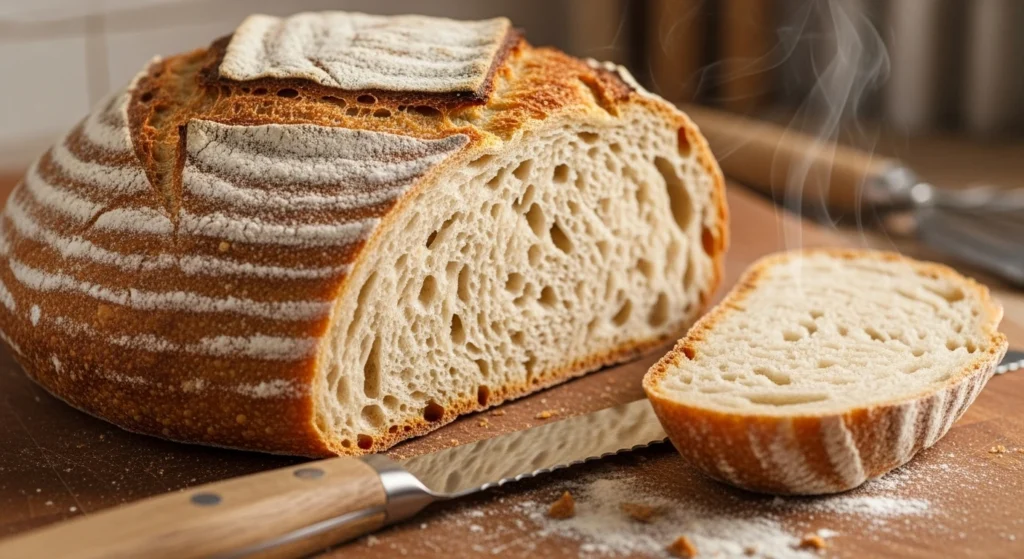
Resist the temptation to cut into the bread immediately! Let it cool for at least an hour to allow the crumb (interior) to set properly.
Health Benefits of Sourdough Bread
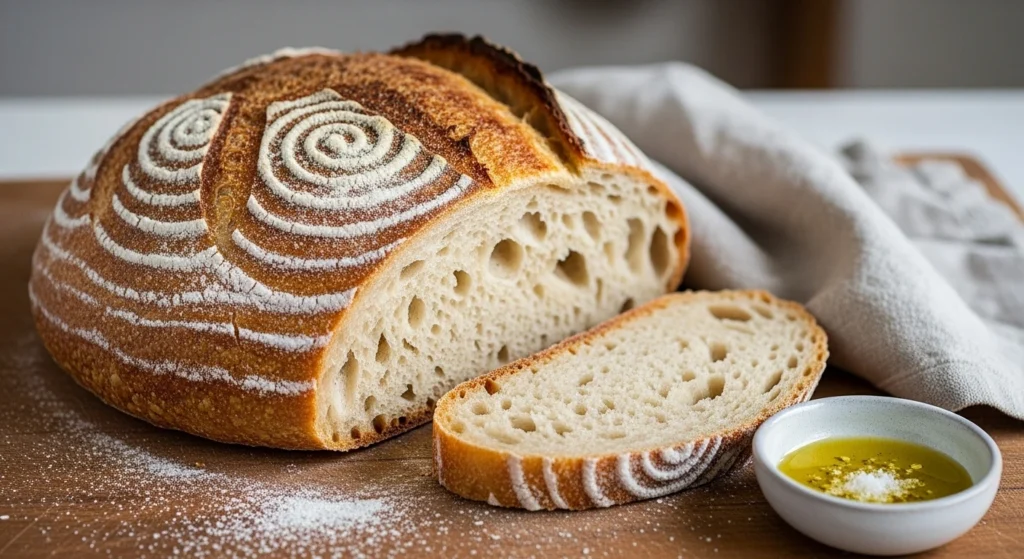
Sourdough bread isn’t just delicious—it’s also packed with health perks that make it stand out from regular bread.
1. Easier to Digest
The natural fermentation process breaks down gluten and phytic acid, making sourdough gentler on the stomach. Many people with mild gluten sensitivity find it easier to digest compared to conventional bread.
2. Better Nutrient Absorption
Phytic acid, found in grains, can block mineral absorption. Sourdough’s fermentation reduces phytic acid, allowing your body to absorb more nutrients like iron, zinc, and magnesium.
3. Lower Glycemic Index
Sourdough bread has a lower glycemic index than white bread, meaning it causes a slower rise in blood sugar levels. This makes it a better choice for people managing blood sugar.
4. Rich in Probiotics and Prebiotics
While probiotics don’t usually survive baking, the fermentation process creates prebiotics—fibers that feed the good bacteria in your gut, supporting digestive health.
5. Longer Shelf Life
Thanks to its acidity, sourdough resists mold growth better than commercial bread, staying fresher for longer without preservatives.
Conclusion: Start Your Sourdough Journey Today
Sourdough bread is more than a recipe—it’s a tradition that connects us to thousands of years of baking history. With just flour, water, and salt, you can create a loaf that’s not only flavorful but also nourishing.
Yes, it takes patience and practice, but that’s part of the charm. Each loaf tells a story of time, care, and craft. If you’ve ever been curious about baking your own sourdough, there’s no better time to start. Feed your starter, preheat your oven, and let the magic of natural fermentation transform your kitchen.
Your first loaf might not be perfect—but it will be yours, and that’s the beauty of sourdough.