

Takoyaki: The Irresistible Japanese Street Food

Table of Contents

Introduction
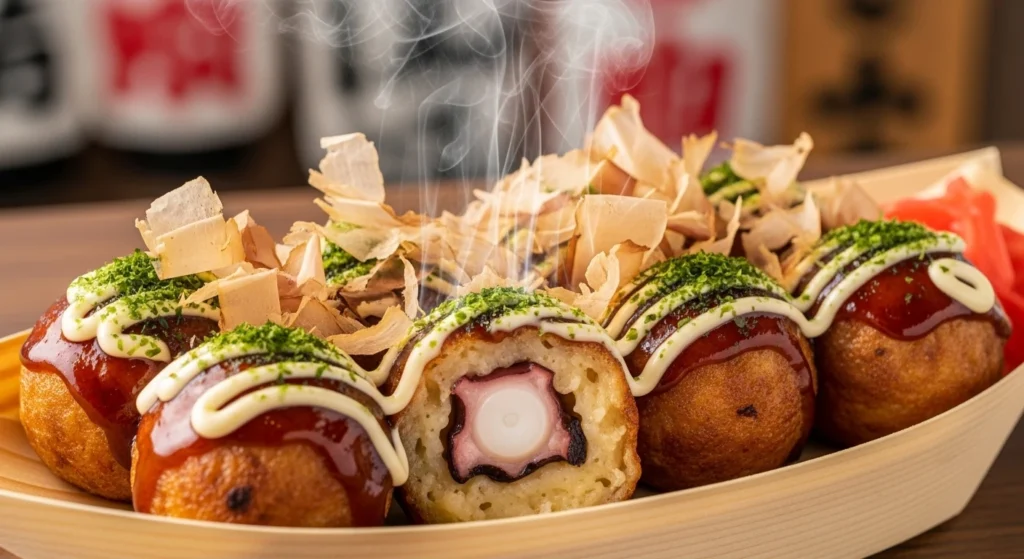
If you’ve ever wandered the lively streets of Osaka, Japan, chances are you’ve caught a whiff of something savory, smoky, and utterly mouthwatering. That, my friend, is takoyaki—a beloved Japanese street food consisting of crispy-on-the-outside, fluffy-on-the-inside batter balls filled with diced octopus, green onions, and pickled ginger.
Takoyaki is more than just food—it’s an experience. Watching vendors skillfully flip the golden orbs in special round molds is mesmerizing, and biting into one fresh off the pan (careful, they’re piping hot!) is unforgettable.
In this post, we’ll explore takoyaki’s fascinating history, essential ingredients, step-by-step preparation method, and even its surprising health benefits. By the end, you’ll not only understand why it’s a staple of Japanese cuisine but also feel inspired to try making it at home.
History of Takoyaki
Takoyaki traces its roots to Osaka in the 1930s, where it was created by a street vendor named Tomekichi Endo. Inspired by an earlier dish called akashi-yaki (a softer dumpling made with eggs and octopus), he developed a more robust batter with flour and dashi, stuffed it with octopus, and cooked it in a rounded iron mold.
The dish quickly gained popularity across Osaka, earning the city its nickname: “The Nation’s Kitchen.” Over time, takoyaki spread throughout Japan and even internationally, becoming a favorite at festivals, food stalls, and izakayas (Japanese pubs).
Today, takoyaki is a symbol of Japanese street food culture. Whether enjoyed at summer festivals (matsuri) with friends or as a quick snack, it captures the warmth and community spirit of Osaka’s food scene.
Ingredients for Takoyaki
While takoyaki may look intricate, its ingredient list is fairly straightforward. Here’s what you’ll need to make authentic takoyaki at home:
1. Batter
- All-purpose flour – 1 cup
- Dashi (Japanese soup stock) – 2 ½ cups (for authentic flavor)
- Eggs – 2 large
- Soy sauce – 1 tbsp
- Baking powder – ½ tsp (optional, for fluffiness)
2. Filling
- Octopus (boiled and diced) – 1 cup
- Green onions (finely chopped) – ¼ cup
- Pickled red ginger (beni shoga) – 2 tbsp
- Tempura scraps (tenkasu) – ¼ cup (adds crunch)
3. Toppings
- Takoyaki sauce – 2–3 tbsp (similar to Worcestershire sauce but sweeter)
- Japanese mayonnaise – 2–3 tbsp
- Aonori (seaweed flakes) – 1 tsp
- Katsuobushi (bonito flakes) – 1 tbsp
4. Equipment
- A takoyaki pan (cast iron with half-sphere molds) is essential. These are available online and in Asian grocery stores.
Step-by-Step Preparation of Takoyaki
Making takoyaki at home can be a fun cooking adventure, especially if you enjoy interactive meals. Here’s a beginner-friendly guide:
Step 1: Prepare the Batter
- In a mixing bowl, whisk together flour, eggs, soy sauce, and dashi until smooth.
- The batter should be thin and runny (thinner than pancake batter).
Step 2: Heat the Takoyaki Pan
- Preheat the pan over medium heat and lightly oil each mold.
- Brush oil generously so the batter won’t stick.
Step 3: Add the Batter and Fillings
- Pour batter into each mold, slightly overfilling them.
- Drop in a piece of octopus, green onions, pickled ginger, and tenkasu into each mold.
- Add a little more batter on top to cover the filling.
Step 4: Flip the Takoyaki
- As the batter cooks, use skewers or chopsticks to flip each ball halfway.
- Keep rotating to form a round, golden ball.
- Continue flipping until the outside is crispy and the inside is soft and cooked through. This takes about 6–8 minutes.
Step 5: Add Toppings
- Transfer takoyaki to a plate.
- Drizzle with takoyaki sauce and Japanese mayonnaise.
- Sprinkle aonori and katsuobushi on top. The bonito flakes will “dance” from the heat—a signature takoyaki presentation.

Health Benefits of Takoyaki
While takoyaki is considered a snack or street food, it does come with certain health perks—especially when enjoyed in moderation.
1. Rich in Protein
- The diced octopus provides lean protein, which supports muscle growth and repair.
2. Good Source of Minerals
- Octopus contains essential nutrients like iron, selenium, and copper.
3. Energy Boost
- The flour-based batter provides carbohydrates, making takoyaki a quick energy source.
4. Brain-Boosting Omega-3s
- Octopus is rich in omega-3 fatty acids, known for supporting heart and brain health.
5. Portion Control Friendly
- Takoyaki is typically eaten in small portions (6–8 pieces), making it easier to enjoy without overindulging.
Tips for Perfect Takoyaki at Home
- Use a proper takoyaki pan – it makes all the difference.
- Keep batter thin – a runny batter ensures fluffiness.
- Don’t skimp on oiling the pan – it helps achieve that golden crust.
- Flip with patience – turning the balls gradually helps form the perfect round shape.
- Experiment with fillings – while octopus is traditional, shrimp, cheese, or even sausage can be delicious substitutes.

Conclusion: A Bite of Osaka at Home
Takoyaki isn’t just food—it’s a warm, fun, and flavorful piece of Japanese culture. From its humble beginnings on the streets of Osaka to its popularity at festivals worldwide, it continues to delight people with its unique combination of crispy texture and savory filling.
So, why not bring the spirit of Japan into your own kitchen? With a takoyaki pan, fresh ingredients, and a bit of practice, you’ll be flipping golden octopus balls like a pro in no time.
And if you love food traditions that connect people, maybe it’s time to try your hand at another culinary adventure—like sourdough baking! Just like takoyaki, it’s an art of patience, precision, and joy.